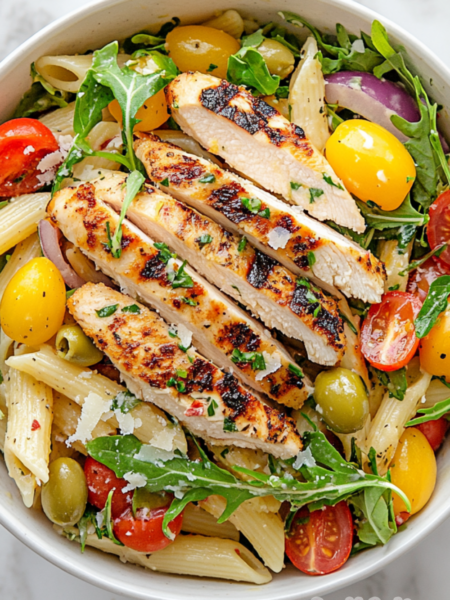

A fresh, flavorful Greek pasta salad with feta, olives, and crisp veggies tossed in a light dressing. Easy, reliable, and perfect for any meal.
This Greek pasta salad is built to be dependable. It delivers a clean, balanced flavor with just enough richness from feta and dressing to feel complete without being heavy.
I approach pasta salads with the same mindset I use in baking. Every component needs to serve a purpose, from how the pasta holds dressing to how the vegetables release moisture over time.
The result here is a salad that stays structured, flavorful, and refreshing even after chilling. It is not just quick, it is consistent every time you make it.
Ingredients Needed for the Recipe
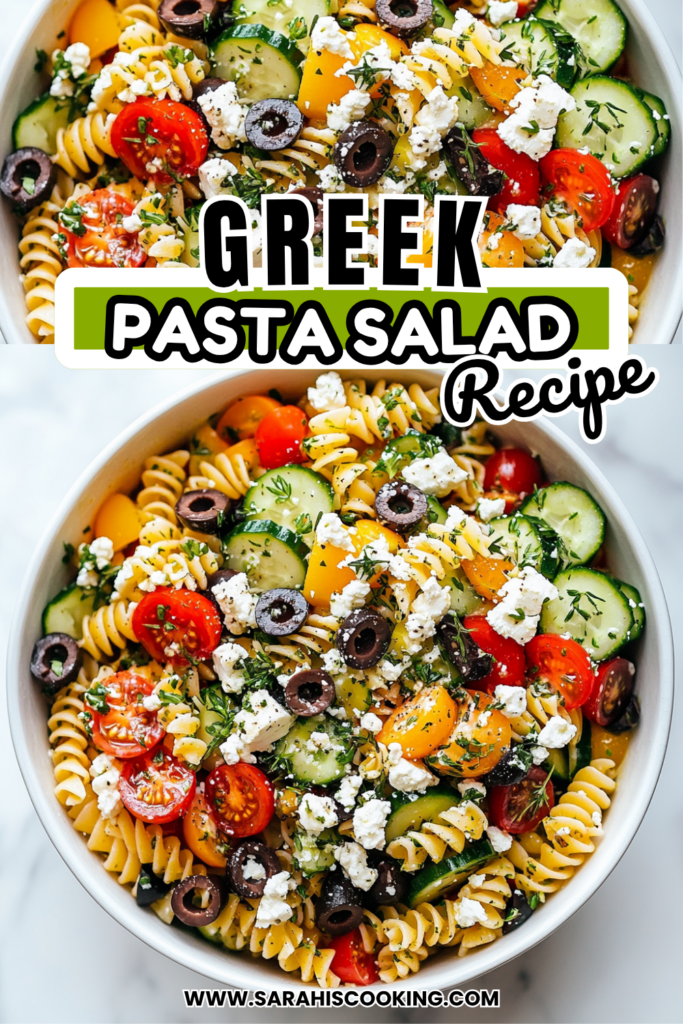
- Tri-colored rotini pasta – The spiral shape traps dressing in its grooves, ensuring even coating and flavor in every bite.
- Crumbled feta cheese – Adds saltiness and creaminess, creating contrast against the crisp vegetables.
- Cherry tomatoes – Provide acidity and natural juices that lightly enhance the dressing without diluting it.
- Cucumbers – Bring crunch and hydration, balancing the denser pasta texture.
- Black olives – Contribute a briny depth that anchors the Greek flavor profile.
- Greek dressing – The binding element that carries seasoning across every ingredient while adding moisture.
- Cilantro – Adds a fresh herbal note that lifts the entire salad and prevents it from tasting flat.
How to make Greek Pasta Salad?
Step 1 – Cook the Pasta Properly
Bring a large pot of salted water to a rolling boil before adding the rotini. The water should taste lightly salty, which ensures the pasta itself is seasoned from the inside.
Cook until just al dente, then drain immediately. Do not overcook, as softer pasta will break down when tossed and chilled.
Step 2 – Toss While Warm
While the pasta is still warm, transfer it to a large bowl and add about half of the dressing. This step is key for flavor absorption.
The warmth allows the pasta to soak in the dressing, filling the ridges and interior. Let it cool at room temperature before adding other ingredients.
Step 3 – Prepare the Vegetables
Halve the cherry tomatoes, chop the cucumbers into even bite-sized pieces, and slice the olives if needed. Keep the cuts consistent for even distribution.
Make sure the vegetables are dry before mixing. Excess moisture can dilute the dressing and weaken the structure.
Step 4 – Combine and Build Texture
Add the cooled pasta, vegetables, feta cheese, and cilantro to a large bowl. Gently toss to combine without breaking the pasta or crushing the cheese.
Pour in the remaining dressing gradually, tossing between additions. Stop once everything is evenly coated but not swimming.
Step 5 – Chill for Flavor Development
Cover the bowl and refrigerate for at least one hour. This resting time allows flavors to settle and meld together.
Before serving, give the salad a light toss. If needed, add a small splash of reserved dressing to refresh the texture.
Why This Recipe Works
The structure of this salad depends on controlled moisture. Pasta absorbs dressing early, while vegetables release moisture later, creating a balanced consistency over time.
Using rotini is intentional. Its ridges hold dressing more effectively than smooth pasta, preventing the salad from tasting uneven or dry in spots.
The ratio of feta to vegetables matters as well. Too much cheese overwhelms the freshness, while too little leaves the salad lacking depth. This balance keeps every bite cohesive.
The two-stage dressing method is what ties everything together. Early absorption builds flavor inside the pasta, while the final addition coats the exterior for a fresh finish.
How I Tested and Refined This Recipe
I started with a simple version where everything was mixed at once. The flavor was fine initially, but after chilling, the pasta tasted flat and under-seasoned.
Next, I tested adding all the dressing at the end. That improved freshness but left the interior of the pasta bland, especially after refrigeration.
The biggest improvement came from splitting the dressing. Tossing half with warm pasta allowed absorption, while reserving the rest maintained brightness.
I also tested rinsing the pasta versus not rinsing it. Rinsed pasta cooled faster but lost its ability to hold dressing, so I removed that step entirely.
Finally, I adjusted vegetable proportions. Too many tomatoes made the salad watery, while too many cucumbers diluted the flavor. The current balance keeps everything crisp and stable.
Common Mistakes and How to Avoid Them
- Overcooking the pasta – Leads to a soft, mushy texture that breaks during mixing and chilling.
- Skipping the warm toss step – Prevents the pasta from absorbing flavor, resulting in a bland base.
- Adding vegetables too early – Warm pasta can wilt or soften them, reducing crunch.
- Using too much dressing at once – Creates a heavy, soggy salad instead of a balanced one.
- Not chilling long enough – Flavors need time to develop and settle properly.
- Overmixing after adding feta – Breaks the cheese and turns it into a paste rather than keeping distinct pieces.
Make-Ahead, Storage, and Freezing Guidance
This salad holds well in the refrigerator for 3 to 5 days when stored in an airtight container. The flavors often improve slightly after the first day.
Over time, the pasta will absorb more dressing, which can make the salad feel drier. Refresh it with a small amount of extra dressing before serving.
Freezing is not recommended. The vegetables lose their texture, and the feta becomes crumbly and watery once thawed.
This dish is best served cold or slightly chilled. Reheating is not necessary and can negatively affect both texture and flavor balance.
Tips
- Salt your pasta water properly to build flavor from the start.
- Cut vegetables evenly so every bite feels balanced.
- Reserve a small portion of dressing for just before serving.
- Use high-quality feta for better texture and flavor impact.
- Let the salad rest before serving to improve overall cohesion.
- A light squeeze of lemon can brighten the final dish if needed.
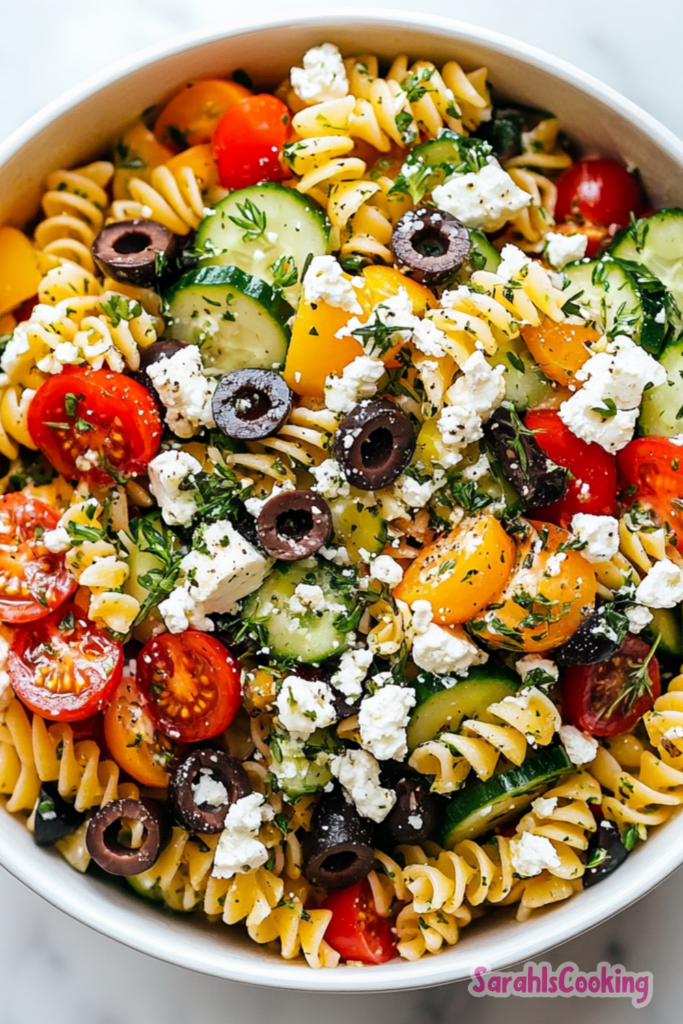

Greek Pasta Salad Recipe
Description
This Greek pasta salad is a light, vibrant, and flavor-packed dish made with tender pasta, crisp vegetables, briny olives, and creamy feta cheese tossed in a zesty Greek dressing. It’s the perfect refreshing side for warm weather, potlucks, or quick meals. With classic Mediterranean ingredients and bold flavors, this easy-to-make salad is both satisfying and versatile. Serve it chilled for the best taste!
Ingredients
Instructions
- Cook the pasta according to package directions in salted boiling water until al dente. Drain and allow it to cool completely.
- Transfer the cooled pasta to a large mixing bowl.
- Add cherry tomatoes, cucumbers, olives, and crumbled feta cheese to the bowl.
- Pour the Greek dressing over the salad and gently toss everything together until evenly coated.
- Cover and refrigerate the salad for at least 1 hour to allow the flavors to blend.
- Garnish with fresh cilantro if desired and serve chilled.
Nutrition Facts
Servings 8
Serving Size 1 serving
- Amount Per Serving
- Calories 320kcal
- % Daily Value *
- Total Fat 12g19%
- Saturated Fat 5g25%
- Cholesterol 25mg9%
- Sodium 520mg22%
- Potassium 220mg7%
- Total Carbohydrate 38g13%
- Dietary Fiber 3g12%
- Sugars 5g
- Protein 10g20%
* Percent Daily Values are based on a 2,000 calorie diet. Your daily value may be higher or lower depending on your calorie needs.
Note
For best flavor, toss warm pasta with a portion of the dressing before cooling. You can customize this salad by adding grilled chicken, chickpeas, or bell peppers.