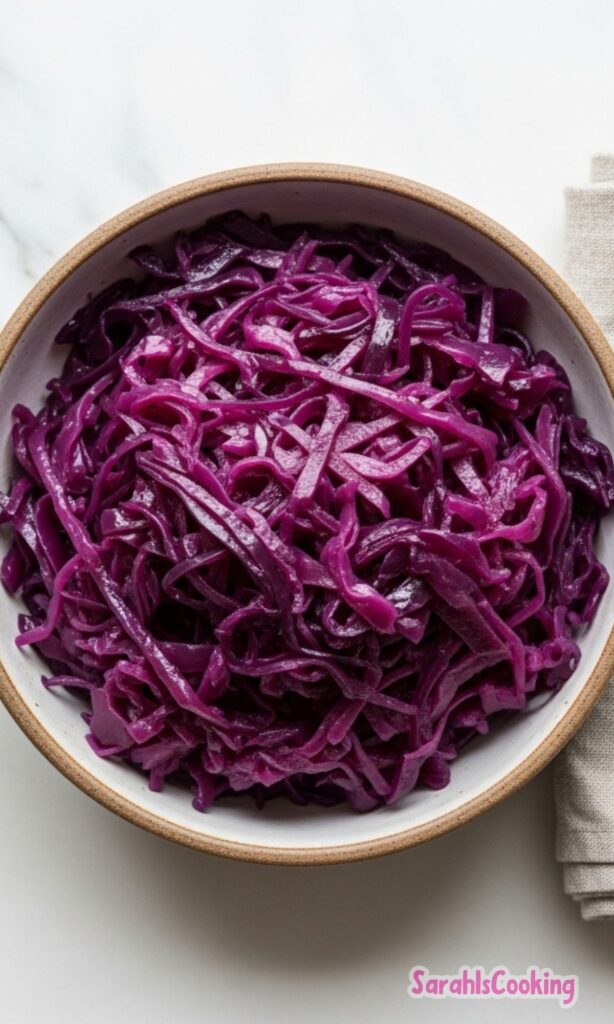
German red cabbage, known as Rotkohl, is one of those side dishes that quietly anchors a meal. It brings brightness to rich roasts, balances salty meats, and adds a sweet-tart contrast that keeps a plate from feeling heavy.
This version focuses on the classic balance of cabbage, apples, vinegar, and sugar. It cooks slowly until tender but still structured, creating that familiar sweet and sour flavor many people remember from holiday tables.
I make this recipe every fall when red cabbage is plentiful, then portion it and freeze it for later meals. It reheats beautifully, which makes it one of the most practical winter side dishes I keep in my freezer.
Who This Recipe Is For
This recipe is for home cooks who want a traditional German-style red cabbage that actually tastes balanced. Not overly sweet, not aggressively sour, and not mushy.
It works well for beginner cooks because the process is straightforward. If you can chop vegetables and simmer a pot on the stove, you can make this successfully.
Experienced cooks will also appreciate how predictable the results are. The ratios are reliable, the method is simple, and the flavor deepens as it cooks.
Why This Recipe Works
The success of German red cabbage comes down to balance and timing. Cabbage naturally contains sulfur compounds that mellow as it cooks, while vinegar sharpens flavor and apples soften the acidity.
Sugar stabilizes the sweet and sour relationship while also helping the cabbage maintain its vibrant color. Without enough sweetness, the dish becomes harsh. Too much sugar and the cabbage tastes flat.
Cooking the apples and onion first creates a flavor base that integrates into the cabbage as it simmers. This step ensures the sweetness is layered rather than simply stirred in.
The cabbage cooks covered for about forty minutes. That window is long enough to soften the fibers but short enough to preserve structure and color.
Ingredients Needed for the Recipe
Butter - Provides the initial cooking fat and builds flavor when sautéing the onions and apples.
Apples - Contribute natural sweetness and subtle acidity that softens the vinegar's sharpness.
Medium onion - Adds savory depth that balances the sweet components of the dish.
Red cabbage (shredded) - The main structure of the recipe, providing texture and earthy flavor.
Water - Creates steam and moisture so the cabbage softens evenly while simmering.
Red wine vinegar - Delivers the signature sour note that defines traditional German red cabbage.
White sugar - Balances acidity while helping maintain the cabbage's rich purple color.
Salt - Enhances all flavors and helps draw moisture from the cabbage as it cooks.
Pepper - Adds mild warmth and rounds out the sweetness.
Bay leaf - Introduces subtle aromatic depth during the simmering stage.
Ingredient Insights and Function
Red cabbage is slightly firmer and more peppery than green cabbage. That structure allows it to cook for a longer time without collapsing completely.
When shredding the cabbage, thinner slices cook more evenly and absorb the sweet and sour flavors better. Thick pieces tend to remain stiff in the center.
The apples matter more than many people expect. Slightly soft apples work perfectly here because they break down slightly and melt into the sauce.
If substituting vinegar, apple cider vinegar is the closest alternative. Rice vinegar works in a pinch but will produce a slightly lighter flavor.
Granulated sugar is traditional and predictable. Brown sugar can be used, but it introduces molasses notes that shift the flavor profile slightly darker.
Butter creates a rounder flavor than oil. If you must substitute, use a neutral oil, but the final dish will feel slightly less rich.
How to make German Red Cabbage Recipe?
Step 1 - Prepare the Vegetables
Start by shredding the red cabbage into thin strips. A sharp knife works perfectly and often feels easier than pulling out a food processor.
Slice the apples and dice the onion. Keeping the apple slices fairly thin helps them soften quickly once they begin cooking.
Step 2 - Build the Flavor Base
Place a large saucepan over medium heat and melt the butter. Once the butter is fully melted and lightly bubbling, add the diced onion and sliced apples.
Cook this mixture for several minutes until the onion turns translucent and the apples begin to soften. This step builds the flavor base for the entire dish.
Step 3 - Add the Cabbage
Add the shredded cabbage to the pot and stir gently so it coats with the butter and mixes with the onions and apples.
The cabbage will look bulky at first, but it will shrink noticeably once heat begins breaking down its fibers.
Step 4 - Add Liquid and Seasoning
Pour in the water and red wine vinegar. Then add the sugar, salt, pepper, and bay leaf.
Stir the mixture thoroughly so the cabbage is evenly coated. Even distribution of vinegar and sugar ensures the flavor cooks into the vegetables rather than sitting on the surface.
Step 5 - Bring to a Gentle Boil
Increase the heat slightly and bring the mixture to a light boil. This activates the cooking process and helps the cabbage begin releasing moisture.
Once bubbling begins across the surface, reduce the heat to maintain a steady simmer.
Step 6 - Cover and Simmer
Place a lid on the saucepan and allow the cabbage to simmer for about forty minutes. Stir occasionally to ensure even cooking.
The cabbage should become tender but still hold some structure. The liquid will reduce slightly and create a glossy coating on the vegetables.
Step 7 - Remove the Bay Leaf and Serve
When the cabbage is fully tender, remove the bay leaf and discard it.
Transfer the cabbage to a serving bowl if eating immediately, or portion it into containers if preparing it for later use or freezing.
How I Tested and Refined This Recipe
I started with several classic ratios for Rotkohl and tested them with different cabbage sizes. Smaller cabbages tend to produce a slightly sweeter result because their leaves are more tender.
My first version used less vinegar. The result tasted flat and overly sweet, especially when paired with roasted meat.
Increasing the vinegar corrected that issue, but the dish initially felt too sharp. Adding a second apple helped soften the acidity naturally.
I also tested cooking the cabbage uncovered. While it reduced liquid faster, it created uneven texture with dry patches in the pot.
Cooking the cabbage covered for most of the time produced the best results. The steam softened the cabbage evenly while preserving moisture.
The final version keeps the sweet and sour balance stable and produces consistent texture across different batches.
Common Mistakes and How to Avoid Them
Shredding cabbage too thick. Thick pieces cook unevenly and remain tough in the center.
Skipping the onion and apple sauté step. This removes the foundational flavor layer.
Adding too much vinegar at once. Excess acid overwhelms the sweetness and becomes harsh.
Cooking uncovered the entire time. This causes uneven softening and dry spots.
Overcooking the cabbage. Extended simmering breaks the structure and produces mush.
Not stirring occasionally. The cabbage at the bottom of the pot can cook faster and stick.
Make-Ahead, Storage, and Freezing Guidance
German red cabbage stores extremely well and often tastes better after resting. The sweet and sour flavors deepen once the cabbage cools.
In the refrigerator, it keeps for about four days in an airtight container. Reheat gently on the stovetop or in the microwave until warmed through.
This dish freezes exceptionally well. Portion it into small containers so you can thaw only what you need.
Frozen red cabbage keeps for several months without losing flavor. The texture softens slightly after thawing, but it remains pleasantly structured.
For reheating, warm it slowly in a saucepan with a tablespoon or two of water to restore moisture.
Tips
Slice the cabbage thinly for the most even texture.
Use slightly soft apples if you have them. They melt into the sauce beautifully.
Taste the cabbage near the end of cooking and adjust sugar if needed.
Let the cabbage sit for ten minutes after cooking so the flavors settle.
Serve it alongside roasted pork, chicken, turkey, or even meatloaf.
Freeze portions in flat containers so they stack easily.
Prep Time
15 mins
Cook Time
40 mins
Rest Time
5 mins
Total Time
1 hr
Difficulty:
easy
Servings:
6
Estimated Cost:
8
Calories:
131
Best Season:
Fall, Winter
Description
This traditional German Red Cabbage recipe delivers the perfect balance of sweet and sour flavors that your Oma, Nana, or Babushka brightened holiday dinners with. Tender shredded red cabbage is braised with apples, red wine vinegar, and a touch of sugar for a comforting side dish that pairs beautifully with roast chicken, turkey, pork, or venison. Make a big batch in fall and freeze portions to enjoy all year long!
ingredients
3Tablespoons butter
2 apples (sliced)
1 medium onion (diced)
1 regular sized red cabbage (shredded (enough to make 8 cups))
1cup water
½cup red wine vinegar (or apple cider vinegar)
⅓cup + 2 Tablespoons white sugar (less if you want it less sweet)
1teaspoon salt
⅛teaspoon pepper
1 bay leaf (don't forget this!)
Instructions
1
Prep your ingredients so they're ready to go: shred the cabbage with a knife or food processor, slice the apples, and dice the onion.
Pro Tip: A sharp knife works better than dragging out a food processor for shredding cabbage.
2
In a large saucepan over medium heat, melt the butter.
3
Add in the sliced apples and diced onion, cooking until soft and fragrant, about 5 minutes.
4
Add the shredded cabbage, water, red wine vinegar, sugar, salt, pepper, and bay leaf. Stir to combine.
5
Heat to boiling, then reduce heat, cover, and simmer for 40 minutes, stirring occasionally, until the cabbage is tender.
6
Discard the bay leaf and transfer to a serving bowl, or divide into individual containers for freezing.
Freezes perfectly for up to 3 months!
Nutrition Facts
Servings 6
Serving Size 1 cup (approx.)
Amount Per Serving
Calories131kcal
% Daily Value *
Total Fat3gg5%
Saturated Fat1gg5%
Trans Fat0gg
Cholesterol8mgmg3%
Sodium400mgmg17%
Potassium350mgmg10%
Total Carbohydrate24gg8%
Dietary Fiber4gg16%
Sugars15gg
Protein1gg2%
Calcium 40mg mg
Iron 0.8mg mg
* Percent Daily Values are based on a 2,000 calorie diet. Your daily value may be higher or lower depending on your calorie needs.
Note
Freezer-friendly: This cabbage freezes beautifully! Portion into individual containers and stack in the freezer for quick sides all year.
Vinegar swap: Red wine vinegar is traditional, but apple cider vinegar, white vinegar, or rice vinegar all work great.
Use imperfect apples: This is the perfect recipe for slightly soft or damaged apples from your garden—they cook down beautifully!
Adjust sweetness: Start with less sugar and taste before serving; you can always add more if you prefer it sweeter.
Serving ideas: Pairs wonderfully with roast chicken, turkey, pork chops, venison, duck, or even meatloaf and mashed potatoes.
Keywords:
german red cabbage, rotkohl, sweet and sour cabbage, winter side dish, holiday recipe, traditional german food, cabbage recipe, oma recipe
Pin this recipe to share with your friends and followers.
Sarah
Food and Lifestyle Blogger
Hi, I’m Sarah, a home cook and baker who believes that good food doesn’t need to be complicated to be meaningful. This blog is where I share approachable, dependable recipes made with care — the kind of dishes you can come back to again and again.