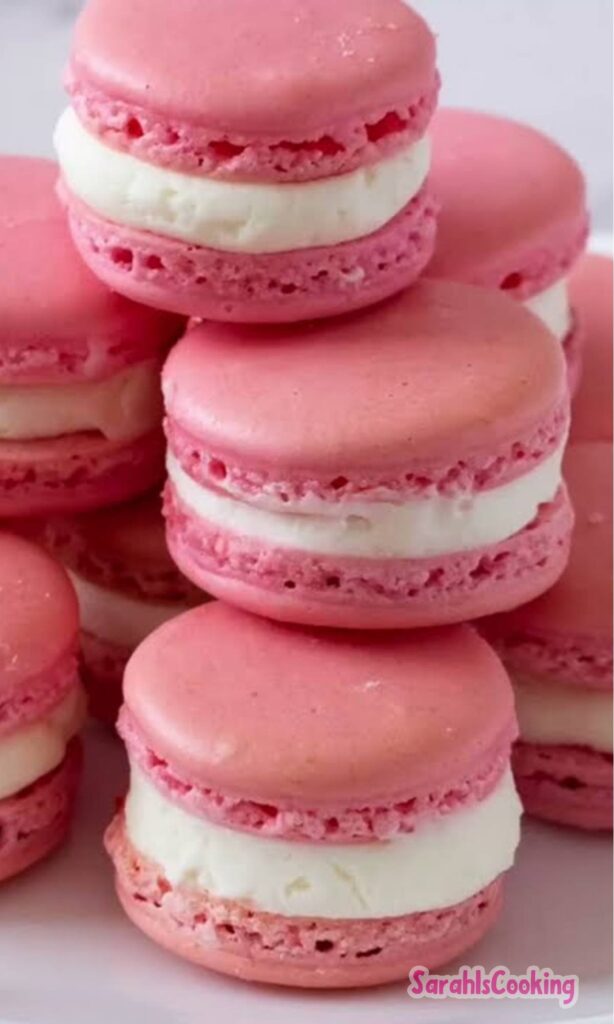
Macarons have a reputation. They seem like the final exam of the baking world—intimidating, precise, and easy to fail. For years, I felt the same way. My first batches were hollow, cracked, or completely footless. But through my pharmacy studies, I learned a core truth that applies perfectly to baking: precision and understanding the "why" behind a process are the keys to repeatable success.
This recipe is the result of that mindset. It’s the method I’ve refined through countless batches, both in my home kitchen and for my small bake sales. We’re going to walk through every step with clear explanations, so you understand not just what to do, but why it works. The goal isn't a rushed, trendy cookie. It's a perfect, classic French macaron: a crisp, shiny shell with a ruffled foot, a tender-chewy interior, and no hollows. Let's bake with confidence.
Who This Recipe Is For
This is a beginner's guide, but it’s not a shortcut. It’s for the baker who values a reliable result over a fast one. If you’re willing to use a scale, read the cues, and appreciate the science of a stable meringue, this recipe is for you. I’ve structured it to build your understanding, so each batch teaches you something, even if it’s not flawless on the very first try.
That’s the beautiful thing about macarons. They are a practice in patience and observation. Once you learn the rhythm—the feel of the meringue, the flow of the batter—it becomes a deeply satisfying ritual. You’re not just making cookies; you’re mastering a technique.
Why This Recipe Works
Success here hinges on method, not magic. We use the French meringue method, where granulated sugar is whipped directly into egg whites. It’s accessible and teaches you the foundational skills. The stability comes from aged egg whites, which have relaxed proteins for a stronger foam, and cream of tartar, which adds acidity for even more support.
We process and sift the dry ingredients thoroughly to eliminate lumps, ensuring a smooth, shiny shell. The most critical step, the macaronage (folding), is described with visual and textural cues so you know exactly when to stop. This single step determines the rise, the foot, and the interior texture. We’re leaving nothing to guesswork.
Ingredients Needed for the Recipe
Precision starts here. A kitchen scale is non-negotiable. Volume measurements for macarons are inconsistent and will lead to frustration. Each ingredient has a specific structural role.
- Egg Whites (4 oz / 115g): The scaffold of the entire cookie. We age them in the fridge for 2-4 days to allow some water to evaporate and the proteins to relax. This creates a meringue that is less fragile and more resistant to overmixing. Bring them to room temperature before whipping for maximum volume.
- Almond Flour (4 oz / 115g): Must be superfine almond flour, not almond meal. Almond meal includes the skins and is coarser, leading to grainy, dull shells. We’ll process and sift it to an ultra-fine powder for that signature smooth top.
- Powdered Sugar (8 oz / 230g): Adds sweetness, dissolves seamlessly into the almond flour, and contributes to the delicate structure and shiny surface.
- Granulated Sugar (2 oz / 55g): Superfine or caster sugar is ideal as it dissolves quickly into the meringue, but regular granulated sugar works. It stabilizes the meringue by forming a syrup around the air bubbles.
- Cream of Tartar (1/4 tsp): An acid that strengthens the egg white foam, prevents over-whipping, and adds a bit of insurance for beginners.
- Meringue Powder (1/2 tsp, optional): My tested safeguard. A little bit reinforces the protein network, making the meringue more forgiving during folding. I strongly recommend it for your first few batches.
- Gel Food Coloring (1 drop, optional): Liquid coloring adds unwanted moisture. Gel or powder color provides vibrant hue without altering the batter consistency. Add it with the vanilla.
- Vanilla Extract (1 tsp) & Salt (1/4 tsp): For flavor balance. You can swap vanilla for other extracts like almond or lemon.
Essential Tools for Success
Your tools are part of the recipe. Before you start, wipe down your stand mixer bowl, whisk attachment, and any spatulas with a bit of white vinegar on a paper towel. This removes any trace of grease, which can prevent egg whites from whipping properly. It’s a simple habit that makes a real difference.
You will need a food processor, a fine-mesh sieve, a stand mixer (a hand mixer can work but requires more attention), a flexible silicone spatula, piping bag with a round tip (I use Ateco #804), and parchment paper or silicone mats. If using parchment, I recommend printing a macaron template to place underneath for uniform size.
How to make French Macaron Recipe?
Read through all steps before beginning. Mise en place—having everything measured and ready—is crucial. Once the meringue is whipped, the process moves deliberately.
Step 1 - Prepare Your Dry Ingredients
In a food processor, combine the almond flour, powdered sugar, and salt. Pulse in 5-second bursts, 3-4 times, shaking the bowl between pulses. This further breaks down the almond flour and combines everything evenly.
Sift the mixture through a fine-mesh sieve into a large bowl. If any large bits remain, discard them. For accuracy, if you discard more than a teaspoon, add back an equal weight of fresh almond flour. I often sift a second time for absolute fineness. This effort is what gives you that perfectly smooth, shiny shell.
Step 2 - Whip the Meringue
In your clean stand mixer bowl, combine the room-temperature egg whites, cream of tartar, and meringue powder (if using). Fit the mixer with the whisk attachment. Start on medium-low speed until the whites are foamy and opaque, about 1 minute.
With the mixer running on medium speed, begin sprinkling in the granulated sugar about a tablespoon at a time. Let each addition incorporate before adding the next. Once all the sugar is in, increase the speed to medium-high.
Whip until you reach stiff, glossy peaks. This is vital. The meringue should stand straight up when you lift the whisk. The bowl should be tipped without the meringue sliding. Add the vanilla and gel coloring at the very end, and whip for just 5 more seconds to incorporate.
Step 3 - Macaronage (The Folding Process)
Add about one-third of the sifted dry ingredients to the meringue. Using a flexible spatula, fold by cutting down through the center, sweeping along the bottom, and pulling up along the side. Rotate the bowl a quarter turn and repeat. The initial mix will look thick and clumpy.
Add the remaining dry ingredients and continue folding. Your goal is to deflate the meringue just enough. The batter will transform from thick to flowing lava. Test often: lift your spatula and let the batter ribbon off. It should flow in a steady, unbroken stream, and the ribbon should melt back into the surface within about 10-15 seconds.
Another test is to draw a figure-eight with the batter dripping from your spatula. If you can do it without the stream breaking, it’s ready. If it’s too thick and breaks, keep folding. If it runs off instantly, it’s overmixed. Err slightly on the thicker side for your first batch.
Step 4 - Piping and Resting
Transfer the batter to a piping bag fitted with a round tip. Hold the bag perpendicular to your baking sheet, lined with parchment or a mat. Pipe straight down, filling your template circles, stopping just before the edge. A small circular flick at the end minimizes peaks.
Firmly tap the baking sheet flat on your counter 3-4 times. This releases trapped air bubbles that would cause cracks. Use a toothpick to pop any visible bubbles. Now, let the piped shells sit at room temperature for 15-30 minutes. They are ready to bake when you can lightly touch the surface and no batter sticks to your finger. This "skin" is what forces the batter to rise upwards, creating the feet.
Step 5 - Baking and Cooling
While the shells rest, preheat your oven to 300°F (150°C). Bake one tray at a time on the middle rack for 12-15 minutes, rotating the tray halfway through. Ovens vary, so test one macaron at the 12-minute mark. Gently try to wiggle it. If the top slides from the foot, it needs more time. It’s done when it feels set and doesn’t move.
Immediately slide the parchment off the hot tray and onto a wire rack. Let the shells cool completely on the parchment before attempting to remove them. This stops the cooking process and prevents sweating.
Step 6 - Filling and Maturing
Pair shells of similar size. Pipe your chosen filling (like the included white chocolate ganache, buttercream, or jam) onto the flat side of one shell. Gently sandwich with its pair. The filled macarons need to mature. Store them in an airtight container in the refrigerator for at least 24 hours.
This maturing time is not optional for the best texture. The filling softens the shell from the inside out, transforming it from merely crisp to that iconic crisp-chewy contrast. It’s a step that requires patience but rewards you immensely.
Tips
- Weather matters. Avoid making macarons on very humid or rainy days, as the shells may not dry properly.
- Use an oven thermometer. Oven thermostat inaccuracies are a leading cause of failure. Knowing your true oven temperature is a game-changer.
- Under-whipped meringue is a more common beginner error than over-whipping. Be sure you have truly stiff, firm peaks.
- If your batter spreads rapidly after piping, it is overmixed. Note it, bake them anyway for practice, and fold less next time.
- If feet spread sideways, your oven is likely too hot. Lower the temperature by 15°F for the next tray.
Understanding Common Issues
Hollow shells often trace back to the meringue. If it wasn’t stable enough, it collapses in the oven. Ensure your egg whites are aged, your tools are grease-free, and you whip to stiff peaks. Overmixed batter can also cause hollowness.
Cracked tops are typically due to trapped air (bang those trays!), under-dried shells (let that skin form fully), or an oven that’s too hot. No feet mean the shells didn’t form a skin before baking, or the batter was too wet (often from liquid coloring or undermixing).
Lopsided feet usually indicate an uneven oven or a pan that’s warped. Rotate your pan and consider investing in a quality, heavy-duty baking sheet for even heat distribution. For more focused troubleshooting, my guide on French Buttercream details meringue stability, which is the core skill here.
Storage and Make-Ahead Instructions
Unfilled shells can be frozen for up to 3 months. Store them in a single layer in an airtight container, separated by parchment paper. Thaw at room temperature before filling. This is a fantastic way to break up the work.
Filled macarons mature in the fridge for 24-48 hours and will keep there for up to a week. They can also be frozen, well-wrapped, for a month. Let them thaw gradually in the refrigerator. The flavor and texture only improve.
This recipe is a foundation. Once you’re comfortable with the plain vanilla shell, the world of flavors opens up. You can replace a small portion of the almond flour with sifted cocoa powder for chocolate macarons, or add a bit of freeze-dried fruit powder for vibrant, fruity shells. The filling possibilities are endless—from a tangy Lemon Curd to a rich chocolate ganache.
Remember, every batch teaches you something. Take notes on what you did, what you saw, and how they turned out. That record is your personal guide to mastery. I still have pages of notes from my early batches, and they remind me that progress, not perfection, is the sweetest reward. Happy baking.