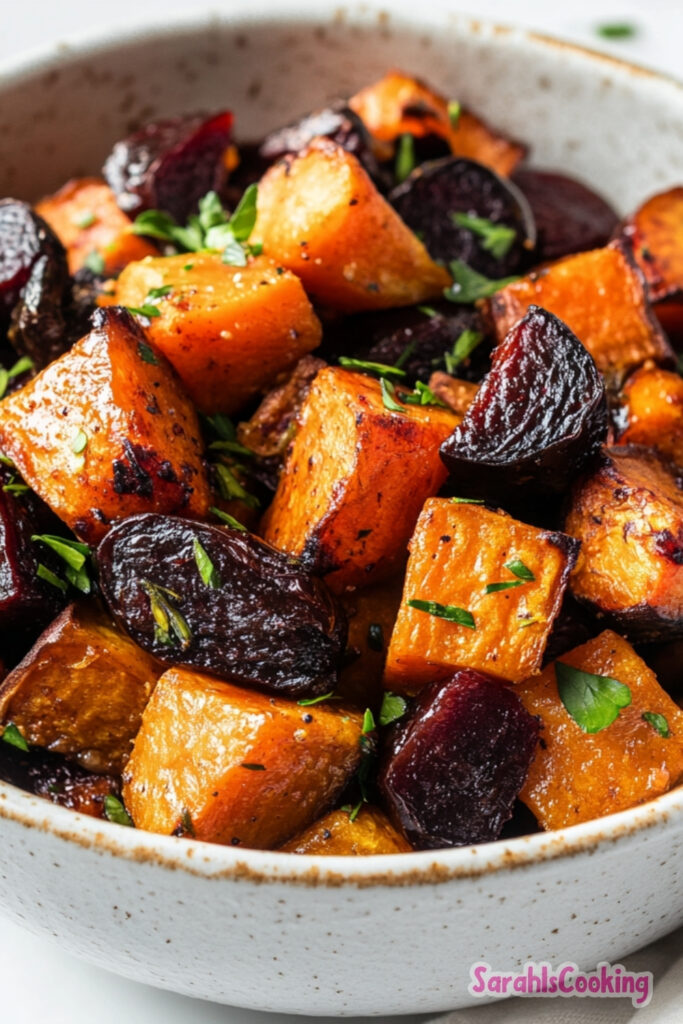
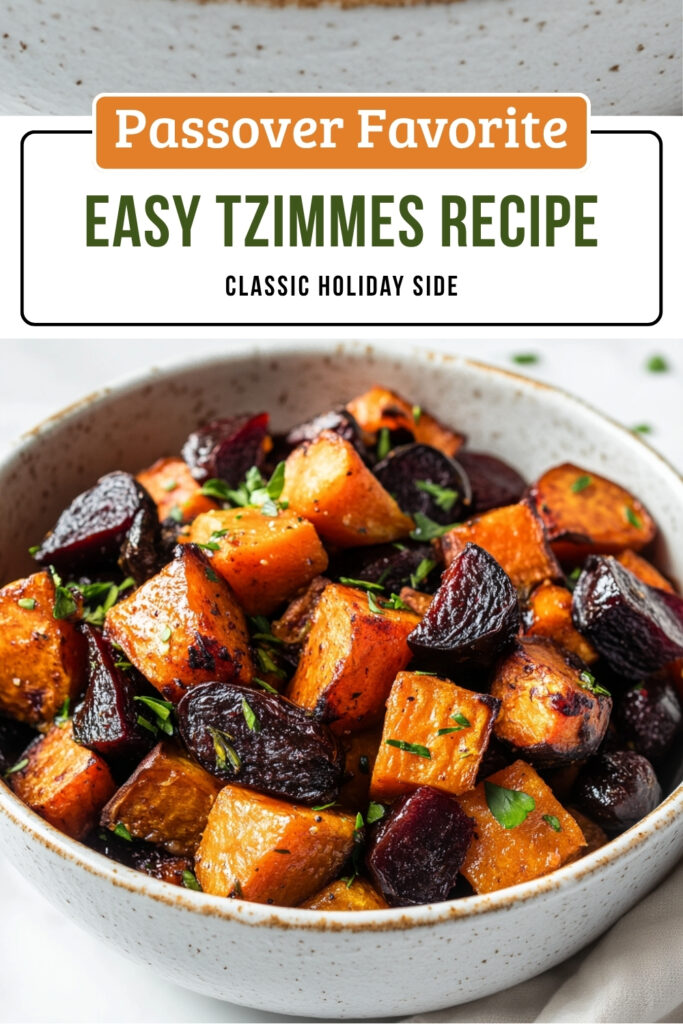
Easy Tzimmes Recipe with Carrots and Sweet Potatoes
Easy roasted tzimmes with carrots and sweet potatoes, naturally sweet, tender, and perfect for holidays or weeknights. Simple, reliable, and deeply flavorful.
This easy tzimmes recipe is built for consistency, not complexity. It delivers tender vegetables, balanced sweetness, and caramelized edges using a simple, repeatable method.
I approach this dish the same way I approach baking. Every step has a purpose, and every ingredient contributes to texture and structure, not just flavor.
The result is a vegan, oven-roasted tzimmes that feels traditional but cooks with modern ease. It works just as well on a holiday table as it does on a regular weeknight.
Ingredients Needed for the Recipe
Beets: Add deep sweetness and moisture as they roast, helping create a soft, cohesive texture across the dish.
Carrots: Provide structure and subtle sweetness, holding their shape while softening just enough to blend with softer vegetables.
Sweet Potatoes: Act as the base, breaking down slightly to create that signature tender, almost melt-in-your-mouth consistency.
Brussels Sprouts: Balance the sweetness with slight bitterness and create contrast in both flavor and texture.
Red Onion: Caramelizes during roasting, adding depth and a mild savory backbone that keeps the dish from tasting flat.
Olive Oil: Promotes even roasting and prevents drying, helping vegetables caramelize rather than steam.
Cinnamon: Enhances natural sweetness without adding sugar, tying together the root vegetables and dried fruit.
Sea Salt: Controls sweetness and sharpens flavor, ensuring the dish tastes balanced instead of overly sweet.
White Pepper: Adds gentle heat without overpowering the natural flavors.
Prunes: Provide concentrated sweetness and a soft, jam-like texture that integrates into the roasted vegetables.
How to make Tzimmes with Carrots and Sweet Potatoes?
Step 1 - Preheat and Prepare the Pan
Preheat your oven to 425°F. This high temperature is key for caramelization rather than steaming.
Line a large rimmed baking sheet with parchment if desired. It simplifies cleanup and prevents sticking without affecting browning.
Step 2 - Wash and Prep the Vegetables
Scrub the beets, carrots, and sweet potatoes thoroughly. Peeling is optional, but even cuts are not.
Dice everything into similar-sized pieces so they cook at the same rate. Uneven cuts lead to uneven texture, which is hard to fix later.
Step 3 - Trim and Cut Brussels Sprouts
Trim the ends and slice the Brussels sprouts into quarters. Keep them close in size to the diced vegetables.
This ensures they soften without burning and integrate properly into the dish instead of standing out.
Step 4 - Combine and Season
Place beets, carrots, onions, and sweet potatoes on the baking sheet. Drizzle with olive oil and sprinkle with cinnamon, salt, and pepper.
Toss thoroughly until everything is evenly coated. This step controls how evenly the vegetables roast and caramelize.
Step 5 - First Roast Phase
Roast for 10 minutes. This initial phase starts softening the dense vegetables and builds the base flavor.
Do not overcrowd the pan. If vegetables are stacked, they will steam instead of roast.
Step 6 - Add Prunes and Brussels Sprouts
Remove the pan and add the Brussels sprouts and prunes. Mix gently but thoroughly.
If the mixture looks dry, add a small amount of olive oil or a splash of orange or pineapple juice to maintain moisture.
Step 7 - Final Roast
Return the pan to the oven and roast for another 20 minutes. The vegetables should be fork-tender with lightly caramelized edges.
Check for doneness by piercing the sweet potatoes and carrots. They should be soft without collapsing completely.
Step 8 - Finish and Serve
Remove from the oven and let rest briefly. This allows the flavors to settle and moisture to redistribute.
Serve warm or at room temperature. Optional fresh parsley or citrus zest can brighten the final dish without changing its structure.
Why This Recipe Works
This recipe relies on natural sugars rather than added sweeteners. As the vegetables roast, their sugars concentrate and caramelize, creating depth without heaviness.
The balance between soft vegetables and structured ones is intentional. Sweet potatoes soften more, while carrots and Brussels sprouts maintain enough integrity to prevent a mushy result.
Roasting in stages is another key decision. Adding prunes and Brussels sprouts later prevents overcooking and keeps their textures distinct.
The seasoning is minimal but strategic. Cinnamon enhances sweetness, while salt and pepper keep everything grounded and savory enough to remain a side dish.
How I Tested and Refined This Recipe
I started with a more traditional approach using added sweeteners and longer cooking times. The result was overly soft and one-dimensional.
Reducing added sugars and relying on natural caramelization immediately improved both flavor and texture. It allowed each ingredient to contribute instead of blending into sweetness.
I also tested different cut sizes. Larger chunks stayed too firm, while smaller ones broke down too much. A medium dice gave the best balance.
Timing adjustments made a noticeable difference. Adding Brussels sprouts at the beginning caused bitterness and uneven cooking, so moving them to the second phase solved that.
I experimented with oil-free versions as well. Using fruit juice works, but requires careful monitoring to avoid drying out or burning.
The final version reflects these refinements. It is simple, but each step has been adjusted to produce consistent, reliable results.
Common Mistakes and How to Avoid Them
Cutting vegetables unevenly, which leads to inconsistent texture and uneven cooking.
Overcrowding the pan, causing vegetables to steam instead of caramelize.
Adding Brussels sprouts too early, resulting in bitterness and overcooking.
Skipping the initial roast phase, which prevents proper flavor development.
Using too little oil or moisture, leading to dry and underdeveloped texture.
Over-roasting, which breaks down vegetables too much and removes structure.
Under-seasoning, causing the dish to taste flat despite natural sweetness.
Make-Ahead, Storage, and Freezing Guidance
This dish stores well in the refrigerator for up to one week in an airtight container. The flavors deepen slightly over time, which can be an advantage.
For meal prep, you can chop most vegetables in advance and store them separately. Sweet potatoes are best cut fresh to prevent oxidation.
To reheat, use a 350°F oven for about 20 minutes. Adding a small amount of liquid helps restore moisture without compromising texture.
Freezing works, though the texture softens slightly upon thawing. Defrost in the refrigerator or at room temperature, then reheat gently for best results.
Tips
Use a large sheet pan to ensure proper spacing and even roasting.
Flip the vegetables halfway through roasting for better caramelization.
Handle beets carefully to avoid staining surfaces and hands.
Add a splash of citrus juice at the end for a subtle brightness.
Adjust prune quantity based on desired sweetness level.
Serve at room temperature for the most balanced flavor.
Double the batch for gatherings, as the volume reduces during cooking.
This Easy Tzimmes Recipe with Carrots and Sweet Potatoes is a must-make for Jewish Holiday Meals. I oven roast this easy Vegan Version of Traditional Tzimmes on one sheet pan for easy clean up. This pareve Tzimmes without meat is super tasty and the perfect healthy side dish for Rosh Hashanah, Passover, and Sukkot. So simple, you can make it as a random weeknight side dish and every week for Shabbat too!
ingredients
1lb beets (about 3 large)
1lb carrots (about 3 large or 4 medium)
1lb Brussels sprouts
1lb sweet potatoes (2 medium-large)
1 red onion
2tablespoon olive oil (extra virgin)
1teaspoon cinnamon
½tsp sea salt
½teaspoon white pepper (or black pepper)
¼cup prunes (cut into ¼s)
Instructions
1
Preheat oven to 425°F (218°C) and line a large rimmed baking tray with unbleached parchment paper if desired for easier clean up.
2
Prep Veggies: Use a loofah or scrub brush to wash the beets, carrots and sweet potatoes. Peeling is optional. Chop beets, carrots, onions and sweet potatoes into large dice. Wash and trim Brussels sprouts and cut into pieces similar in size to diced veggies.
3
Place beets, carrots, onions and sweet potatoes onto prepared pan. Drizzle with olive oil, sprinkle with cinnamon, salt and pepper. Toss well.
4
Roast at 425°F for 10 minutes. Add the Brussels sprouts and prunes and mix well. If veggies seem dry, sprinkle on an additional tablespoon of olive oil, or use a splash of orange or pineapple juice.
5
Continue to cook for another 20 minutes, until all veggies are tender and beets have begun to caramelize.
6
Tzimmes can be made in advance, stored in the fridge in an airtight container, and gently reheated in a 325°F oven until warmed through. Or serve at room temperature. Sprinkle with fresh parsley and orange zest if desired.
Nutrition Facts
Servings 8
Serving Size 1 serving (about 1 cup)
Amount Per Serving
Calories173kcal
% Daily Value *
Total Fat4gg7%
Saturated Fat1gg5%
Trans Fat0.01gg
Cholesterol0mgmg0%
Sodium279mgmg12%
Potassium837mgmg24%
Total Carbohydrate32gg11%
Dietary Fiber8gg32%
Sugars13gg
Protein5gg10%
Calcium 75 mg
Iron 2 mg
* Percent Daily Values are based on a 2,000 calorie diet. Your daily value may be higher or lower depending on your calorie needs.
Note
Oil-free option: Substitute the olive oil with the zest and juice of one orange for a no-oil version.
For extra tang: Add a splash of lemon juice or balsamic vinegar to the finished product and mix well.
Make ahead: This dish can be prepared in advance and gently reheated. Plan to make extra as ingredients shrink when cooked!
Beet tip: Take caution when cutting beets as they will stain your hands. Pierce with a fork to hold the beet in place without touching it.
Potluck perfect: Bring hot in a Dutch oven and either serve at room temp or reheat in the oven or on stovetop with a splash of orange juice.
Pin this recipe to share with your friends and followers.
Sarah
Food and Lifestyle Blogger
Hi, I’m Sarah, a home cook and baker who believes that good food doesn’t need to be complicated to be meaningful. This blog is where I share approachable, dependable recipes made with care — the kind of dishes you can come back to again and again.