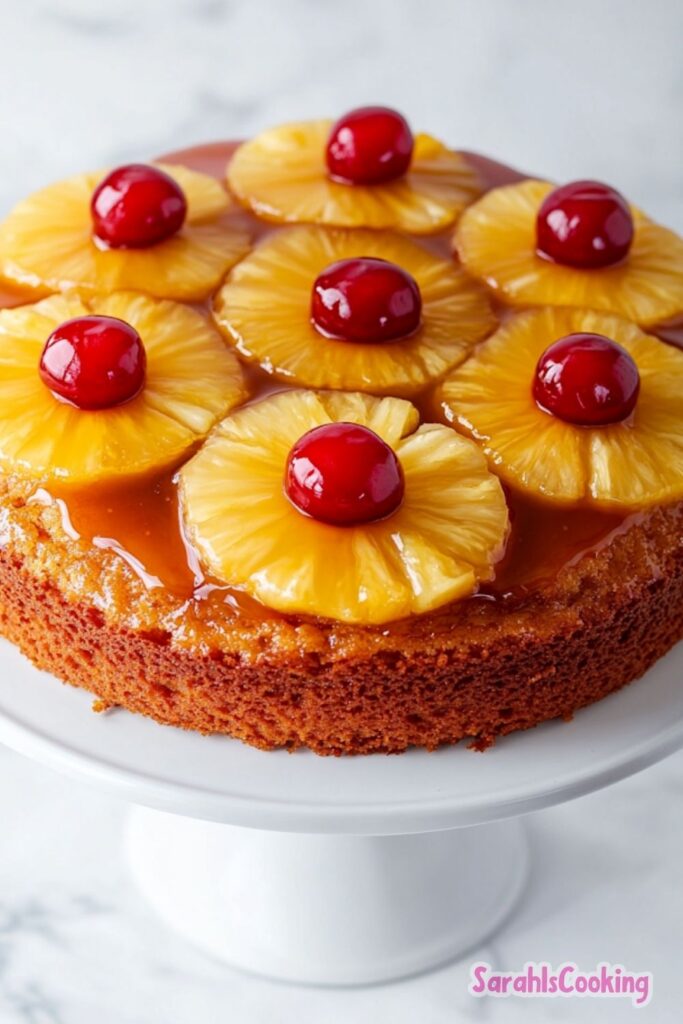
Pineapple upside-down cake has endured for generations because it delivers something dependable - a soft, buttery cake crowned with caramelized fruit that turns glossy and golden once inverted. When done well, the topping melts into the cake just enough to keep every slice moist.
This version focuses on reliability and speed. By using a well-tested yellow cake base and enhancing it with pineapple juice, the structure stays light while the flavor remains true to the classic.
I value recipes that work the same way every time. This one bakes evenly, flips cleanly, and produces the sticky caramel topping people expect from a proper pineapple upside-down cake.
If you follow the order and cues carefully, you will end up with a cake that slices beautifully and holds its texture from the first serving to the last.
Who This Recipe Is For
This recipe is ideal for home bakers who want a classic dessert without complicated technique. If you enjoy reliable, old-school cakes that bake beautifully in a simple pan, this one fits right in.
Beginner bakers will appreciate the clear structure and forgiving batter, while experienced bakers will value how the topping caramelizes consistently when flipped.
It is especially good for anyone baking for family gatherings, church potlucks, or casual celebrations where comfort desserts tend to disappear quickly.
Why This Recipe Works
The structure of pineapple upside-down cake relies on two components that must work together. The topping needs enough butter and sugar to caramelize, while the cake must be tender but sturdy enough to hold the fruit once inverted.
Brown sugar provides moisture and deeper caramel flavor than white sugar. As it melts into the butter during baking, it creates the glossy syrup that coats the pineapple rings.
Substituting pineapple juice for water in the cake batter reinforces the fruit flavor without affecting the batter's structure. The acidity of the juice also brightens the sweetness of the topping.
The final key is baking the cake long enough to fully set the crumb. If the center is underbaked, the cake can collapse when flipped.
Ingredients Needed for the Recipe
Butter - Melts in the baking pan to form the base of the caramel layer and prevents the topping from sticking.
Brown sugar - Creates the rich caramel syrup that coats the pineapple and seeps slightly into the cake.
Canned pineapple slices in juice - Provide the signature fruit topping and release juices that blend with the caramel.
Maraschino cherries - Add color, sweetness, and visual structure inside the pineapple rings.
Yellow cake mix - Forms the main cake structure with a balanced ratio of flour, sugar, and leavening.
Vegetable oil - Adds moisture and softness to the cake crumb.
Eggs - Provide structure and stability so the cake holds together after flipping.
Pineapple juice mixed with water - Replaces plain water to enhance flavor while maintaining proper batter hydration.
Ingredient Insights and Function
The caramel base depends on the correct balance of butter and brown sugar. Butter melts first and coats the pan, while the sugar dissolves into it during baking. Together they form a syrup that thickens as the cake cools.
Canned pineapple works better here than fresh because it is softer and more uniform. Fresh pineapple can release too much moisture and prevent the topping from caramelizing properly.
The pineapple juice substitution is small but important. Pure juice alone can be too concentrated, so combining it with water keeps the batter consistency correct while still adding flavor.
If you swap the cake mix for a homemade batter, keep the texture similar to a traditional yellow cake. A dense batter will struggle to rise through the fruit layer and may bake unevenly.
Maraschino cherries may seem decorative, but they also add small pockets of sweetness that balance the caramel topping. Skipping them will not ruin the cake, but it changes the classic look.
How to Easily Make Pineapple Upside-Down Cake?
Step 1 - Prepare the Oven and Pan
Preheat the oven to 350°F. If you are using a dark or nonstick pan, lower the temperature slightly to 325°F to prevent over-browning.
Place the butter directly in a 13x9-inch baking pan and set it in the oven for a few minutes until fully melted. Remove the pan carefully once the butter has liquefied.
Step 2 - Build the Caramel Base
Sprinkle the brown sugar evenly over the melted butter. Try to distribute it across the entire pan so the caramel forms consistently during baking.
The sugar should sit in a thick layer but not form clumps. This ensures the syrup melts smoothly and coats the fruit.
Step 3 - Arrange the Fruit
Lay the pineapple slices across the sugar mixture in a single layer. Press them gently so they settle into the sugar.
Place one maraschino cherry in the center of each pineapple ring. Scatter additional cherries between the slices to fill the gaps.
Step 4 - Prepare the Cake Batter
Drain the pineapple slices and reserve the juice. Add enough water to the juice to measure one full cup.
Prepare the yellow cake batter according to package directions, replacing the water with the pineapple juice mixture.
Mix just until the batter becomes smooth. Overmixing can make the crumb slightly tough.
Step 5 - Assemble the Cake
Pour the batter gently over the arranged pineapple and cherries. Start near the edges and move inward so the fruit layer stays undisturbed.
Use a spatula to spread the batter evenly across the pan if needed.
Step 6 - Bake the Cake
Bake the cake for 42 to 48 minutes. If using a dark or nonstick pan, the bake time may extend slightly.
The cake is ready when the center springs back lightly and a toothpick inserted in the middle comes out clean.
Step 7 - Loosen the Cake
As soon as the cake comes out of the oven, run a knife along the edges of the pan. This prevents the caramel from sticking as it cools.
Work slowly and make sure the knife reaches the bottom corners of the pan.
Step 8 - Flip the Cake
Place a heatproof serving plate upside down over the pan. Hold both firmly and flip them together in one confident motion.
Leave the pan resting over the cake for about five minutes. This allows the caramel topping to settle and drizzle over the fruit.
Step 9 - Cool Before Serving
Lift the pan away carefully and allow the cake to cool for about 30 minutes. The topping will thicken slightly as it rests.
The cake can be served warm or fully cooled depending on preference.
How I Tested and Refined This Recipe
When refining this cake, I focused mostly on the topping ratio. Too little butter caused the sugar to dry out instead of melting, while too much created a greasy layer under the fruit.
I also tested the cake with plain water and with pineapple juice. The version using juice had noticeably better flavor without changing the crumb texture.
Another test involved flipping the cake at different times. Waiting too long allowed the caramel to harden, which made the fruit stick to the pan.
The final method flips the cake immediately after baking and leaves the pan resting on top briefly. This ensures the caramel flows smoothly over the fruit.
Common Mistakes and How to Avoid Them
Allowing the butter to burn in the oven instead of just melting.
Clumping brown sugar instead of spreading it evenly across the pan.
Overmixing the batter, which can create a dense cake texture.
Pouring batter too quickly and disturbing the pineapple arrangement.
Underbaking the cake, which causes the center to collapse after flipping.
Waiting too long to invert the cake after removing it from the oven.
Using fresh pineapple with too much moisture.
Make-Ahead, Storage, and Freezing Guidance
Pineapple upside-down cake keeps well for several days if stored properly. Cover the cake tightly and refrigerate once it has fully cooled.
Over time the topping will absorb slightly into the cake, making the crumb even more moist. The fruit will soften but still hold its shape.
If freezing, wrap individual slices tightly in plastic wrap and place them in an airtight container. Frozen slices keep their texture for about two months.
To reheat, warm slices gently in the microwave for 15 to 20 seconds. This loosens the caramel topping and restores the soft texture of the cake.
Tips
Drain pineapple slices well so the caramel topping sets properly.
Use room temperature eggs for smoother batter mixing.
Press the pineapple lightly into the sugar so it stays in place.
Flip the cake confidently in one motion rather than hesitating.
Allow at least 30 minutes of cooling for the topping to thicken.
Serve with lightly sweetened whipped cream if you want a softer finish.
Wow your friends and family with this classic pineapple upside-down cake. With tasting notes that boast fruity, gooey, caramelly goodness, it's no wonder why this has been a must-make favorite for generations. Using Betty Crocker™ Super Moist™ Yellow Cake Mix, you can have this impressive dessert prepped for the oven in just 15 minutes. Bake, flip, and enjoy a nostalgic dessert that's perfect for celebrations, brunches, or any time you need a cheerful sweet treat.
ingredients
Topping
1/4cup butter
1cup packed brown sugar (light or dark)
1can (20 oz) pineapple slices in juice (drained, juice reserved)
1jar (6 oz) maraschino cherries without stems (drained, about 18 cherries)
Cake Batter
1box Betty Crocker™ Super Moist™ Yellow Cake Mix
vegetable oil (as called for on cake mix box)
eggs (as called for on cake mix box)
cup water (added to reserved pineapple juice to measure 1 cup total)
Instructions
1
Preheat & Prepare PanHeat oven to 350°F (175°C) (325°F/165°C for dark or nonstick pan). Place butter in a 13x9-inch pan and set on middle oven rack to melt, about 5-7 minutes.
Set a timer to avoid over-melting butter
2
Make Caramel ToppingSprinkle brown sugar evenly over melted butter. Arrange pineapple slices on brown sugar. Place a cherry in center of each pineapple slice, and arrange remaining cherries around slices; press gently into brown sugar.
Pat cherries dry to prevent excess moisture
3
Prepare Cake BatterAdd enough water to reserved pineapple juice to measure 1 cup total. Make cake batter as directed on box, substituting pineapple juice mixture for the water called for on the box.
Using pineapple juice adds extra flavor and moisture
4
Assemble & BakePour batter evenly over pineapple and cherries. Bake 42-48 minutes (44-53 minutes for dark or nonstick pan) or until toothpick inserted in center comes out clean.
Test doneness with toothpick; oven temperatures vary
5
Flip the CakeImmediately run knife around side of pan to loosen cake. Place heatproof serving plate upside down onto pan; turn plate and pan over in one quick, confident motion. Leave pan over cake 5 minutes so brown sugar topping can drizzle over cake; remove pan.
Use oven mitts for safety when flipping
6
Cool & ServeCool 30 minutes before serving warm, or cool completely. Store covered in refrigerator.
Best served same day for optimal texture
Nutrition Facts
Servings 12
Serving Size 1/12 of Cake
Amount Per Serving
Calories360kcal
% Daily Value *
Total Fat12g19%
Saturated Fat4g20%
Cholesterol55mg19%
Sodium260mg11%
Potassium110mg4%
Total Carbohydrate58g20%
Sugars42g
Protein3g6%
Calcium 10 mg
Iron 6 mg
* Percent Daily Values are based on a 2,000 calorie diet. Your daily value may be higher or lower depending on your calorie needs.
Note
Crushed pineapple variation: For easier serving and even distribution, use drained crushed pineapple instead of rings.
Add nuts: Place pecan halves between pineapple slices before adding batter for extra crunch and flavor.
Less sweet topping: Reduce brown sugar to 3/4 cup if you prefer a less caramelized, less sweet topping.
Flavor boost: Add 1/2 tsp cinnamon or nutmeg to the brown sugar for a warm spice twist.
Make ahead tip: Prepare and bake earlier in the day; refrigerate and bring to room temperature 30 minutes before serving.
Pin this recipe to share with your friends and followers.
Sarah
Food and Lifestyle Blogger
Hi, I’m Sarah, a home cook and baker who believes that good food doesn’t need to be complicated to be meaningful. This blog is where I share approachable, dependable recipes made with care — the kind of dishes you can come back to again and again.