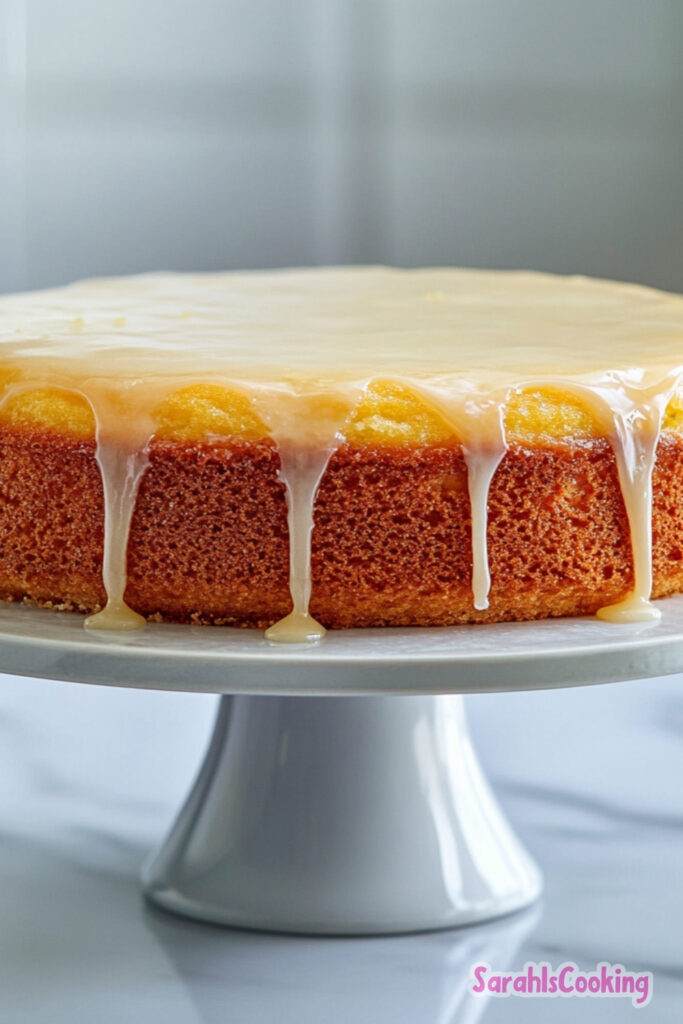
Easy glazed lemon cake with bright citrus flavor, soft crumb, and a simple 2-ingredient glaze. No mixer needed, reliable results, and perfect for everyday baking.
This easy glazed lemon cake is built for consistency, flavor, and simplicity. It delivers a soft, moist crumb with a clean citrus finish and a smooth glaze that sets just right every time.
I’ve tested enough cakes over the years to know that lemon can easily fall flat or turn harsh. This version avoids both by balancing acidity, fat, and sweetness in a way that holds up across different kitchens.
It’s a straightforward sheet cake, no mixer required, no complicated steps. The result is dependable, bright, and exactly the kind of recipe you can come back to without second guessing.
Who This Recipe Is For
This recipe is for home bakers who want a reliable lemon cake without the complexity of layered desserts. If you prefer clear steps and predictable results, this fits right into your routine.
It works well for beginners because the method is forgiving, but it also satisfies experienced bakers who care about texture and flavor balance. There’s enough precision here to trust the outcome.
If you’ve ever struggled with dry cakes or muted lemon flavor, this recipe addresses those issues directly. It’s designed to remove uncertainty, not add to it.
Why This Recipe Works
The structure of this cake relies on a careful ratio of fat, liquid, and flour. Melted butter provides richness without requiring creaming, which simplifies the process while still supporting a tender crumb.
Buttermilk plays a key role in texture. Its acidity reacts with baking soda to create lift, while also softening the gluten structure. That combination keeps the cake moist without making it dense.
Lemon flavor is layered, not forced. Zest brings essential oils, extract adds depth, and fresh juice finishes the glaze. Each element contributes something different, which prevents the flavor from feeling one-dimensional.
Ingredients Needed for the Recipe
All-purpose flour - provides the structural base and determines the cake’s crumb stability.
Baking powder - ensures consistent rise and lightness throughout the cake.
Baking soda - reacts with buttermilk to enhance lift and improve texture softness.
Kosher salt - sharpens the sweetness and balances the citrus flavor.
Lemon zest - delivers concentrated citrus oils that define the cake’s flavor.
Granulated sugar - sweetens while also contributing to moisture retention.
Unsalted butter (melted) - adds richness and keeps the crumb tender without creaming.
Eggs - provide structure, binding, and stability during baking.
Lemon extract - intensifies lemon flavor beyond what zest alone can provide.
Buttermilk - adds acidity, moisture, and tenderness to the crumb.
Powdered sugar - forms the base of the glaze with a smooth texture.
Fresh lemon juice - creates a bright, slightly tangy glaze that complements the cake.
Ingredient Insights and Function
Buttermilk is not optional here if you want the intended texture. It contributes both acidity and fat, which work together to soften the crumb and activate the baking soda. Substituting milk with lemon juice can work in a pinch, but the result is slightly less rich.
Lemon zest is where most of the flavor lives. Skipping it or reducing the amount leads to a flat-tasting cake, even if you increase the juice. Bottled lemon juice doesn’t provide the same aromatic quality and should be avoided.
Lemon extract might seem like an extra step, but it fills in the gaps that zest alone cannot cover. Without it, the cake can taste good but not distinctly lemony. With too much, though, it becomes artificial, so balance matters.
Melted butter simplifies the method, but it also changes how the cake behaves. It creates a slightly denser crumb than creamed butter, but in this case, that density translates to moisture rather than heaviness.
How to make Glazed Lemon Cake?
Step 1 - Prepare the Pan and Oven
Preheat the oven to 350°F and line a 9 x 9-inch pan with parchment paper. Let the paper extend over two sides so you can lift the cake out easily later.
Lightly grease any exposed areas to prevent sticking. This step ensures clean edges and helps the cake release without tearing.
Step 2 - Mix the Dry Ingredients
In a small bowl, whisk together the flour, baking powder, baking soda, and salt. Mixing thoroughly here prevents uneven rising later.
Set this mixture aside so it’s ready to incorporate without delay. Keeping it separate avoids overworking the batter.
Step 3 - Activate the Lemon Flavor
Place the lemon zest and sugar in a large bowl. Use your fingers to rub them together until the mixture becomes fragrant and slightly damp.
This step releases the essential oils from the zest, which directly impacts how strong and fresh the lemon flavor tastes in the final cake.
Step 4 - Build the Wet Base
Add the melted butter to the sugar mixture and whisk until smooth. The mixture should look glossy and slightly thickened.
Incorporate the eggs one at a time, whisking fully after each addition. Then stir in the lemon extract to complete the flavor base.
Step 5 - Combine Wet and Dry Components
Switch to a spatula and add the dry ingredients along with the buttermilk. Stir gently until just combined and no dry streaks remain.
The batter should be smooth but not overmixed. Overworking at this stage can tighten the crumb and reduce tenderness.
Step 6 - Transfer and Level the Batter
Pour the batter into the prepared pan and spread it evenly into the corners. A level surface ensures even baking.
Tap the pan lightly on the counter to release any large air pockets before placing it in the oven.
Step 7 - Bake to Proper Doneness
Bake for 30 to 35 minutes until the top is lightly golden and a toothpick inserted in the center comes out clean.
Avoid opening the oven too early, as temperature drops can affect the rise. Check only near the end of the baking time.
Step 8 - Cool the Cake Properly
Let the cake cool in the pan for about 20 minutes. Then use the parchment sling to lift it out onto a rack.
Allow it to cool completely before glazing. Applying glaze too early will cause it to melt and lose structure.
Step 9 - Prepare the Lemon Glaze
Mix powdered sugar with fresh lemon juice until you reach a thick but pourable consistency. Adjust slowly to avoid thinning it too much.
The glaze should flow easily but still hold a slight shape when spread.
Step 10 - Glaze and Finish
Pour the glaze over the cooled cake and spread it evenly with a spatula. Work quickly before it begins to set.
Slice the cake within a few minutes while the glaze is still soft for clean edges. Let it fully set before serving.
How I Tested and Refined This Recipe
I started with a traditional creamed butter method, but it added unnecessary steps without improving texture. Switching to melted butter simplified the process while maintaining moisture.
Early versions lacked strong lemon flavor. Increasing zest helped, but it wasn’t enough on its own. Adding lemon extract created a more rounded, consistent citrus profile.
I tested different liquid ratios and found that reducing buttermilk made the cake slightly dry, while increasing it too much weakened the structure. The final amount strikes a balance between softness and stability.
The glaze also went through adjustments. A thinner glaze soaked in too quickly, while a thicker one sat heavily on top. The final ratio creates a smooth layer that sets without cracking.
Common Mistakes and How to Avoid Them
Overmixing the batter - leads to a dense, tough crumb instead of a soft texture.
Skipping the zest rubbing step - results in weak lemon flavor.
Using bottled lemon juice - produces a dull, less fresh taste.
Glazing while the cake is warm - causes the glaze to melt and disappear.
Incorrect oven temperature - affects rise and can lead to uneven baking.
Not measuring flour properly - too much flour creates dryness.
Opening the oven too early - interrupts the cake’s structure while setting.
Make-Ahead, Storage, and Freezing Guidance
This cake holds its moisture well and can be made ahead without losing quality. It actually becomes slightly softer after the first day as the crumb settles.
At room temperature, it keeps for up to 5 days when wrapped tightly. Refrigeration extends it to about a week, though it should be brought back to room temperature before serving.
For freezing, skip the glaze and wrap the cake in portions. It can be stored for up to 3 months and thawed at room temperature without significant texture loss.
Reheating isn’t usually necessary, but a brief rest at room temperature restores softness if refrigerated. Avoid microwaving, as it can affect the crumb structure.
Tips
Use room temperature eggs for better incorporation.
Zest lemons before juicing to make prep easier.
Line the pan carefully to prevent sticking at the corners.
Check doneness at the minimum bake time to avoid overbaking.
Let the glaze set fully before stacking or storing pieces.
This easy glazed lemon cake is a bright, citrusy sheet cake that delivers maximum flavor with minimal effort. Made without a mixer and baked in just 30 minutes, it features a moist, tender crumb thanks to buttermilk and a vibrant lemon flavor from fresh zest and extract. Finished with a simple 2-ingredient lemon glaze, this cake is perfect for quick desserts, afternoon snacks, or a refreshing addition to any brunch table.
ingredients
For the Lemon Cake
1 1/2cup all-purpose flour
1 1/2tsp baking powder
1/4tsp baking soda
1/2tsp salt
1 1/2tbsp lemon zest (from 2 lemons)
1cup granulated sugar
1/2cup unsalted butter (melted)
2 eggs
2tsp lemon extract
1cup buttermilk
For the Lemon Glaze
1cup powdered sugar
2tbsp lemon juice (freshly squeezed)
Instructions
1
Preheat oven to 180°C (350°F). Grease and line a 9x9-inch baking pan with parchment paper.
2
In a bowl, whisk together flour, baking powder, baking soda, and salt.
3
Rub lemon zest into sugar using your fingers until fragrant.
Enhances lemon flavor
4
Whisk melted butter into the sugar mixture until smooth, then add eggs one at a time followed by lemon extract.
5
Add dry ingredients and buttermilk, gently mixing until a smooth batter forms.
6
Pour batter into prepared pan and spread evenly.
7
Bake for 30–35 minutes or until a toothpick inserted in the center comes out clean.
8
Cool for 20 minutes, then remove from pan and let cool completely.
9
Mix powdered sugar and lemon juice to form a thick glaze, then pour over the cooled cake.
10
Slice and serve once the glaze is slightly set.
Nutrition Facts
Servings 16
Serving Size 1 slice
Amount Per Serving
Calories260kcal
% Daily Value *
Total Fat12gg19%
Saturated Fat7gg35%
Trans Fat0gg
Cholesterol55mgmg19%
Sodium180mgmg8%
Potassium90mgmg3%
Total Carbohydrate35gg12%
Dietary Fiber1gg4%
Sugars22gg
Protein4gg8%
Calcium 6% mg
Iron 8% mg
* Percent Daily Values are based on a 2,000 calorie diet. Your daily value may be higher or lower depending on your calorie needs.
Note
Enhance flavor: Always use fresh lemon zest and juice for the best citrus taste.
Buttermilk matters: It creates a soft, tender crumb—avoid skipping it.
Storage: Store covered at room temperature for 3 days or refrigerate up to 1 week.
Freezing tip: Freeze unglazed slices for up to 3 months.
Pin this recipe to share with your friends and followers.
Sarah
Food and Lifestyle Blogger
Hi, I’m Sarah, a home cook and baker who believes that good food doesn’t need to be complicated to be meaningful. This blog is where I share approachable, dependable recipes made with care — the kind of dishes you can come back to again and again.