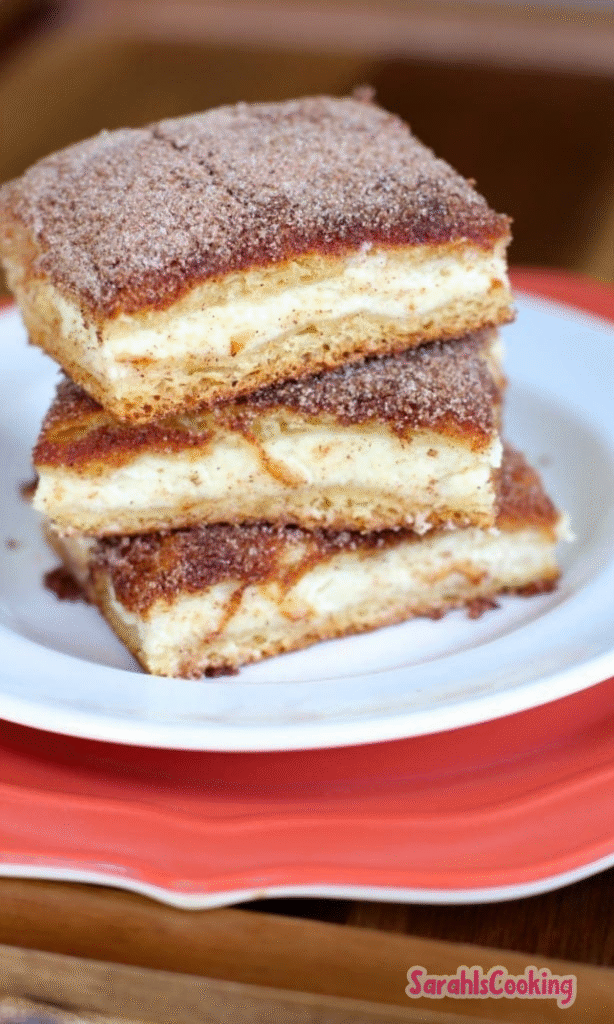
Easy Churro Cheesecake Bars bring together two textures that rarely share the same pan: crisp, cinnamon-sugar pastry and a smooth, lightly tangy cheesecake center. This version is designed for reliability. The layers bake evenly, the filling sets cleanly, and the bars slice without collapsing.
Using crescent dough is not a shortcut in the careless sense. It is a structural decision. When handled correctly, it creates a laminated base and top that crisp at the edges while protecting the creamy center. The result feels familiar and comforting, but the method is deliberate.
Who This Recipe Is For
This recipe is for home bakers who want predictable results without managing a water bath or making pastry from scratch. If you understand how to soften cream cheese properly and can follow visual cues in the oven, you can make this successfully.
It is also ideal for anyone baking for gatherings. The bars travel well, hold their shape after chilling, and can be made a day in advance without sacrificing texture. I have prepared these for bake sales and small events, and the structure remains intact even after several hours at room temperature.
If you are looking for a tall, ultra-dense New York style cheesecake, this is not that. These bars are lighter and more portable by design.
Why This Recipe Works
Crescent Dough as a Structural Shortcut
Crescent dough sheets contain thin layers of fat dispersed through enriched dough. When baked, those layers create lift and separation. In this recipe, the bottom layer acts as a barrier between the cheesecake filling and the pan. It bakes through without becoming soggy, provided the filling ratio is correct.
The top layer performs a different function. It shields the filling from direct heat and browns gently under the cinnamon sugar. Because the dough is pre-laminated, it produces flakiness without the labor of folding butter into pastry.
Using seamless sheets rather than perforated triangles reduces weak points. Seams can split as the filling expands during baking, which leads to uneven surfaces and small cracks.
Cheesecake Ratio and Stability
The filling uses two packages of full-fat cream cheese, one egg, and a controlled amount of sugar. That ratio is intentional. More egg creates a firmer, slightly rubbery texture. Less egg leaves the center too soft once chilled.
Sugar affects more than sweetness. It influences moisture retention. In early tests, increasing the sugar by even two tablespoons created a looser set and slight syruping along the bottom crust after refrigeration. The current balance allows the bars to slice cleanly while remaining creamy.
Unlike a traditional cheesecake, this filling is thin enough to bake through in about 30 minutes without a water bath. The thinner layer promotes even cooking and reduces the risk of cracking.
For readers who enjoy deeper cinnamon flavor in baked goods, the structure here is similar to what I use in my Cinnamon Sugar Blondies Recipe, where sugar distribution directly impacts texture and surface crispness.
Cinnamon Sugar Placement Strategy
Half of the cinnamon sugar goes directly into the pan before the first dough layer. As it bakes, it melts and caramelizes against the pastry. This creates a lightly crisp underside and prevents sticking.
The remaining cinnamon sugar coats the top layer. During baking, it forms a delicate crust that mimics the exterior of a churro. Applying all the sugar on top would make the bottom pale and slightly underdeveloped. Dividing it improves texture contrast.
Ingredient Insights and Function
Cream Cheese
Full-fat block cream cheese is essential. Spreadable tub versions contain stabilizers and extra moisture that weaken the structure. Reduced-fat cream cheese will set, but the bars will be softer and slightly more prone to bending when lifted.
True room temperature matters. Cream cheese should feel pliable when pressed with a finger. If it is even slightly cool in the center, it will not incorporate smoothly and you will be tempted to overmix once the egg is added.
Egg
The egg binds the filling and provides structure. It should be at room temperature to blend evenly. Cold egg added to softened cream cheese can cause the mixture to seize slightly, leading to small lumps.
Once the egg is added, mix only until combined. Overmixing incorporates excess air, which expands in the oven and contracts while cooling. That expansion and collapse can create cracks or slight sinking.
Sugar
Granulated sugar sweetens and stabilizes. Fine granulated sugar dissolves more readily into the cream cheese mixture, producing a smoother filling. Coarse sugar can leave faint grittiness if not fully incorporated.
In the cinnamon sugar mixture, the sugar must be evenly blended with the cinnamon. Uneven distribution results in darker spots on top and bland areas elsewhere.
Crescent Dough Sheets
Seamless sheets are preferred. If using standard crescent rolls, press the perforations firmly together and seal them with your fingers before transferring to the pan. Unsealed seams can separate during baking and allow filling to bubble through.
The dough should be cold but not stiff. If it becomes too warm while handling, it can stretch and shrink back in the oven.
Vanilla and Salt
Vanilla rounds out the tang of the cream cheese. A small pinch of salt sharpens the sweetness and enhances the cinnamon. Without salt, the filling tastes flat.
For a more traditional cheesecake variation, the cream cheese handling principles are similar to those in my Eggnog Cheesecake Recipe, where temperature control determines final texture.
Step-by-Step Success Guidance
Preheating and Pan Preparation
Preheat the oven fully to 350°F before assembling. Crescent dough depends on initial oven heat to create lift. An underheated oven can produce a dense bottom layer.
Use a light-colored metal 9x13-inch pan. Dark pans brown the bottom too quickly, especially with the sugar layer beneath.
Lightly grease the pan. Then sprinkle half of the cinnamon sugar evenly across the bottom. Do not pile it in the center. A thin, even layer promotes uniform caramelization.
Mixing the Filling Properly
Beat the softened cream cheese alone first. It should become smooth and slightly fluffy. Scrape the bowl thoroughly before adding sugar.
After adding sugar, beat again until fully incorporated. At this stage, the mixture should look creamy and cohesive with no visible lumps.
Add the egg, vanilla, and salt. Mix on low speed just until blended. Stop as soon as the mixture is smooth. Overbeating at this stage increases the risk of surface cracking.
Building Clean Layers
Unroll the first sheet of dough and gently lay it over the cinnamon sugar. Press lightly into the corners without stretching. Stretching thins the dough and encourages shrinkage during baking.
Spread the filling evenly with an offset spatula. Push it to the edges to prevent overbaked crust borders. An uneven layer will bake unevenly.
Place the second sheet of dough over the filling. Lay it down gently rather than pulling it across the surface. If it resists, let it rest for a minute to relax.
Sprinkle the remaining cinnamon sugar evenly over the top. Use your fingers to distribute it rather than dumping from one side.
Visual Doneness Cues
Bake for about 30 minutes. The top should be lightly golden, not dark brown. The center should jiggle slightly when the pan is gently shaken, but it should not ripple like liquid.
If the edges brown too quickly before the center sets, your oven may run hot. In that case, tent loosely with foil for the final few minutes.
Cooling and Chilling
Allow the pan to cool completely on a wire rack. The residual heat continues cooking the filling gently.
Refrigerate for at least one hour before slicing. In testing, slicing at room temperature produced soft edges and slight smearing. After chilling, the layers were defined and clean.
For the neatest cuts, use a sharp knife and wipe it clean between slices.
How I Tested and Refined This Recipe
The first version I tested used more sugar in the filling. It tasted pleasant but baked slightly softer. After refrigeration, a thin syrupy layer formed where the filling met the bottom crust. Reducing the sugar improved structure without compromising flavor.
I also tested baking at 325°F for a longer time. The top layer did not brown as evenly, and the filling texture was less cohesive. Baking at 350°F for about 30 minutes produced the best balance of browning and set.
Perforated crescent rolls were tested alongside seamless sheets. Even when sealed carefully, the perforations created faint weak lines that became visible after slicing. Seamless sheets gave a cleaner presentation.
Chill time was another variable. One hour in the refrigerator allowed slicing, but overnight chilling produced the most stable texture. For events or sales, I now prefer baking the day before and chilling overnight for consistent results.
For readers who enjoy a more traditional cheesecake bar format, the layering principles here are similar to my Apple Caramel Cheesecake Bars Recipe, though the crust and bake time differ significantly.
Common Mistakes and How to Avoid Them
Lumpy Filling
Cold cream cheese is the usual cause. Once the egg is added, it is difficult to smooth out lumps without overmixing. Always soften the cream cheese fully before starting.
Soggy Bottom Layer
This can happen if the bars are underbaked or if the sugar ratio is too high. Bake until the center is set with a slight jiggle. Avoid adding extra sugar to the filling.
Cracked or Puffy Top
Overmixing after adding the egg introduces excess air. Bake just until set and avoid extended oven time. Slight puffing will settle as the bars cool.
Bars Falling Apart When Sliced
Insufficient chilling is almost always the cause. The filling needs time to firm. Refrigerate thoroughly and use a sharp knife.
Top Layer Shrinking
If the dough was stretched during placement, it can contract while baking. Lay it gently and avoid pulling it to fit.
Make-Ahead, Storage, and Freezing Guidance
Store the bars covered in the refrigerator for up to five days. The texture becomes slightly firmer after extended chilling, but the flavor remains balanced.
For food safety, do not leave the bars at room temperature for more than two hours. Because the filling contains dairy and egg, refrigeration is necessary.
To freeze, cut into individual portions and wrap tightly in plastic wrap, then place in an airtight container. Freeze for up to two months. Thaw overnight in the refrigerator. The crust remains stable, though it softens slightly compared to freshly baked.
If serving after refrigeration, allow the bars to sit at room temperature for about 15 minutes. This softens the filling slightly while preserving clean edges.
Final Reinforcement
Easy Churro Cheesecake Bars are dependable because each element has a purpose. The dough provides structure, the filling ratio ensures stability, and the cinnamon sugar placement controls texture. When handled with attention to temperature and layering, the result is consistent every time.