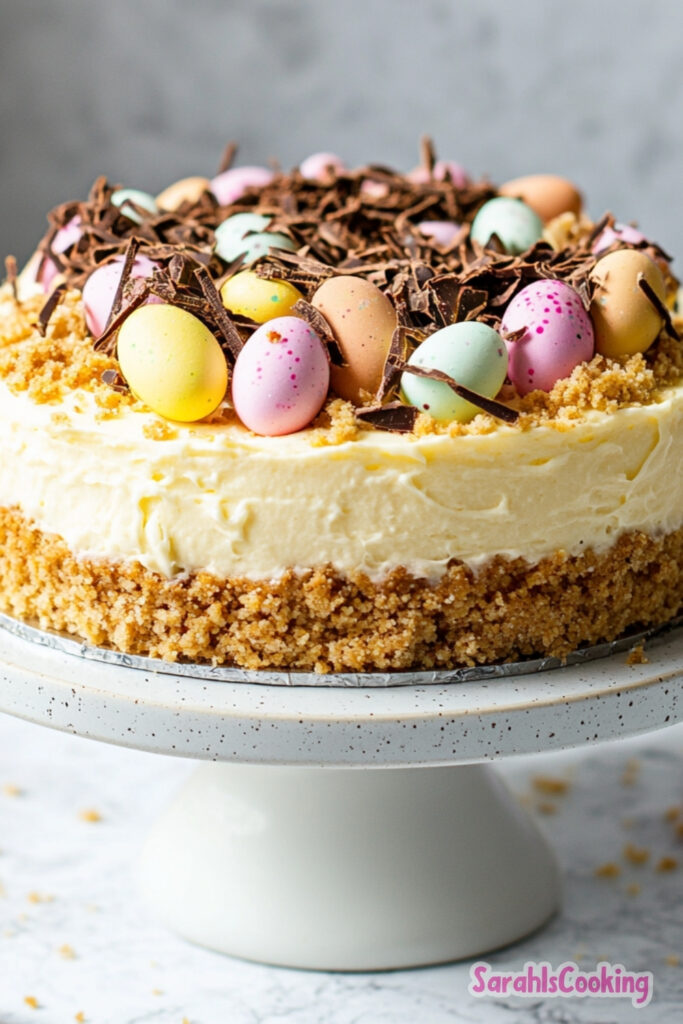
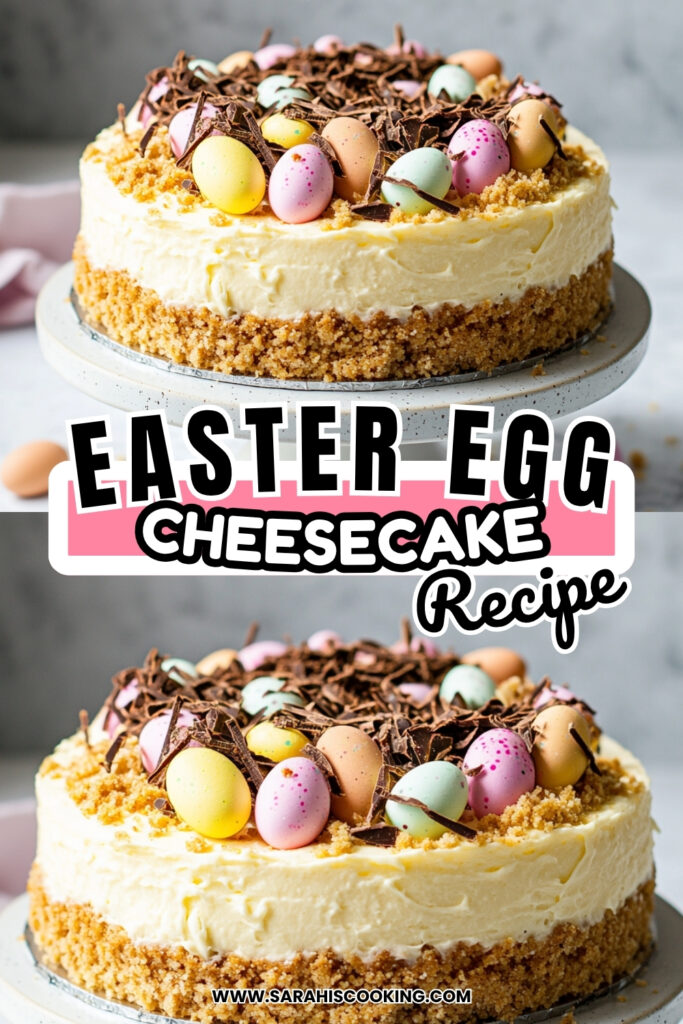
This Easter egg cheesecake is designed to be reliable, structured, and consistently creamy without requiring an oven. It sets cleanly, slices neatly, and holds its shape even after a few hours at room temperature. That balance does not happen by accident, it comes from deliberate ratios and careful handling.
I approach no-bake cheesecakes with the same precision I use in any tested bake. The goal is a filling that is light but stable, paired with a base that stays crisp yet cuts easily. This version delivers both, with minimal guesswork.
The addition of Easter eggs is not just decorative. They bring texture contrast and small bursts of chocolate throughout the filling, which makes each bite feel complete rather than overly soft.
Who This Recipe Is For
This recipe is for home bakers who want a dependable dessert that looks impressive without complicated techniques. If you prefer clear steps and predictable results, this method will feel straightforward.
It works well for beginners, but it also respects the expectations of more experienced bakers. The structure is forgiving, yet precise enough that small adjustments still matter.
If you are baking with children, this is also a strong option. The process is hands-on without being delicate, and the chilling time does most of the work.
Why This Recipe Works
The structure relies on a balanced ratio of cream cheese to whipped cream. The cream cheese provides stability and body, while the whipped cream lightens the texture so it does not feel dense or overly rich.
Icing sugar dissolves easily into the filling, preventing graininess. It also helps maintain a smooth consistency, which is essential in a no-bake dessert where there is no heat to correct texture issues.
The biscuit base uses just enough butter to bind the crumbs without making it greasy. Once chilled, it forms a firm layer that supports the filling without crumbling under pressure.
Chilling time is not optional here. The extended rest allows the fats to firm up and the structure to stabilize, which is what gives you clean slices and a set interior.
Ingredients Needed for the Recipe
Digestive biscuits - form the structural base, providing a firm but crumbly foundation that supports the cheesecake.
Butter, melted - binds the biscuit crumbs together and solidifies when chilled, creating a stable crust.
Cream cheese, softened - the primary structure of the filling, responsible for thickness, tang, and stability.
Vanilla extract - enhances flavor depth and balances the richness of the cream cheese.
Icing sugar - sweetens the filling while dissolving smoothly to maintain a silky texture.
Assorted Easter eggs - add texture variation and chocolate pockets throughout the cheesecake.
Cream - whipped to incorporate air, creating a lighter texture and helping the filling set properly.
Ingredient Insights and Function
Cream cheese must be properly softened before mixing. If it is too cold, it will not blend smoothly and can leave small lumps that are difficult to correct later. Full-fat versions work best because they provide the firmness needed for slicing.
Whipping cream to the right stage matters more than it seems. Soft peaks will not provide enough structure, while overwhipped cream becomes grainy and difficult to fold. You are aiming for firm peaks that still look smooth.
Digestive biscuits create a neutral base that does not compete with the filling. If you substitute with a sweeter biscuit, the overall dessert can become unbalanced. A small addition of pretzels can add contrast, but it slightly changes the binding ratio.
Swapping icing sugar for granulated sugar is not recommended. Granulated sugar does not dissolve fully in a cold mixture, which can lead to a gritty texture that cannot be fixed once assembled.
How to make Easter egg cheesecake?
Step 1 - Prepare the biscuit base
Crush the digestive biscuits into fine, even crumbs. The texture should resemble sand, with no large chunks remaining. This ensures the base holds together cleanly when sliced.
Add the melted butter and mix until the crumbs are evenly coated. Press the mixture firmly into a lined springform tin, making sure the surface is level and compact. Chill for at least 30 minutes to set.
Step 2 - Mix the cream cheese filling
In a large bowl, beat the softened cream cheese with the icing sugar and vanilla extract. The mixture should become smooth and slightly glossy, with no visible lumps.
Take your time at this stage. Proper mixing here prevents texture issues later, and it sets the foundation for a stable filling.
Step 3 - Whip the cream
In a separate bowl, whip the cream until firm peaks form. The cream should hold its shape when lifted but still appear smooth and not dry.
This step introduces air into the cheesecake, which gives it a lighter consistency while still allowing it to set firmly during chilling.
Step 4 - Combine the mixtures
Fold one third of the whipped cream into the cream cheese mixture. This loosens the base and makes it easier to incorporate the remaining cream without deflating it.
Gently fold in the rest of the cream along with the chopped Easter eggs. Use slow, controlled motions to maintain the air in the mixture.
Step 5 - Assemble and smooth
Pour the filling over the chilled base. Use a spatula or spoon to spread it evenly, ensuring the surface is smooth and level.
Tap the tin lightly on the counter to remove any trapped air pockets, which helps create a clean final texture.
Step 6 - Chill until set
Refrigerate the cheesecake for at least 6 to 8 hours, or overnight for best results. The filling should feel firm to the touch and hold its shape when sliced.
Once set, remove from the tin carefully and garnish with additional Easter eggs before serving.
How I Tested and Refined This Recipe
The first version I tested used less cream, which resulted in a filling that was too dense and slightly heavy. It held its shape, but the texture lacked the lightness expected from a no-bake cheesecake.
I then increased the cream and adjusted the folding method. This improved the texture significantly, but the structure became too soft when sliced after minimal chilling.
The final version balances both. The ratio of cream cheese to whipped cream was adjusted to maintain stability while still creating a smooth, airy consistency.
I also tested different chilling times. At four hours, the cheesecake appeared set but collapsed slightly when cut. At six hours and beyond, it held clean edges and maintained its structure consistently.
Common Mistakes and How to Avoid Them
Using cold cream cheese - leads to lumps that cannot be smoothed out later.
Overwhipping the cream - creates a grainy texture that affects the final consistency.
Undermixing the base - results in a crumbly crust that does not hold together.
Overmixing after adding whipped cream - deflates the mixture and reduces stability.
Skipping proper chilling time - causes the cheesecake to collapse when sliced.
Adding too many chocolate eggs - disrupts the structure and makes slicing uneven.
Make-Ahead, Storage, and Freezing Guidance
This cheesecake stores well in the refrigerator for up to 5 days. Keep it covered to prevent it from absorbing other flavors and to maintain moisture balance.
Over time, the texture becomes slightly firmer as the fats continue to set. The flavor remains stable, though the base may soften slightly after several days.
For freezing, wrap the cheesecake tightly and store for up to one month. Thaw overnight in the refrigerator to preserve the texture.
Do not reheat. This dessert is meant to be served chilled, and warming it will compromise both structure and consistency.
Tips
Line your springform tin properly to ensure easy removal without damaging the edges.
Chill the base longer if your kitchen is warm to prevent it from softening during assembly.
Chop Easter eggs into varied sizes for better texture distribution.
Use a warm knife to slice clean portions without dragging the filling.
Do not rush the folding process, slow movements preserve structure.
For quicker serving, portion into small cups instead of a full cake.
This no-bake Easter egg cheesecake is a festive, creamy delight with a buttery biscuit base and a vanilla cheesecake layer studded with chocolate Easter eggs. Perfect for Easter celebrations and fun to make with kids, this egg-citing dessert requires no oven and delivers maximum yum with minimal effort. The tamariki will love helping to crush biscuits and fold in those colorful chocolate treats!
ingredients
200g digestive biscuits
80g butter (melted)
500g cream cheese (softened)
1tsp vanilla extract
3/4cup icing sugar
250g assorted Easter eggs (such as mini eggs, half roughly chopped, half reserved for garnish)
500ml cream (cold, for whipping)
Instructions
1
Prepare the biscuit baseBlitz biscuits in a food processor into a fine crumb. Add in the melted butter and pulse until just combined.
2
Chill the basePress the biscuit mixture firmly into the base of a greased and lined springform cake tin. Set aside in the fridge to chill for at least 30 minutes.
3
Make the cheesecake fillingIn a large bowl, beat the softened cream cheese, vanilla extract and icing sugar together until smooth and creamy.
4
Whip and fold the creamIn a separate bowl, whip the cold cream until soft peaks form. Gently fold one-third of the whipped cream into the cream cheese mixture until just combined.
5
Add Easter eggs and finish fillingFold in the remaining whipped cream along with the roughly chopped Easter eggs. Mix gently until just combined—do not overmix.
6
Assemble and chillPour the cheesecake mixture over the chilled biscuit base. Use a spoon or spatula to smooth the top evenly. Chill for at least 6-8 hours or overnight until fully set.
7
Garnish and serveRemove the cheesecake from the tin. Garnish with extra whole Easter eggs just before serving. Slice and enjoy!
Nutrition Facts
Servings 10
Serving Size 1 slice
Amount Per Serving
Calories629kcal
% Daily Value *
Total Fat51gg79%
Total Carbohydrate43gg15%
Dietary Fiber1gg4%
Sugars32gg
Protein6gg12%
* Percent Daily Values are based on a 2,000 calorie diet. Your daily value may be higher or lower depending on your calorie needs.
Note
Sweet and salty twist: Add ½ cup pretzels and an extra 25g of butter into the food processor along with the biscuits for a delicious flavor contrast!
No food processor? Crush the biscuits in a resealable bag with a rolling pin for a fun, kid-friendly alternative that gets little hands involved.
Individual portions: Divide the cheesecake mixture into plastic cups or jars for faster chilling and easy serving to little hands at Easter gatherings.
Make ahead friendly: This cheesecake can be prepared up to 2 days in advance and stored covered in the fridge until ready to serve.
Storage tip: Keep leftovers covered in the refrigerator; the cheesecake stays fresh and creamy for up to 5 days.
Pin this recipe to share with your friends and followers.
Sarah
Food and Lifestyle Blogger
Hi, I’m Sarah, a home cook and baker who believes that good food doesn’t need to be complicated to be meaningful. This blog is where I share approachable, dependable recipes made with care — the kind of dishes you can come back to again and again.