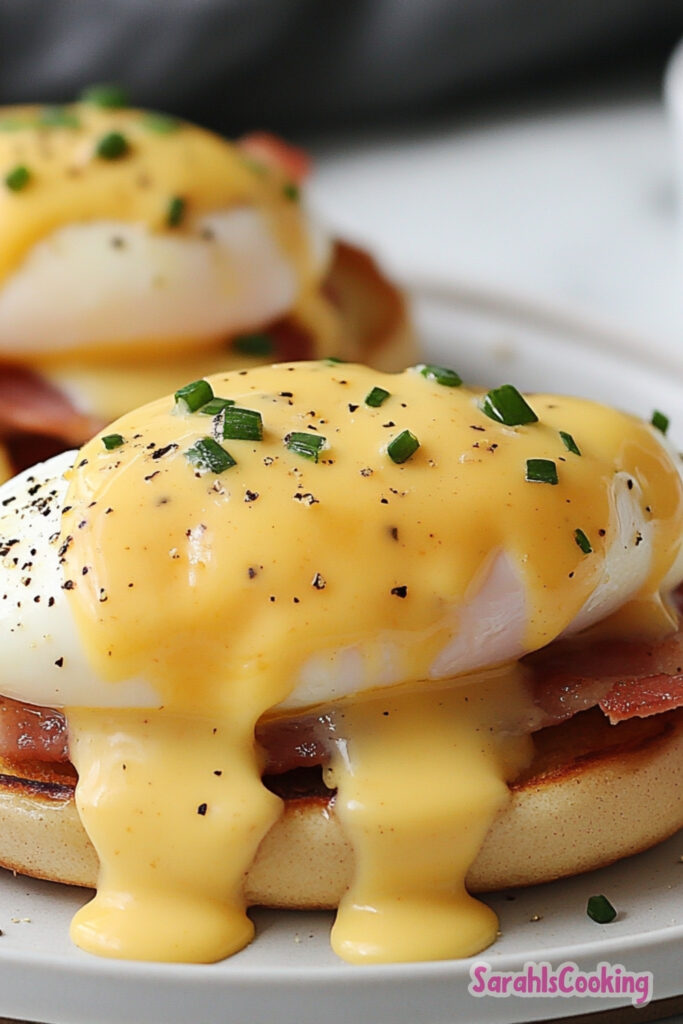
I’ve made this Classic Eggs Benedict enough times to know exactly where it can go wrong and how to keep it steady. When it works, it’s balanced, rich, and clean, not heavy or sloppy. That’s always my goal.
This version is built for consistency. The eggs hold their shape, the hollandaise stays smooth, and every layer stacks without sliding apart. Nothing here is rushed, but nothing is complicated either.
I approach this like I do baking. Controlled heat, clear timing, and small details that actually matter. Once you understand the logic, it becomes repeatable.
Ingredients Needed for the Recipe
English muffins - These act as the structural base, providing a firm yet slightly crisp layer that supports the toppings without becoming soggy.
Unsalted butter - Used in multiple stages, it adds richness, helps toast the muffins evenly, and forms the fat base of the hollandaise for proper emulsification.
Eggs - The main component, delivering a soft, runny yolk that creates a natural sauce when cut into.
Distilled white vinegar - Encourages the egg whites to coagulate quickly during poaching, which helps maintain a compact shape.
Canadian bacon - Adds a savory, slightly salty layer that balances the richness of the eggs and sauce while contributing structure.
Egg yolks - The foundation of the hollandaise, responsible for thickening and stabilizing the sauce when emulsified with butter.
Lemon juice - Brings acidity that cuts through the fat and keeps the hollandaise from tasting flat.
Cayenne pepper - Adds a subtle background heat that enhances flavor without overpowering the dish.
Salt and black pepper - Essential for seasoning each layer so the final dish doesn’t taste one-dimensional.
Fresh chives - Provide a mild onion note and a fresh finish that contrasts the richness.
How to make Classic Eggs Benedict?
Step 1 - Toast the English Muffins
Split the muffins and toast them until the edges are golden and slightly crisp. You want a firm surface that can hold moisture without collapsing.
Spread butter immediately so it melts into the surface. Keep them covered loosely with foil so they stay warm but don’t steam and soften.
Step 2 - Prepare the Poaching Water
Bring a pot of water to a gentle simmer, not a boil. Small bubbles should rise slowly, but the surface should stay calm.
Add the vinegar and let it distribute evenly. This creates the right environment for the egg whites to set quickly.
Step 3 - Prep the Eggs for Poaching
Crack each egg into a small cup. If you want cleaner edges, strain off the loose whites using a fine mesh sieve for about 30 seconds.
This step isn’t required, but it improves structure. It prevents those thin strands that make the eggs look uneven.
Step 4 - Poach the Eggs
Gently slide the eggs into the simmering water, working in batches so the temperature stays stable. Avoid stirring completely.
Cook for about 3 to 4 minutes. The whites should be set, but the yolks should still feel soft when lightly pressed.
Step 5 - Drain and Hold the Eggs
Lift the eggs out with a slotted spoon and place them on a paper towel-lined plate. This removes excess water that would otherwise dilute the dish.
Cover lightly with foil to keep them warm. Be careful not to stack or press them, or the yolks can break.
Step 6 - Make the Hollandaise Sauce
Add egg yolks, salt, lemon juice, and cayenne to a blender. Blend until the mixture turns slightly lighter and frothy.
Melt the butter until hot but not browned. Slowly stream it into the blender while running on low speed, allowing the sauce to thicken gradually.
Step 7 - Adjust the Sauce Consistency
If the sauce becomes too thick, add a small amount of hot water while blending. This loosens it without breaking the emulsion.
The final texture should be smooth and pourable, not runny and not stiff. It should coat the back of a spoon lightly.
Step 8 - Cook the Canadian Bacon
Heat butter in a skillet over medium heat. Add the bacon and cook just until warmed through and lightly crisped.
This step builds flavor without drying it out. Overcooking will make it tough and overly salty.
Step 9 - Assemble the Dish
Place the toasted muffins on a plate, then layer the bacon on top. Set one poached egg on each piece carefully.
Spoon the hollandaise over the eggs, letting it fall naturally. Finish with salt, pepper, and chives, and serve immediately.
Why This Recipe Works
The structure relies on contrast. A crisp base, a soft egg, and a smooth sauce all layered in a way that holds together when cut. Each component has a defined role.
The hollandaise is built using controlled emulsification. The steady addition of hot butter into yolks creates a stable sauce that doesn’t split easily when handled correctly.
Poaching at a low simmer prevents agitation. This keeps the eggs intact and gives them that clean, rounded shape without excess movement in the water.
The seasoning is layered, not added all at once. That’s what keeps the dish from tasting flat even though it’s rich.
How I Tested and Refined This Recipe
I started with traditional stovetop hollandaise and found it too inconsistent. Temperature control was tricky, and it split easily if I moved too fast.
Switching to the blender method made a clear difference. It gave me more control over the emulsion and produced a smoother, more reliable texture.
I tested poaching at different temperatures. Boiling water caused the eggs to break apart, while water that was too cool made them spread out too much.
The gentle simmer was the turning point. It allowed the whites to set without movement, which made the eggs look cleaner and cook more evenly.
I also experimented with straining the eggs. Skipping it worked fine for taste, but straining improved the final shape enough that I kept it as an optional step.
Timing each component together took a few rounds. Holding the eggs warm without overcooking them was the last piece that made everything come together.
Common Mistakes and How to Avoid Them
Using boiling water for poaching - This breaks the eggs apart. Keep the water at a gentle simmer.
Pouring butter too quickly into the hollandaise - This can cause the sauce to split instead of emulsify.
Overcooking the eggs - Leads to firm yolks instead of a soft, flowing center.
Skipping proper draining - Excess water dilutes both the texture and flavor of the final dish.
Letting hollandaise sit too long - It thickens and can lose its smooth consistency.
Over-toasting the muffins - Makes them too hard and difficult to cut through cleanly.
Crowding the poaching pot - Drops the temperature and causes uneven cooking.
Make-Ahead, Storage, and Freezing Guidance
Poached eggs can be made ahead and stored in cold water in the refrigerator for up to one day. This keeps them from overcooking while holding their shape.
To reheat, place them in warm water for about 1 to 2 minutes. Avoid boiling water here, or the yolks will firm up too much.
Hollandaise does not store well. It’s best made fresh, as refrigeration causes it to solidify and separate when reheated.
The assembled dish should not be stored. Once combined, the textures change quickly, and it loses its balance.
Freezing is not recommended. The eggs and sauce both break down in texture after thawing.
Tips
Use fresh eggs for tighter whites and better shape during poaching.
Keep all components warm, not hot, before assembling.
Blend hollandaise just until combined to avoid over-thinning.
Work in small batches when poaching to maintain water temperature.
Season lightly at each stage instead of all at once.
Serve immediately for the best texture contrast.
Use a slotted spoon with a gentle lift to protect the yolks.
Put on your chef's hat and whip up an Eggs Benedict so luxurious, you'll feel like you're dining at a 5-star hotel! This brunch classic features toasted English muffins topped with Canadian bacon, perfectly poached eggs with runny yolks, and a velvety blender hollandaise sauce. Whether it's for a special brunch or a relaxing Sunday morning, you'll feel like a pro serving up this timeless dish.
ingredients
For the English Muffins
4 English muffins (split)
2tablespoons unsalted butter (for spreading)
For the Poached Eggs
8large eggs (fresh)
1tablespoon distilled white vinegar (helps eggs hold shape)
For the Bacon
1tablespoon unsalted butter
8slices Canadian bacon (or regular bacon, ham steak, or prosciutto)
For the Hollandaise Sauce
3 egg yolks (large)
1/4teaspoon salt
1 1/2tablespoons lemon juice (from 1 fresh lemon)
1pinch cayenne pepper (optional, for subtle heat)
12tablespoons unsalted butter (1½ sticks, melted)
For Serving
salt and freshly ground black pepper (to taste)
fresh chives (finely chopped, for garnish)
Instructions
1
Toast the English MuffinsSplit the English muffins and toast until golden. Spread with butter, place on a plate, and cover with foil to keep warm.
2
Poach the EggsBring 6 cups of water and the vinegar to a gentle simmer in a large saucepan. For neater eggs, crack each egg into a fine mesh sieve over a bowl and let the watery part of the white drain for about 30 seconds. Gently transfer each egg into a small cup or ramekin, then carefully slide the eggs (four at a time) into the simmering water.
Avoid stirring the water while eggs are cooking to prevent breaking them apart.
3
Cook the Poached EggsCook eggs for 3 to 4 minutes, until the whites are set but yolks remain runny. Use a slotted spoon to transfer them to a paper towel-lined plate to drain. Cover with foil to keep warm, being careful not to puncture the yolks.
Eggs can be poached a day ahead and stored in ice-cold water in the refrigerator; reheat gently in simmering water before serving.
4
Make the Hollandaise SauceCombine egg yolks, salt, lemon juice, and cayenne pepper in a blender. Blend for about 20 seconds until frothy. Melt butter in a small pot over medium heat until bubbling but not browned. With the blender running on low, slowly pour the hot butter in a thin stream through the center knob into the egg mixture. Keep blending until the sauce thickens.
If sauce is too thick, blend in 1-2 tablespoons of hot water to reach desired consistency.
5
Cook the BaconIn a medium skillet, melt butter over medium heat. Cook Canadian bacon (or chosen protein) until warmed through and slightly crisp, about 1 minute per side.
If using regular bacon, cook in a dry pan until fully crisp and browned.
6
Assemble the Eggs BenedictPlace English muffin halves on serving plates. Top each half with a slice of bacon (fold prosciutto or regular bacon if needed), followed by a poached egg. Generously spoon hollandaise sauce over the top. Finish with a pinch of salt, a few grinds of pepper, and a sprinkle of chives.
Serve immediately while warm for best results.
Nutrition Facts
Servings 4
Serving Size 1 serving (2 English muffin halves with toppings)
Amount Per Serving
Calories690kcal
% Daily Value *
Total Fat58gg90%
Saturated Fat33gg165%
Trans Fat0gg
Cholesterol475mgmg159%
Sodium1120mgmg47%
Potassium165mgmg5%
Total Carbohydrate27gg9%
Dietary Fiber0gg0%
Sugars1gg
Protein17gg34%
Calcium 162mg mg
Iron 2mg mg
* Percent Daily Values are based on a 2,000 calorie diet. Your daily value may be higher or lower depending on your calorie needs.
Note
Perfect poached eggs: Use the freshest eggs possible and strain them through a fine mesh sieve to remove watery whites for a neater shape.
Hollandaise rescue: If your sauce breaks or curdles, add 1 tablespoon of hot water and blend vigorously to re-emulsify.
Make-ahead tip: Poached eggs can be prepared up to 1 day ahead. Store in ice-cold water in the fridge, then gently reheat in simmering water for 1-2 minutes before serving.
Variations: Try Eggs Florentine (with spinach), Eggs Royale (with smoked salmon), or Eggs Blackstone (with tomato and bacon).
Pin this recipe to share with your friends and followers.
Sarah
Food and Lifestyle Blogger
Hi, I’m Sarah, a home cook and baker who believes that good food doesn’t need to be complicated to be meaningful. This blog is where I share approachable, dependable recipes made with care — the kind of dishes you can come back to again and again.