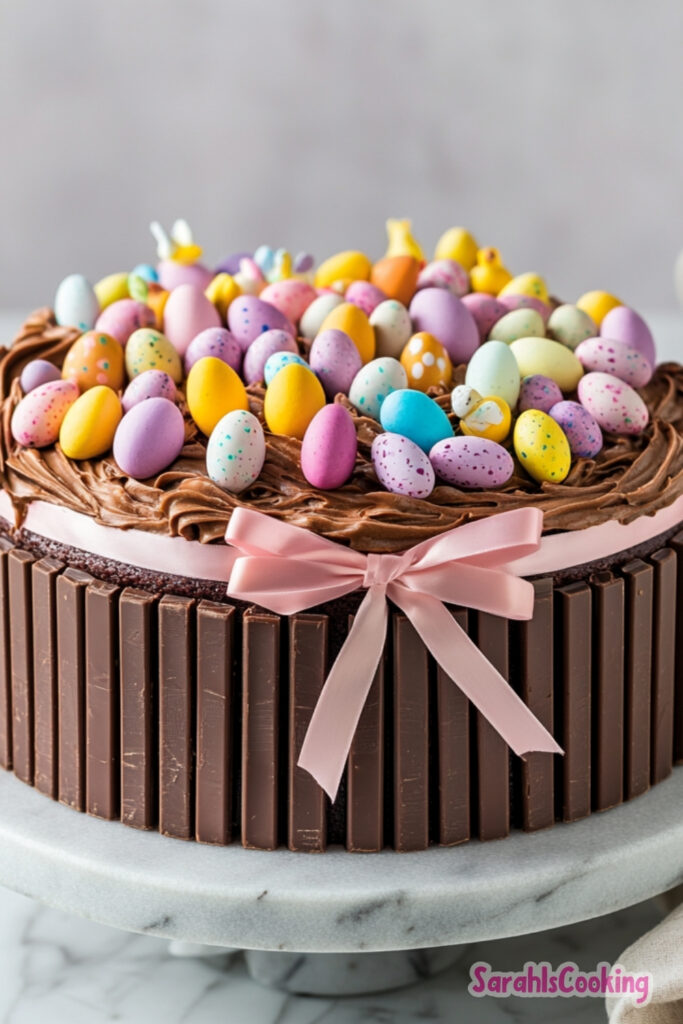
This Chocolate Easter Cake is a rich, foolproof chocolate sponge with buttercream, KitKat sides, and mini eggs. Easy steps, reliable results, and a stunning Easter centerpiece.
This is one of those cakes that looks far more complicated than it actually is. The structure is straightforward, the method is reliable, and the result is consistently impressive. It delivers a soft chocolate sponge, balanced sweetness, and a clean finish every time.
I’ve made variations of this cake for years, especially around Easter, and it never fails to hold its shape or flavor. The combination of a classic sponge with a simple butter icing creates a stable base for decoration without becoming overly heavy.
What matters here is control. Temperature, mixing, and timing are all simple but intentional. When those are respected, this cake comes together smoothly and holds up beautifully as a centerpiece.
The decoration may feel playful, but the foundation is solid baking. That’s what makes it dependable, not just pretty.
Ingredients Needed for the Recipe
3 large eggs - provide structure and stability while helping the sponge rise and hold air during baking.
175 g self-raising flour - forms the base structure and includes leavening to ensure an even, consistent rise.
175 g caster sugar - dissolves easily, creating a smooth batter and contributing to moisture retention.
175 g softened butter - adds richness, tenderness, and helps create a soft crumb.
1½ level tsp baking powder - boosts lift to ensure the sponge rises evenly without becoming dense.
40 g cocoa powder - provides the chocolate flavor while slightly drying the batter for structure balance.
4 tbsp boiling water - activates and blooms the cocoa, deepening flavor and smoothing texture.
200 g softened butter (for icing) - creates a creamy base for butter icing and helps it spread easily.
400 g icing sugar - thickens and stabilizes the butter icing, giving it structure and sweetness.
2-4 tbsp milk - loosens the icing to a spreadable consistency without breaking its structure.
18 x 2-finger KitKats - form a stable outer wall that supports decoration and adds texture contrast.
4 x 100 g bags chocolate mini eggs - provide topping weight and visual appeal while adding crunch.
Ribbon - helps secure the KitKats and reinforces the structure of the outer layer.
Easter chicks - decorative elements that complete the visual theme without affecting structure.
How to make Chocolate Easter Cake?
Step 1 - Prepare the Oven and Tins
Preheat the oven to 180°C (350°F) or gas mark 4. This ensures consistent heat from the moment the batter goes in, which is essential for even rising.
Grease and line two 20 cm sandwich tins. Proper lining prevents sticking and allows the sponge to release cleanly without tearing.
Step 2 - Mix the Base Batter
In a large bowl, combine eggs, flour, sugar, butter, and baking powder. Beat until the mixture becomes smooth and slightly thickened.
The batter should look uniform with no streaks of butter. Avoid overmixing, as this can tighten the crumb and reduce softness.
Step 3 - Bloom the Cocoa
In a separate bowl, mix cocoa powder with boiling water, adding it gradually. You are aiming for a thick, smooth paste.
This step deepens the chocolate flavor and removes any dry bitterness. The paste should be glossy and lump-free before adding.
Step 4 - Combine Chocolate and Batter
Fold the cocoa paste into the main batter until evenly incorporated. The mixture should turn a consistent chocolate color.
Work gently but thoroughly to avoid streaks while maintaining air in the batter for a light texture.
Step 5 - Bake the Sponges
Divide the batter evenly between the prepared tins and level the tops. This ensures even baking and uniform layers.
Bake for 20 to 25 minutes. The cakes are ready when they spring back lightly and pull away from the sides.
Step 6 - Cool Completely
Allow the cakes to cool in their tins briefly before transferring to a wire rack. Full cooling is critical before icing.
If the sponge is even slightly warm, the butter icing will melt and lose structure.
Step 7 - Prepare the Butter Icing
Beat softened butter and icing sugar together until smooth and pale. This step should create a light, spreadable texture.
Add milk gradually until the icing loosens slightly. It should hold its shape but spread without resistance.
Step 8 - Assemble the Cake Layers
Place the first sponge on your serving plate or cake board. Spread about one-third of the icing evenly across the surface.
Set the second sponge on top and gently press to level. The layers should sit stable without sliding.
Step 9 - Crumb Coat the Cake
Use the remaining icing to cover the entire cake in a thin layer. This does not need to be perfect.
This layer helps the KitKats adhere and traps loose crumbs for a cleaner finish.
Step 10 - Add the KitKat Border
Break the KitKats into single fingers and press them around the sides of the cake. They should stick easily to the icing.
Place them close together to form a continuous wall. This creates both structure and visual impact.
Step 11 - Secure with Ribbon
Wrap a ribbon around the cake and tie it snugly. This reinforces the KitKat layer and prevents shifting.
It also adds a clean, finished look without requiring additional decoration skills.
Step 12 - Decorate the Top
Pour the mini eggs onto the top of the cake, spreading them evenly. They should sit naturally within the border.
Add Easter chicks as desired. Keep the weight centered so the cake remains balanced.
Why This Recipe Works
The ratio of butter, sugar, and flour is balanced to create a sponge that is soft but stable. The inclusion of both self-raising flour and baking powder ensures consistent lift without collapse.
Blooming the cocoa separately improves both flavor and texture. It integrates smoothly into the batter and prevents dry pockets that can weaken the crumb.
The butter icing is intentionally simple and slightly firm. It acts more as a structural adhesive than a soft frosting, which is important for holding the outer chocolate layer.
The KitKat border is not just decorative. It reinforces the cake’s sides, helping maintain shape even when topped with heavier decorations like mini eggs.
How I Tested and Refined This Recipe
I tested several versions of this sponge using different cocoa integration methods. Mixing cocoa directly into the batter resulted in a slightly uneven texture and muted flavor.
Blooming the cocoa with hot water consistently produced a richer taste and smoother crumb. That change alone made the biggest difference in final quality.
I also adjusted the icing consistency multiple times. Too stiff and it tore the sponge during spreading, too soft and it failed to hold the KitKats in place.
The final balance allows easy spreading while still supporting decoration. I tested both chilled and room temperature assembly, and room temperature consistently gave better adhesion.
Even the number of KitKats was intentional. Too few left gaps, while too many created uneven pressure around the cake. The final count creates a snug, stable ring.
Common Mistakes and How to Avoid Them
Using cold butter - leads to uneven mixing and a dense sponge. Always soften properly.
Skipping cocoa blooming - results in weaker chocolate flavor and dry patches.
Overmixing the batter - tightens the crumb and reduces rise.
Opening the oven too early - can cause the sponge to sink in the center.
Icing a warm cake - melts the buttercream and destabilizes the structure.
Spacing KitKats unevenly - creates gaps that weaken the outer support.
Adding too much milk to icing - makes it too soft to hold decorations.
Not leveling the layers - leads to a tilted and unstable final cake.
Make-Ahead, Storage, and Freezing Guidance
This cake is best made the day before serving. The sponge settles slightly overnight, improving texture and making slicing cleaner.
Stored in an airtight container, it will stay fresh for up to three days. The exterior chocolate may soften slightly but will hold its shape.
For freezing, only freeze the sponge layers. Wrap them tightly and store for up to one month without loss of quality.
Defrost at room temperature before assembling. Avoid refrigerating the fully decorated cake, as condensation can affect texture.
Tips
Weigh your batter evenly between tins for consistent layers.
Use a serrated knife to level cakes if needed.
Chill the cake briefly before decorating for easier handling.
Press KitKats gently, not forcefully, to avoid cracking.
Use a turntable if available for smoother icing application.
Keep decorations balanced to prevent leaning.
Slice with a sharp knife warmed slightly for cleaner cuts.
This lovely traditional Classic Easy Chocolate Easter Cake is so simple to make, it's crazy! A beautiful chocolate sponge cake with chocolatey butter icing, all encased in a circle of KitKats, finally topped with Mini Eggs and traditional Easter chicks. It looks really fancy and makes a stunning centerpiece – an easy showstopper for sure! Perfect for Easter celebrations, bake sales, or any special occasion.
ingredients
Cake
3large eggs (free-range)
175g self-raising flour (6 oz)
175g caster sugar (6 oz)
175g softened butter (6 oz, plus extra for greasing)
1½tsp baking powder (level)
40g cocoa powder (1½ oz)
4tbsp boiling water
Butter Icing
200g softened butter
400g icing sugar (sieved)
2-4tbsp milk (to soften consistency)
Decoration
18pieces 2-finger KitKat bars (broken into singles)
Preheat & PreparePreheat the oven to 180°C (160°C fan / Gas Mark 4 / 350°F). Grease and line 2 x 20cm (8-inch) sandwich cake tins with baking paper.
7-inch tins also work well
2
Make Cake BatterIn a large mixing bowl, beat together the eggs, flour, caster sugar, softened butter, and baking powder until smooth and well combined.
Can be done by hand or with electric mixer
3
Add Cocoa PastePut the cocoa powder in a separate small bowl and add the boiling water a little at a time to make a stiff paste. Add this paste to the cake mixture and combine thoroughly.
This intensifies the chocolate flavor
4
BakeDivide the mixture evenly between the prepared tins, level the tops, and bake for 20-25 minutes, or until the cakes are springy to the touch and shrinking slightly from the sides of the tins.
Test with a skewer - it should come out clean
5
CoolLeave the cakes to cool in the tins for 10 minutes, then turn out onto a wire rack to cool completely before decorating.
Approximately 1 hour total cooling time
Butter Icing
6
Make ButtercreamCream the softened butter with the sieved icing sugar until smooth and fluffy. Add milk, 1 tablespoon at a time, to soften the consistency for easier spreading.
Use electric mixer or mix by hand
Assembly & Decoration
7
Layer CakesPlace the first cake layer on your serving plate or cake board. Spread approximately one-third of the buttercream evenly over the top.
Trim the flatter cake layer for a neat stack if needed
8
Stack & FrostPlace the second cake layer on top. Roughly cover the entire cake with the remaining buttercream - don't worry about perfection as it will be covered!
A thin crumb coat is ideal
9
Add KitKatsBreak KitKat bars into single fingers and press them gently around the outside edge of the cake, standing upright. They will stick to the buttercream.
Work carefully to create an even circle
10
Add RibbonTie the ribbon around the KitKats in a neat bow to secure them and add a decorative finish.
Approx. 75cm ribbon needed
11
Top with TreatsPile the chocolate mini eggs on top of the cake and add Easter chick decorations. Slice and serve!
Store leftovers in an airtight container
Nutrition Facts
Servings 12
Serving Size 1 slice (1/12 of cake)
Amount Per Serving
Calories567kcal
% Daily Value *
Total Fat32gg50%
Saturated Fat19gg95%
Trans Fat1gg
Cholesterol131mgmg44%
Sodium279mgmg12%
Potassium216mgmg7%
Total Carbohydrate71gg24%
Dietary Fiber3gg12%
Sugars52gg
Protein6gg12%
Calcium 51mg mg
Iron 2mg mg
* Percent Daily Values are based on a 2,000 calorie diet. Your daily value may be higher or lower depending on your calorie needs.
Note
Butter tip: For perfectly softened butter, chop into cubes and soak in lukewarm water for 3 minutes, then drain [[2]].
Icing consistency: If buttercream is too thick, add a few drops of water or milk to loosen.
Make ahead: Bake sponges a day ahead; decorate on serving day for freshest results.
Freezing: Freeze undecorated sponges wrapped in baking paper + foil for up to 3 months. Thaw, then ice and decorate.
Variations: Swap KitKats for other chocolate bars; use golden eggs, Creme Eggs, or mixed candies for different looks.
Storage: Keep in an airtight container at room temperature for up to 3 days for best flavor and texture.
Pin this recipe to share with your friends and followers.
Sarah
Food and Lifestyle Blogger
Hi, I’m Sarah, a home cook and baker who believes that good food doesn’t need to be complicated to be meaningful. This blog is where I share approachable, dependable recipes made with care — the kind of dishes you can come back to again and again.