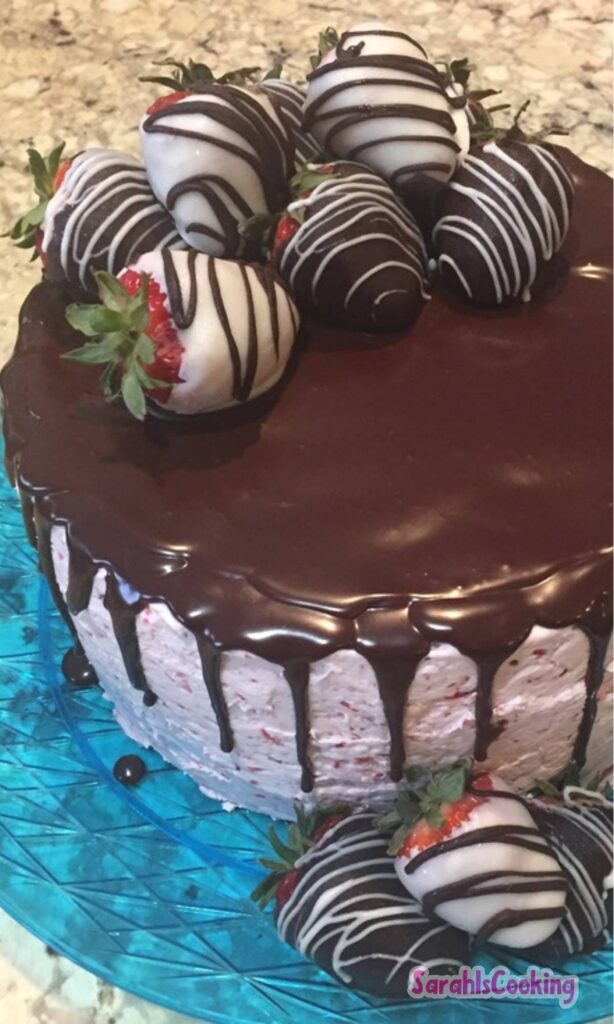
This chocolate strawberry cake is one of those recipes I come back to when I need something that looks special but still behaves predictably in the kitchen. It has enough visual impact for celebrations, yet it is grounded in techniques I trust and ingredients that pull their weight.
I developed this cake with real-world conditions in mind. It needs to slice cleanly, stay moist in the refrigerator, and still taste balanced instead of cloying. Every choice in this recipe, from the fat used to the way the cocoa is treated, serves one of those goals.
The combination itself is familiar, but the execution matters. Chocolate layers that stay tender when chilled, a strawberry buttercream that tastes like fruit instead of candy, and a ganache that sets without turning brittle. When all three work together, the cake feels intentional rather than overdone.
Who This Recipe Is For
This recipe is for home bakers who want consistency more than shortcuts. If you like understanding why a method works and how to fix it when it doesn’t, this cake will suit you well.
It’s also for anyone baking ahead for a birthday, holiday, or event where refrigeration is unavoidable. The cake is designed to be served cold or just slightly cool without sacrificing texture.
If you enjoy layer cakes but don’t want to gamble on fragile crumbs or frosting that melts on contact, this is a reliable option that rewards careful execution.
Why This Recipe Works
The chocolate cake layers rely on oil instead of butter, which keeps them soft even after chilling. Butter firms up in the refrigerator, but oil stays liquid, so the crumb remains tender instead of tight.
Blooming the cocoa powder with hot liquid deepens the chocolate flavor without adding more sugar. It also helps the cocoa disperse evenly, preventing dry pockets that can dull the final texture.
The strawberry buttercream uses real fruit in a controlled amount. Enough to bring freshness and acidity, but not so much that it loosens the frosting or overwhelms the chocolate.
Ingredients Needed for the Recipe
- Unsweetened cocoa powder - Provides the primary chocolate flavor; blooming it enhances depth without bitterness.
- Hot water or coffee - Activates the cocoa and intensifies flavor; coffee adds richness without tasting like coffee.
- All-purpose flour - Gives structure while staying tender when properly measured.
- Granulated sugar - Sweetens and helps retain moisture in the cake layers.
- Baking soda and baking powder - Work together for balanced lift and an even crumb.
- Salt - Sharpens both chocolate and strawberry flavors.
- Neutral oil - Keeps the cake soft when chilled and prevents dryness.
- Buttermilk - Adds acidity for rise and tenderness, plus subtle tang.
- Eggs - Bind the batter and contribute to structure without heaviness.
- Vanilla extract - Rounds out both chocolate and fruit notes.
- Unsalted butter - Forms the base of the strawberry buttercream.
- Confectioners’ sugar - Sweetens and stabilizes the frosting.
- Fresh strawberries - Provide natural strawberry flavor and light acidity.
- Semi-sweet chocolate - Creates a smooth ganache with balanced sweetness.
- Heavy cream - Emulsifies the ganache for a glossy finish.
How to make Chocolate Strawberry Cake?
Step 1 - Prepare the pans and oven
Preheat the oven to 350°F and prepare three 9-inch round cake pans. Grease them thoroughly and line the bottoms with parchment to ensure clean release.
If you use cake strips, soak and wrap them now. They help the layers bake evenly and reduce doming, which makes stacking easier later.
Step 2 - Bloom the cocoa
Sift the cocoa powder into a bowl to remove any lumps. Pour the hot water or coffee over it and whisk until smooth.
Let this mixture cool slightly. This step deepens the chocolate flavor and ensures the cocoa fully dissolves into the batter.
Step 3 - Mix the dry ingredients
In a large bowl, whisk together the flour, sugar, baking soda, baking powder, and salt. This distributes the leavening evenly and prevents uneven rise.
Take a moment to break up any clumps. Dry ingredients should look uniform before adding liquids.
Step 4 - Combine the wet ingredients
Whisk the oil, buttermilk, eggs, and vanilla into the cooled cocoa mixture until fully combined.
The mixture should look glossy and cohesive, with no visible streaks of oil or egg.
Step 5 - Make the batter and bake
Pour the cocoa mixture into the dry ingredients and whisk just until combined. Stop as soon as no dry pockets remain.
Divide the batter evenly between the pans and bake until the centers spring back lightly when touched. Cool completely before removing from the pans.
Step 6 - Prepare the strawberry buttercream
Beat the butter and salt until very light and fluffy. This step matters more than most people think and sets the texture of the frosting.
Gradually add the sugar, alternating with small amounts of chopped strawberries. Scrape the bowl often to keep the frosting even.
Step 7 - Assemble the cake
Level the cake layers if needed. Place the first layer on your serving plate and spread frosting evenly to the edges.
Stack the remaining layers and frost the outside. Chill the cake to firm up the buttercream before adding ganache.
Step 8 - Make and apply the ganache
Heat the cream until just simmering and pour it over the chopped chocolate. Let it sit, then whisk until smooth.
Pour the ganache over the chilled cake, allowing it to drip naturally. Decorate with fresh strawberries and chill until set.
Visual and Texture Cues to Watch For
The baked cake layers should look matte on top and pull slightly from the pan edges. A glossy surface usually signals underbaking.
The buttercream should feel light and airy, not dense. If it looks greasy, the butter was too warm or under-whipped.
Ganache should flow slowly, not run. If it races down the sides, it is too warm and needs a few minutes to cool.
Common Mistakes and How to Fix Them
Dense cake layers usually come from overmixing or excess flour. Weighing ingredients helps prevent both issues.
Runny frosting often means the strawberries were too wet. Always pat them dry and add gradually.
Ganache that breaks or looks grainy is often overheated. Gentle heat and patience make a difference here.
Substitutions and What to Expect
Frozen strawberries work well in the frosting if thawed and dried thoroughly. Expect a slightly softer texture.
Strawberry jam can replace fresh berries, but the flavor will be sweeter and less fresh. Reduce sugar slightly to compensate.
Dairy-free substitutions are possible, but texture may change. Use baking-style dairy-free butter and full-fat alternatives.
Tips
- Weigh flour for accuracy and repeatable results.
- Use room temperature eggs and buttermilk for smoother batter.
- Chill the cake before adding ganache to control the drip.
- Pat strawberries dry to prevent loose frosting.
- Stop mixing as soon as the batter comes together.
Make-Ahead, Storage, and Freezing
The fully assembled cake keeps well in the refrigerator for up to five days. Cover it to prevent drying or absorbing odors.
Cake layers can be baked and frozen in advance. Wrap tightly and thaw in the refrigerator before frosting.
For freezing a whole cake, skip the ganache until serving day. This preserves the clean finish and texture.