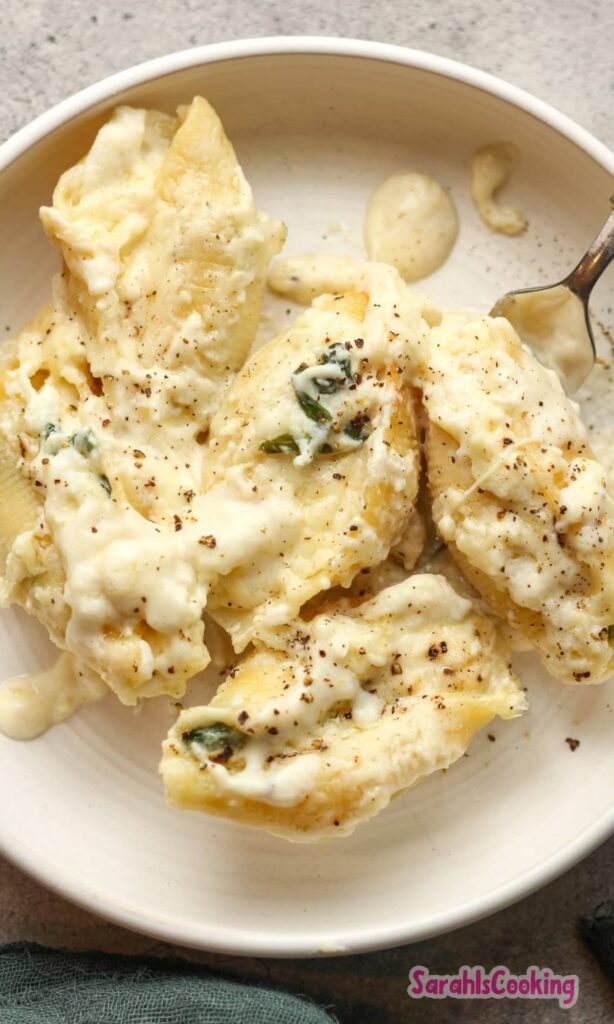
This section introduces Chicken Alfredo Stuffed Shells as a structured, comfort-driven baked pasta designed to deliver reliable results through balanced richness, clear preparation steps, and repeatable technique.
It establishes confidence by emphasizing tested proportions, familiar ingredients, and a methodical assembly that prioritizes texture, creaminess, and stability during baking.
Include a brief personal note from Sarah about why this dish became a dependable option for gatherings or weeknight comfort, reinforcing trust through lived experience rather than storytelling.
Who This Recipe Is For
This section defines the recipe as ideal for intermediate home cooks who want a meal that feels elevated but follows a logical, forgiving process.
Clarify that the recipe suits family dinners, make-ahead situations, and anyone looking for a filling baked pasta that holds structure without complicated techniques.
Reassure readers that small imperfections during stuffing or assembly do not affect the final outcome, reducing hesitation and encouraging confidence.
Why Chicken Alfredo Stuffed Shells Works
This section explains the culinary logic behind combining shredded chicken, a multi-cheese filling, and a flour-thickened Alfredo sauce to create layers that remain creamy while still holding shape.
Highlight how the balance of milk and cream prevents heaviness, while eggs bind the filling so it bakes into a cohesive texture rather than becoming loose.
Emphasize testing insights such as sauce thickness, proper seasoning at each stage, and how evenly cooked chicken distributes flavor throughout the dish.
Ingredient Insights and Function
This section breaks down how each ingredient contributes structurally: ricotta for softness, cottage cheese for moisture balance, mozzarella for melt, and Parmesan for depth and salinity.
Explain how butter and flour create the base of a stable Alfredo, while garlic and herbs provide contrast to the richness without overwhelming the dish.
Use this area to reinforce Sarah’s precision mindset, explaining that measured ratios—not guesswork—are what keep the filling creamy and the sauce smooth.
Step-by-Step Success Guidance for Chicken Alfredo Stuffed Shells
Preparation Phase
Outline the importance of cooking the pasta shells just to tender, allowing them to remain strong enough to hold filling without tearing.
Explain sequencing: cook and cool the chicken, mix the filling evenly, and prepare the sauce last so it stays fluid for assembly.
Reference Sarah’s experience with preparing components ahead of time to make assembly calm and organized.
Execution Phase
Focus on visual and textural cues such as a smooth, lump-free sauce, evenly filled shells, and a baking dish arranged tightly enough to prevent drying.
Reinforce that whisking continuously during sauce preparation prevents graininess and ensures a velvety consistency.
Where helpful, readers who prefer an even faster prep workflow can rely on techniques similar to those used in Shredded Chicken Recipe for efficient protein preparation.
Finishing and Doneness Cues
Explain that the dish is ready when the sauce bubbles at the edges, the cheese is lightly golden, and the center feels set but still soft.
Encourage resting time after baking so the filling firms slightly, allowing cleaner servings and better texture.
Highlight testing observations that overbaking leads to tightening of the sauce, making timing an important quality factor.
How I Tested and Refined Chicken Alfredo Stuffed Shells
This section details iterative adjustments such as balancing milk-to-cream ratios, refining cheese quantities, and ensuring the filling remained moist without collapsing.
Discuss how small variations in sauce thickness or chicken temperature affected the final bake, leading to the current dependable method.
Use Sarah’s scientific perspective to explain how repeat testing ensured the recipe performs consistently across different kitchens.
Common Mistakes When Making Chicken Alfredo Stuffed Shells
Identify predictable issues like overcooking pasta shells, allowing the sauce to become too thick before assembly, or under-seasoning individual components.
Explain why these errors occur and how layering seasoning and monitoring texture prevents a flat or heavy result.
Reduce reader risk by reinforcing that the sauce should remain pourable before baking, as it thickens further in the oven.
Make-Ahead, Storage, and Freezing Guidance
This section clarifies that the dish can be assembled up to a day in advance, making it practical for entertaining or structured weekly meal planning.
Explain how refrigeration affects sauce consistency and why adding a small amount of milk or cream during reheating restores its smooth texture.
For serving balance, suggest pairing with something bright and crisp like Cucumber Salad, which offsets the richness without adding complexity.
When building a full meal spread, this dish fits naturally alongside lighter starters such as Bruschetta Recipe, helping create contrast in both texture and flavor.