
This carrot cake cheesecake brings together two classic desserts in a way that feels thoughtful rather than excessive. Moist carrot cake layers frame a creamy cheesecake center, creating a dessert that is rich but still balanced enough to serve comfortably at a family gathering.
I spent time refining the proportions so the cheesecake layer supports the cake rather than overpowering it. The result is a structured, sliceable cake with distinct layers and a clean flavor that doesn’t feel heavy.
The whipped cream cheese frosting ties everything together. It’s lighter than traditional frosting, which matters when the center of the cake already carries plenty of richness.
When prepared carefully, this is a reliable centerpiece dessert that looks impressive while still behaving like a well-tested home recipe.
Who This Recipe Is For
This recipe is designed for home bakers who want a show-stopping dessert but still expect clear, dependable instructions. If you enjoy baking layered cakes and are comfortable managing a few steps, this recipe will feel manageable.
It works especially well for holidays, spring gatherings, and occasions when you want something memorable on the dessert table. The layered structure makes it feel special without requiring advanced pastry techniques.
Even intermediate bakers will find this approachable. The method focuses on stable mixing techniques, careful cooling, and simple assembly.
Why This Recipe Works
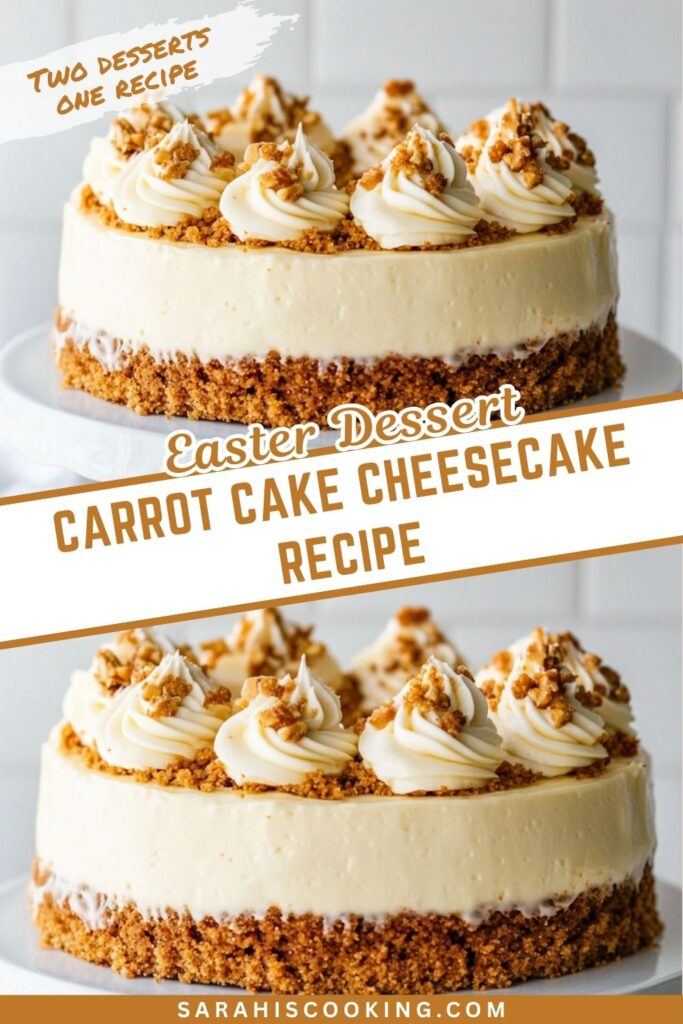
The success of this carrot cake cheesecake comes down to balance. Carrot cake is naturally moist, while cheesecake is dense and creamy. If the proportions lean too far in either direction, the final cake becomes difficult to slice or overly heavy.
Here the cheesecake layer is baked separately and fully chilled before assembly. This creates a stable center that behaves almost like a firm custard layer inside the cake.
The carrot cake layers rely on both oil and butter. Oil keeps the crumb soft and moist, while butter adds depth and structure. Using both creates a cake that stays tender without collapsing.
The spices are intentional as well. Cinnamon provides warmth while nutmeg adds depth without overpowering the carrots. The goal is flavor clarity rather than a heavy spice profile.
Ingredients Needed for the Recipe
- Cream cheese – The backbone of both the cheesecake layer and the frosting. Its fat content creates the dense, creamy texture that holds the cake together.
- Granulated sugar – Sweetens the cheesecake while also helping create a smooth, stable batter.
- Sour cream – Adds moisture and a subtle tang to the cheesecake, which prevents the filling from tasting overly sweet.
- Eggs – Provide structure in both the cheesecake and the carrot cake layers. They help the batters set properly during baking.
- All-purpose flour – Gives the carrot cake its structure and crumb stability so the layers can support the cheesecake center.
- Brown sugar – Adds moisture and a deeper caramel flavor that pairs naturally with carrots and warm spices.
- Baking soda and baking powder – Work together to lift the cake layers and keep the crumb light despite the dense batter.
- Salt – Balances sweetness and sharpens the flavor of the spices.
- Cinnamon – The primary spice that defines the carrot cake flavor.
- Nutmeg – Adds subtle warmth and depth without overpowering the cake.
- Vegetable oil – Keeps the carrot cake exceptionally moist and tender.
- Unsalted butter – Contributes flavor richness and helps support the cake structure.
- Vanilla extract – Rounds out the sweetness and deepens the flavor of both the cake and frosting.
- Grated carrots – Provide moisture, sweetness, and the signature carrot cake texture.
- Walnuts or pecans – Optional, but they add contrast and a gentle crunch to the soft cake crumb.
- Powdered sugar – Sweetens and thickens the cream cheese frosting.
- Heavy cream – Lightens the frosting so it spreads easily and feels airy against the dense layers.
Ingredient Insights and Function
Brick-style cream cheese is essential for this recipe. Tub-style spreadable cream cheese contains stabilizers and extra moisture, which can prevent the cheesecake from setting properly.
Full-fat sour cream is worth using here. Lower-fat versions tend to introduce excess water into the cheesecake batter, which can affect both texture and baking time.
The carrot cake batter intentionally uses both granulated and brown sugar. Brown sugar contains molasses, which increases moisture and contributes a subtle caramel note that complements the spices.
If you prefer cake flour, it can technically be used. However, the crumb will be lighter and less sturdy, which can make stacking the cheesecake layer slightly more difficult.
Vegetable oil works best because it remains liquid at room temperature. This keeps the carrot cake soft even after refrigeration.
Nuts are optional but helpful for contrast. Toasting them lightly before adding to the batter deepens their flavor and keeps them crisp inside the cake.
How to make Carrot Cake Cheesecake?
Step 1 – Prepare the Cheesecake Pan
Preheat the oven to 325°F and line the bottom of an 8-inch springform pan with parchment paper. This ensures the cheesecake releases cleanly once chilled.
Lock the pan around the parchment so excess paper extends beneath the base. This simple step makes removing the cheesecake much easier later.
Step 2 – Mix the Cheesecake Batter
Beat softened cream cheese and sugar until smooth and completely lump free. Scrape the bowl thoroughly so no dense pockets remain.
Add sour cream and vanilla, mixing on low speed until fully incorporated. The batter should look silky and uniform.
Step 3 – Incorporate the Eggs
Add eggs one at a time while mixing on low speed. Each egg should disappear into the batter before adding the next.
Avoid whipping air into the mixture. Gentle mixing produces a smoother cheesecake texture.
Step 4 – Bake the Cheesecake Layer
Pour the batter into the prepared springform pan and bake for about 35 minutes. The center should still have a slight jiggle while the edges appear set.
This gentle bake prevents the cheesecake from becoming overly firm.
Step 5 – Cool and Chill the Cheesecake
Allow the cheesecake to cool in the pan for about ten minutes. Run a knife carefully around the edge to loosen it from the sides.
Once it reaches room temperature, cover and refrigerate for at least four hours. Overnight chilling is even better.
Step 6 – Prepare the Carrot Cake Batter
Preheat the oven to 350°F and grease two 8-inch cake pans. Line the bottoms with parchment for easy removal.
Whisk together flour, sugars, leavening agents, salt, cinnamon, and nutmeg until the mixture is evenly combined.
Step 7 – Add Fats and Eggs
Stir in the oil and melted butter until a thick batter forms. Make sure no dry flour pockets remain.
Add eggs one at a time, then mix in vanilla, grated carrots, and nuts if using.
Step 8 – Bake the Cake Layers
Divide the batter evenly between the prepared pans. Bake for about 40 minutes, or until a toothpick inserted into the center comes out mostly clean.
Allow the cakes to cool briefly before turning them onto a rack to cool completely.
Step 9 – Prepare the Frosting
Beat cream cheese and softened butter until smooth and creamy. The mixture should appear light and fully blended.
Add vanilla, salt, and powdered sugar, then finish with a splash of heavy cream. Beat briefly until the frosting becomes airy and spreadable.
Step 10 – Assemble the Cake
Level the cake layers if necessary. Place the first carrot cake layer on a serving platter and spread a layer of frosting across the top.
Carefully invert the chilled cheesecake onto the frosted layer, then add another thin layer of frosting before topping with the second cake layer.
Step 11 – Frost and Finish
Spread frosting over the top and sides of the cake until smooth. A thin crumb coat followed by a final layer works best.
Chill briefly before slicing so the layers hold their shape.
How I Tested and Refined This Recipe
Early versions of this recipe used equal thickness for the carrot cake and cheesecake layers. While it looked impressive, the finished slices were heavy and difficult to cut cleanly.
I reduced the cheesecake height and adjusted the carrot cake batter so the final ratio felt balanced. This made the cake easier to slice while still highlighting the creamy center.
Another challenge was moisture control. Too much oil made the cake fragile when stacked with the cheesecake layer.
Introducing melted butter alongside the oil solved that issue. The butter added flavor and structure while the oil maintained softness.
I also experimented with frosting thickness. Traditional cream cheese frosting felt too dense with the cheesecake layer.
The final whipped version includes a touch of cream, which keeps the frosting light enough to complement the cake rather than overwhelm it.
Common Mistakes and How to Avoid Them
- Overmixing the cheesecake batter – This introduces excess air and increases the risk of cracks during baking.
- Skipping the chilling time – The cheesecake must fully chill before stacking or it will collapse during assembly.
- Using pre-shredded carrots – These are too dry and thick for proper texture in the cake.
- Removing the cheesecake from the pan too early – It needs time to set before being handled.
- Overbaking the carrot cake layers – Dry cake makes the entire dessert feel heavy.
- Frosting warm cake layers – This causes the frosting to melt and slide.
- Adding too much powdered sugar to the frosting – Excess sweetness overwhelms the balance of the cake.
Make-Ahead, Storage, and Freezing Guidance
This cake benefits from advance preparation. The cheesecake layer can be baked one to two days before assembly and kept chilled in the refrigerator.
Once assembled, the cake stores well for up to five days in the refrigerator. The flavor actually improves slightly after the first day as the layers settle together.
If freezing, wrap individual slices tightly in plastic wrap and place them in an airtight container. They freeze well for up to two months.
To serve, thaw slices overnight in the refrigerator. Allow them to sit at room temperature for about fifteen minutes before eating so the texture softens slightly.
Tips
- Grate carrots finely so they blend smoothly into the cake batter.
- Toast nuts lightly before adding them for deeper flavor.
- Use room temperature eggs for smoother batter mixing.
- Chill the cheesecake overnight for the cleanest assembly.
- Level cake layers for stable stacking.
- Apply a thin crumb coat before the final frosting layer.
- Use a sharp knife dipped in warm water for neat slices.
- Refrigerate the cake briefly before serving for cleaner cuts.

Carrot Cake Cheesecake Recipe
Description
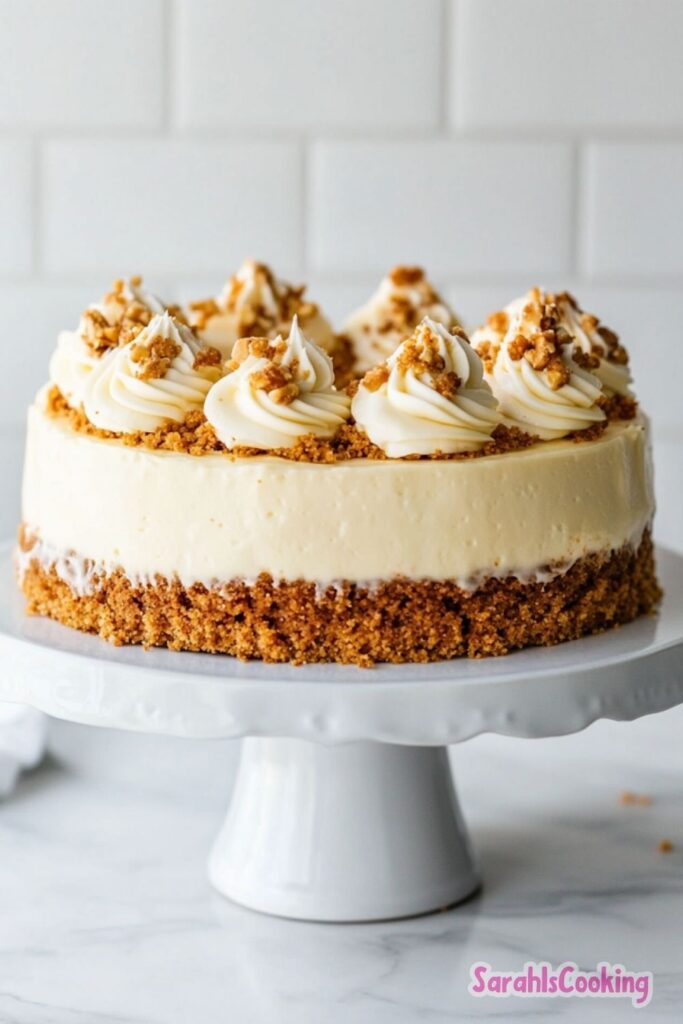
This Carrot Cake Cheesecake consists of two layers of moist carrot cake sandwiched around a rich cheesecake. It's topped with a whipped cream cheese icing for one decadent, but surprisingly refreshing, dessert. An absolute showstopper perfect for Easter or any dessert table.
ingredients
For Cheesecake
For Carrot Cake
For Frosting
Instructions
Cheesecake
Preheat & Prepare
Preheat oven to 325F (165C) and line the bottom of an 8” round springform pan with parchment paper.Mix Batter
Beat cream cheese and sugar until smooth. Add sour cream and vanilla. Add eggs one at a time on low speed.Do not over-beat eggs to prevent cracking.Bake & Chill
Bake for 35 minutes. Cool 10 minutes, run knife around edge. Cool to room temp, cover, and chill for at least 4 hours.Preferably overnight.
Carrot Cake
Preheat & Prepare
Preheat oven to 350F (175C). Grease, flour, and line two 8” round cake pans.Mix Dry & Wet
Whisk flour, sugars, leaveners, salt, and spices. Add oil and melted butter. Stir in eggs, vanilla, carrots, and nuts.Bake
Divide batter into pans. Bake for 40 minutes. Cool in pans 10-15 minutes, then invert to cooling rack.
Frosting
Beat
Beat butter and cream cheese until creamy. Add vanilla and salt.Finish
Gradually add powdered sugar. Add heavy cream and beat on high for 15-30 seconds until light.
Assembly
Layer
Place one cake layer on platter, cover with frosting. Invert cheesecake on top, cover with frosting, top with final cake layer.Frost & Serve
Spread frosting over entire cake. Store covered in refrigerator.
Nutrition Facts
Servings 14
Serving Size 1 slice
- Amount Per Serving
- Calories 780kcal
- % Daily Value *
- Total Fat 48gg74%
- Saturated Fat 22gg111%
- Trans Fat 0gg
- Cholesterol 180mgmg60%
- Sodium 520mgmg22%
- Potassium 350mgmg10%
- Total Carbohydrate 85gg29%
- Dietary Fiber 2gg8%
- Sugars 65gg
- Protein 9gg18%
- Calcium 10% mg
- Iron 8% mg
* Percent Daily Values are based on a 2,000 calorie diet. Your daily value may be higher or lower depending on your calorie needs.
Note
- Making in Advance: The cheesecake needs to chill for at least 4 hours (preferably overnight) before assembling.
- Carrot Prep: Peel carrots before grating for a cleaner looking cake. Use a food processor for ease.
- Storage: Store remaining cake covered in the refrigerator for up to 5 days.
- Nutrition: Nutrition information is automatically calculated, so should only be used as an approximation.