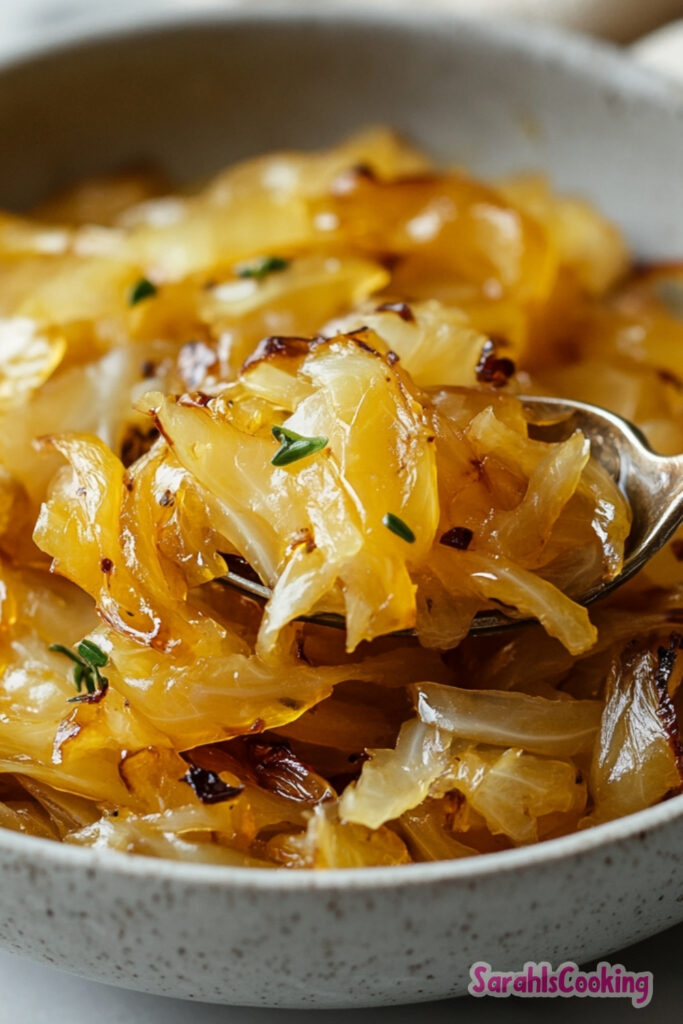
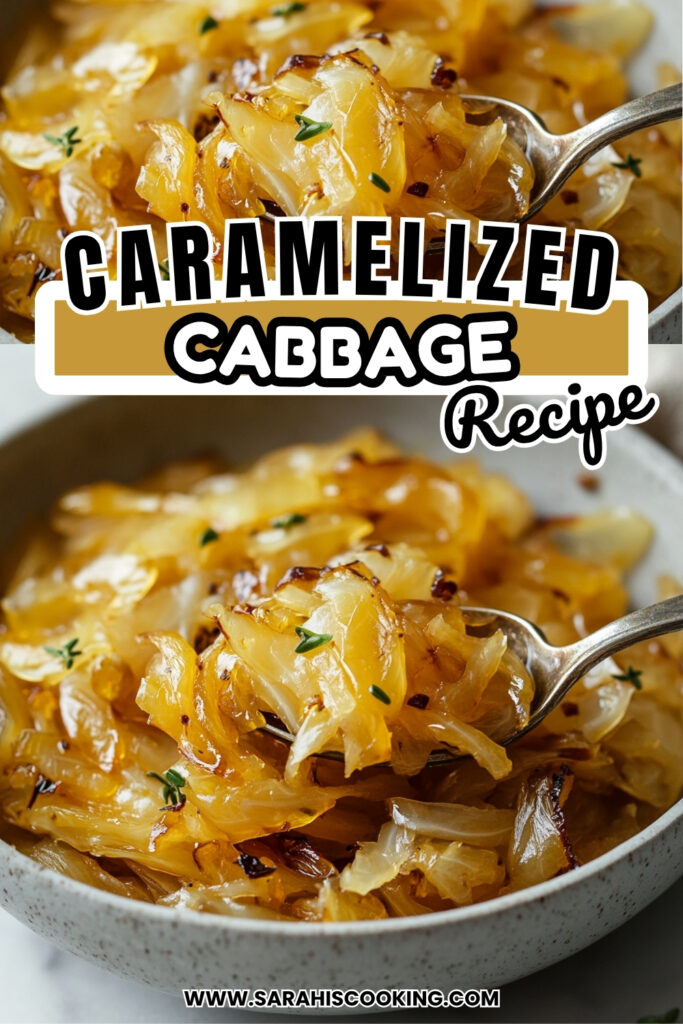
Caramelized cabbage that’s tender, sweet, and tangy. This easy stovetop recipe delivers deep flavor in 35 minutes with simple ingredients.
This caramelized cabbage is a simple side dish that delivers far more flavor than you would expect from a humble vegetable. It cooks down into something tender, lightly sweet, and balanced with just enough acidity to keep each bite interesting.
I approach this recipe with the same mindset I use in baking. Precision matters, even in something as rustic as cabbage. Heat control, timing, and restraint are what turn this from soft sautéed cabbage into deeply caramelized, golden strands.
The process is straightforward and repeatable. With a handful of ingredients and about thirty-five minutes, you get a side that pairs well with both hearty mains and lighter meals without competing for attention.
Ingredients Needed for the Recipe
Olive oil - Provides the base fat for even heat distribution and prevents sticking while allowing the cabbage to soften gradually without burning.
Green cabbage - The structural core of the dish, its natural sugars develop during cooking, transforming from slightly bitter to sweet and tender.
Kosher salt - Draws out moisture early in the cooking process, helping the cabbage soften and concentrate flavor as it cooks down.
Black pepper - Adds subtle warmth and contrast, balancing the sweetness that develops during caramelization.
Apple cider vinegar - Introduces acidity that cuts through the richness and enhances the natural sweetness of the cabbage.
Unsalted butter (optional) - Adds a final layer of richness and gloss, rounding out the flavor without overpowering the dish.
How to make Caramelized Cabbage?
Step 1 - Heat the Oil Properly
Place a large skillet over medium heat and add the olive oil. Let it warm until it shimmers slightly, which signals it is hot enough to start cooking without scorching the cabbage.
If the oil is too cool, the cabbage will steam instead of caramelize. If it is too hot, the edges will burn before the interior softens, so this initial temperature matters.
Step 2 - Add and Season the Cabbage
Add the thinly sliced cabbage to the skillet and immediately season it with salt and pepper. Toss well so every strand is lightly coated with oil and seasoning.
This step begins the moisture release process. The salt helps draw out water, which softens the cabbage and prepares it for even browning later.
Step 3 - Soften and Start Browning
Cook the cabbage for about 15 minutes, stirring occasionally rather than constantly. Letting it sit briefly between stirs allows the edges to develop color.
You are looking for softened strands with light golden spots. If the pan looks dry, resist the urge to add more oil too soon. The cabbage will continue releasing moisture.
Step 4 - Add Vinegar and Deepen Flavor
Drizzle the apple cider vinegar over the cabbage once it has softened and begun browning. Stir to distribute it evenly across the pan.
Continue cooking for another 10 minutes, allowing the liquid to evaporate while the cabbage deepens in color. This is where the balance between sweet and tangy develops.
Step 5 - Finish with Butter (Optional)
In the final few minutes, add the butter if using. Stir until it melts completely and coats the cabbage, adding a slight sheen and richer mouthfeel.
Watch closely at this stage. The cabbage should be fully caramelized with golden brown edges, not dark or bitter. Remove from heat once the color looks even and appetizing.
Step 6 - Serve Immediately
Transfer the cabbage to a serving dish while it is still hot. The texture is best right off the stove when it is tender but not overly soft.
At this point, the flavor should be balanced with gentle sweetness, light acidity, and a subtle savory depth from the caramelization process.
Why This Recipe Works
This recipe works because it respects the natural composition of cabbage. The vegetable contains inherent sugars that, when exposed to steady heat, break down and create a deeper, more complex flavor profile.
The ratio of fat to cabbage is intentional. Too much oil would make the dish greasy and inhibit browning, while too little would lead to uneven cooking and sticking. The measured amount ensures controlled caramelization.
Timing is equally important. The initial softening phase allows moisture to escape gradually, while the later stage focuses on building color and flavor. Skipping either phase leads to a less developed result.
The addition of apple cider vinegar is not just for taste. It sharpens the overall profile, preventing the sweetness from becoming flat. This contrast is what makes the dish feel complete rather than one-dimensional.
How I Tested and Refined This Recipe
I tested this recipe multiple times with slight variations in heat and timing. Early versions cooked too quickly, which resulted in uneven browning and occasional bitterness on the edges.
One adjustment was lowering the heat slightly and extending the cooking time. This allowed the cabbage to soften more evenly before caramelization began, improving both texture and flavor.
I also experimented with when to add the vinegar. Adding it too early interrupted browning, while adding it too late made the flavor feel disconnected. The final method adds it once the cabbage has already started to brown.
The butter was another variable. In some tests, it was added too soon and blended into the oil without adding much richness. Adding it at the end created a noticeable difference in both texture and finish.
The final version reflects these adjustments. Each step has a purpose, and removing or altering one tends to show up clearly in the final dish.
Common Mistakes and How to Avoid Them
Cooking over high heat - leads to burnt edges before the cabbage softens properly.
Stirring too frequently - prevents caramelization by not allowing contact with the pan.
Adding vinegar too early - stops the browning process and results in softer, less flavorful cabbage.
Overcrowding the pan - traps steam and prevents proper caramelization.
Skipping the salt at the beginning - reduces moisture release and slows down the cooking process.
Using thick cabbage slices - leads to uneven cooking and inconsistent texture.
Adding too much oil - creates a greasy texture instead of a lightly coated finish.
Make-Ahead, Storage, and Freezing Guidance
This cabbage can be made ahead and stored in the refrigerator for up to five days. Allow it to cool to room temperature before transferring it to an airtight container.
Over time, the texture will soften slightly as it continues to absorb moisture. The flavor remains strong, though the edges lose some of their initial crispness.
Freezing is not recommended. The cabbage becomes overly soft and watery after thawing, losing the structure that makes this dish appealing.
To reheat, use a skillet over medium heat rather than a microwave. This helps restore some of the original texture and brings back a bit of the caramelized flavor.
Tips
Slice the cabbage as thinly as possible for even cooking and better texture.
Use a wide skillet to maximize surface area and encourage browning.
Let the cabbage sit undisturbed for short intervals to build color.
Taste near the end and adjust salt only if needed.
Add a pinch of extra pepper at the end for a brighter finish.
Serve immediately for the best texture and flavor balance.
This caramelized cabbage recipe transforms humble green cabbage into a tender, golden-brown side dish with a beautiful balance of sweet and tangy flavors. The natural sugars in cabbage caramelize on the stovetop, creating a rich, nutty depth that's enhanced by a splash of apple cider vinegar. Simple, wholesome, and ready in just 35 minutes, this versatile side pairs perfectly with everything from meatloaf to veggie burgers.
ingredients
2tablespoons olive oil
1medium head green cabbage (cored and sliced into thin strips)
1/2teaspoon kosher salt
1/4teaspoon black pepper
1tablespoon apple cider vinegar
1tablespoon unsalted butter (optional, for richer flavor)
Instructions
1
Heat olive oil in a large skillet over medium heat until shimmering.
2
Add the sliced cabbage to the skillet, sprinkle with salt and pepper, and stir to coat with oil.
3
Cook the cabbage, stirring occasionally, until it starts to soften and brown on the edges, about 15 minutes.
4
Drizzle apple cider vinegar over the cabbage and stir to combine. Continue cooking until the cabbage is fully caramelized and golden brown, about 10 more minutes.
5
If desired, add butter in the last few minutes of cooking for a richer flavor. Stir until melted and well incorporated.
6
Serve immediately as a side dish or use in salads, wraps, and grain bowls.
Nutrition Facts
Servings 4
Serving Size 1/4 of recipe
Amount Per Serving
Calories145kcal
% Daily Value *
Total Fat10gg16%
Saturated Fat3gg15%
Trans Fat0gg
Cholesterol8mgmg3%
Sodium332mgmg14%
Potassium420mgmg12%
Total Carbohydrate13gg5%
Dietary Fiber6gg24%
Sugars7gg
Protein3gg6%
Calcium 75mg mg
Iron 1mg mg
* Percent Daily Values are based on a 2,000 calorie diet. Your daily value may be higher or lower depending on your calorie needs.
Note
Vegan option: Skip the butter or substitute with coconut oil or ghee for a Paleo-friendly version.
Extra flavor: Add minced garlic, caraway seeds, or a pinch of red pepper flakes while cooking.
Meal prep: This cabbage stores well in an airtight container in the fridge for up to 5 days.
Don't freeze: The soft texture doesn't hold up well to freezing and thawing.
Lower sodium: Reduce salt and boost flavor with fresh herbs like thyme or parsley.
Pin this recipe to share with your friends and followers.
Sarah
Food and Lifestyle Blogger
Hi, I’m Sarah, a home cook and baker who believes that good food doesn’t need to be complicated to be meaningful. This blog is where I share approachable, dependable recipes made with care — the kind of dishes you can come back to again and again.