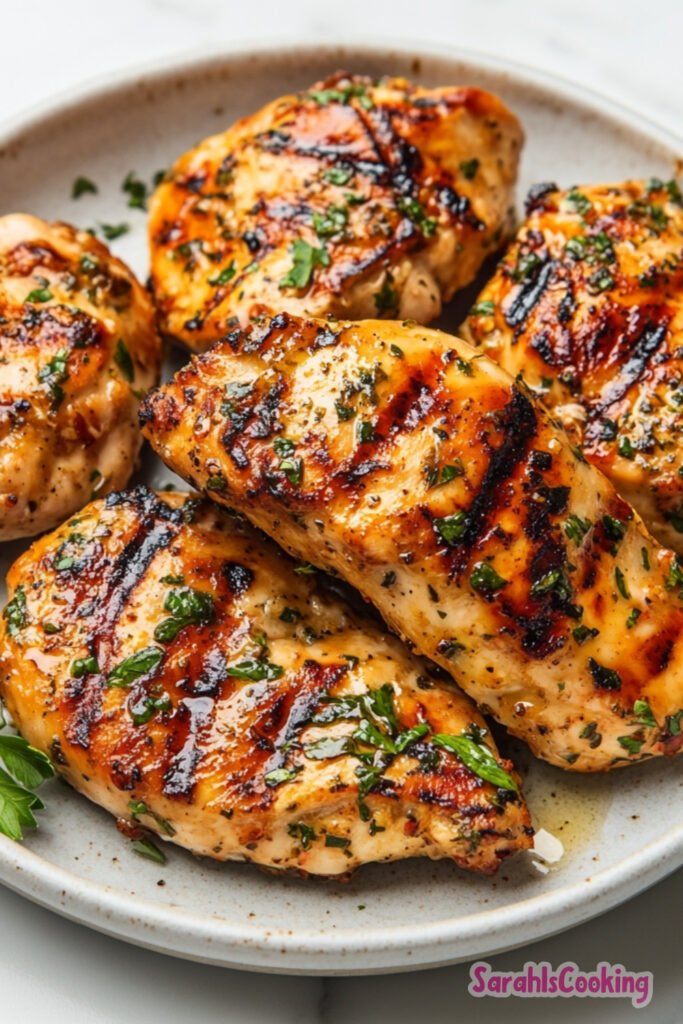
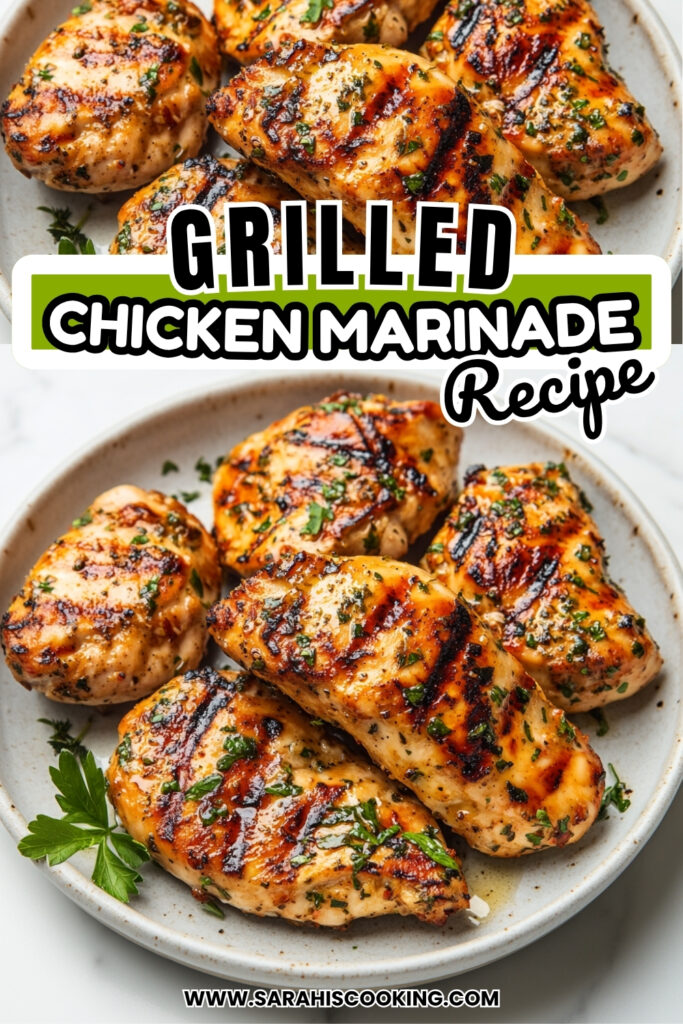
Best grilled chicken marinade with olive oil, vinegar, garlic, and Parmesan for juicy, flavorful results every time.
This grilled chicken marinade is built for consistency. It delivers tender, juicy chicken with balanced flavor every single time, without relying on complicated steps or hard-to-find ingredients.
I approach marinades with the same mindset I use in baking. Every ingredient must serve a purpose, and every step must be repeatable. This one checks both boxes with ease.
The result is chicken that grills evenly, holds moisture, and develops a savory, lightly tangy crust that feels complete on its own or layered into meals.
Ingredients Needed for the Recipe
Chicken (2 pounds, thighs, breasts, or tenders) - the protein base; different cuts affect moisture retention and cook time but all benefit from this marinade structure.
Olive oil (1/3 cup) - acts as the fat carrier; helps distribute flavors evenly and prevents the chicken from drying out during high-heat grilling.
White wine vinegar (3 tablespoons) - provides acidity; gently tenderizes the meat while adding brightness that cuts through richness.
Parmesan cheese (2 ounces, shredded) - adds umami depth and a light crust; melts slightly and clings to the surface during grilling.
Garlic (2 cloves, minced) - builds aromatic intensity; infuses the marinade with savory sharpness that penetrates the meat.
Sugar (2 teaspoons) - balances acidity; also supports light caramelization on the grill for better browning.
Italian seasoning (2 teaspoons) - delivers herb complexity; creates a layered flavor profile without requiring multiple individual herbs.
Black pepper (1 teaspoon) - adds gentle heat and depth; enhances the overall savory profile.
Salt (1 teaspoon) - essential for seasoning; begins the process of drawing moisture and then redistributing it back into the chicken.
How to make Grilled Chicken Marinade?
Step 1 - Combine the Marinade
Add olive oil, white wine vinegar, Parmesan, garlic, sugar, Italian seasoning, black pepper, and salt into a large zip-top bag. Massage the bag gently until the mixture looks evenly combined and slightly thickened.
You should see the cheese suspended throughout the liquid rather than settling at the bottom. This ensures every piece of chicken will be coated evenly later.
Step 2 - Add the Chicken
Place the chicken into the bag and press out excess air before sealing. Massage the marinade into the chicken, making sure every surface is coated and no pieces are stuck together.
This step matters more than it seems. Uneven coating leads to uneven seasoning and inconsistent texture after grilling.
Step 3 - Marinate Properly
Refrigerate the chicken for at least 4 hours, though 8 hours is ideal. During this time, the acid and salt begin to restructure the proteins, improving tenderness and flavor absorption.
Avoid going much beyond 8 hours, especially with smaller cuts, as too much acid exposure can begin to soften the texture excessively.
Step 4 - Preheat the Grill
Bring your grill to medium-high heat, around 450°F. A properly preheated grill ensures immediate searing, which locks in juices and prevents sticking.
If the grill is not hot enough, the chicken will release moisture too quickly and lose structure before it develops a proper crust.
Step 5 - Grill the Chicken
Remove the chicken from the marinade and place it directly on the grill grates. Cook for 5 to 7 minutes per side, depending on thickness.
Flip only once if possible. Look for a golden, lightly charred exterior and an internal temperature of 165°F for doneness.
Step 6 - Rest Before Serving
Transfer the chicken to a plate and let it rest for 5 to 10 minutes. This allows the juices to redistribute and prevents them from spilling out when sliced.
Skipping this step results in dry slices even if the chicken was perfectly cooked on the grill.
Why This Recipe Works
This marinade succeeds because it balances fat, acid, and seasoning in a way that supports both flavor and structure. The olive oil carries fat-soluble flavors while protecting the surface during grilling.
The vinegar provides controlled acidity, enough to tenderize but not overwhelm. Combined with salt, it helps the chicken retain moisture instead of losing it under heat.
The addition of Parmesan is intentional. It contributes umami and forms a subtle crust that enhances texture without burning when used at the right ratio.
Sugar plays a quiet but important role. It balances sharpness and promotes browning, giving the chicken a more appealing finish without turning it sweet.
How I Tested and Refined This Recipe
I started by testing different acid sources, including lemon juice and apple cider vinegar. Both worked, but the flavor was either too sharp or too fruity for a balanced grilled result.
White wine vinegar gave the cleanest acidity. It brightened the chicken without competing with the garlic and herbs, which made the overall flavor more stable.
I also adjusted the oil ratio multiple times. Too little oil caused sticking and uneven cooking, while too much diluted the seasoning. The final ratio coats the chicken without making it greasy.
Parmesan took a few rounds to get right. Finely grated versions disappeared into the marinade, while larger shreds clung better and created a more noticeable texture after grilling.
The marinating time was another key variable. At under 4 hours, the flavor stayed mostly on the surface. At over 10 hours, the texture began to soften too much, especially in thinner cuts.
The final version reflects these adjustments. It is not just flavorful but stable, meaning it performs the same way across different cuts and grill setups.
Common Mistakes and How to Avoid Them
Skipping marination time - leads to surface-level flavor only; allow at least 4 hours for proper absorption.
Over-marinating - breaks down texture; avoid exceeding 8 hours for best results.
Using a cold grill - prevents proper searing; always preheat fully before adding chicken.
Not removing excess marinade - causes flare-ups and uneven browning; let excess drip off before grilling.
Overcooking - dries out the chicken; use a thermometer and pull at 165°F.
Cutting immediately after grilling - releases juices; always rest before slicing.
Make-Ahead, Storage, and Freezing Guidance
You can prepare the marinade up to 2 days in advance and store it in the refrigerator. Keep it well mixed, as the cheese may settle over time.
Marinated raw chicken should be cooked within 24 hours for best texture. Beyond that, the acid begins to affect the structure too much.
Cooked grilled chicken stores well in the refrigerator for up to 4 days. The texture remains tender, though the surface will soften slightly after storage.
For freezing, cook the chicken first, then cool completely before sealing. Freeze for up to 2 months. Reheat gently to avoid drying out, preferably covered in a low oven.
Tips
Pound thicker chicken breasts to even thickness for consistent cooking.
Use freshly grated Parmesan for better melt and flavor distribution.
Let the chicken sit at room temperature for 15 minutes before grilling.
Oil the grill grates lightly to prevent sticking.
Double the marinade and cook extra chicken for meal prep.
Transform ordinary chicken into an extraordinary meal with this ultimate grilled chicken marinade. Designed for tender, juicy results every time, this recipe balances bright acidity from white wine vinegar with savory depth from Parmesan and garlic. It’s simple enough for a weeknight dinner yet impressive enough for weekend gatherings. Just combine pantry staples, let it marinate, and grill to perfection for a sweet, savory, and indulgent flavor profile that will have everyone asking for seconds.
Ingredients
The Marinade
1/3cup olive oil
3Tablespoons white wine vinegar
2ounces Parmesan cheese (shredded)
2cloves garlic (minced)
2teaspoons sugar
2teaspoons Italian seasoning
1teaspoon black pepper
1teaspoon salt
The Protein
2pounds boneless, skinless chicken breasts (thighs or tenders also work)
Instructions
1
Prepare the MarinadeIn a gallon-sized zip-top bag, combine the olive oil, white wine vinegar, shredded Parmesan cheese, minced garlic, sugar, Italian seasoning, black pepper, and salt. Seal the bag and massage gently to ensure all ingredients are well combined.
2
Marinate the ChickenAdd the chicken pieces to the bag with the marinade. Press out as much air as possible before sealing tightly. Massage the bag to ensure the chicken is fully coated in the mixture.
3
ChillPlace the bag in the refrigerator. For best results, marinate for 4 to 8 hours. This allows the flavors to penetrate the meat and the acids to tenderize it effectively.
Do not exceed 24 hours as the vinegar may break down the texture too much.
4
Preheat GrillWhen ready to cook, preheat your grill to medium-high heat, approximately 450°F (230°C).
5
Grill the ChickenRemove chicken from the marinade and discard any excess liquid. Place chicken directly on the hot grill grates. Cook for 5-7 minutes per side, flipping once, until the internal temperature reaches 165°F (74°C).
Use an instant-read thermometer for accuracy.
6
Rest and ServeTransfer the cooked chicken to a plate or cutting board. Let it rest for 5-10 minutes before slicing or serving. This helps retain the juices for a moist final dish.
Nutrition Facts
Servings 4
Serving Size 1/4 of recipe
Amount Per Serving
Calories320kcal
% Daily Value *
Total Fat20g31%
Saturated Fat4.5g23%
Cholesterol85mg29%
Sodium780mg33%
Potassium450mg13%
Total Carbohydrate3g1%
Sugars2g
Protein32g64%
* Percent Daily Values are based on a 2,000 calorie diet. Your daily value may be higher or lower depending on your calorie needs.
Note
For meal prep, double the marinade recipe and prepare multiple batches of chicken. This marinade works excellently on chicken thighs for a richer flavor or wings for a crispy appetizer.
Pin this recipe to share with your friends and followers.
Sarah
Food and Lifestyle Blogger
Hi, I’m Sarah, a home cook and baker who believes that good food doesn’t need to be complicated to be meaningful. This blog is where I share approachable, dependable recipes made with care — the kind of dishes you can come back to again and again.