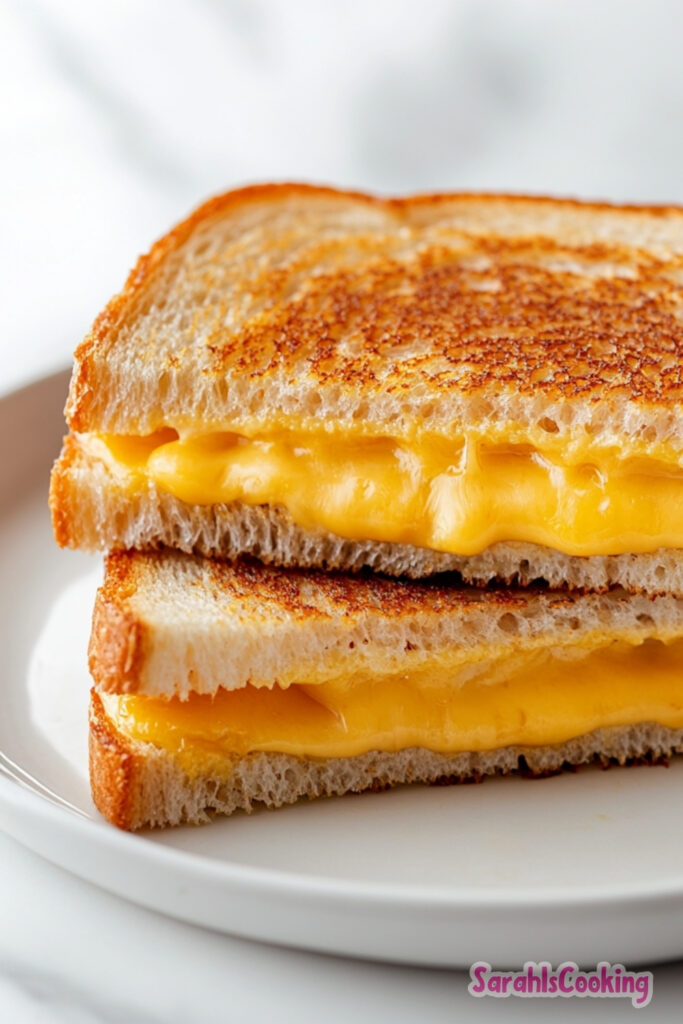
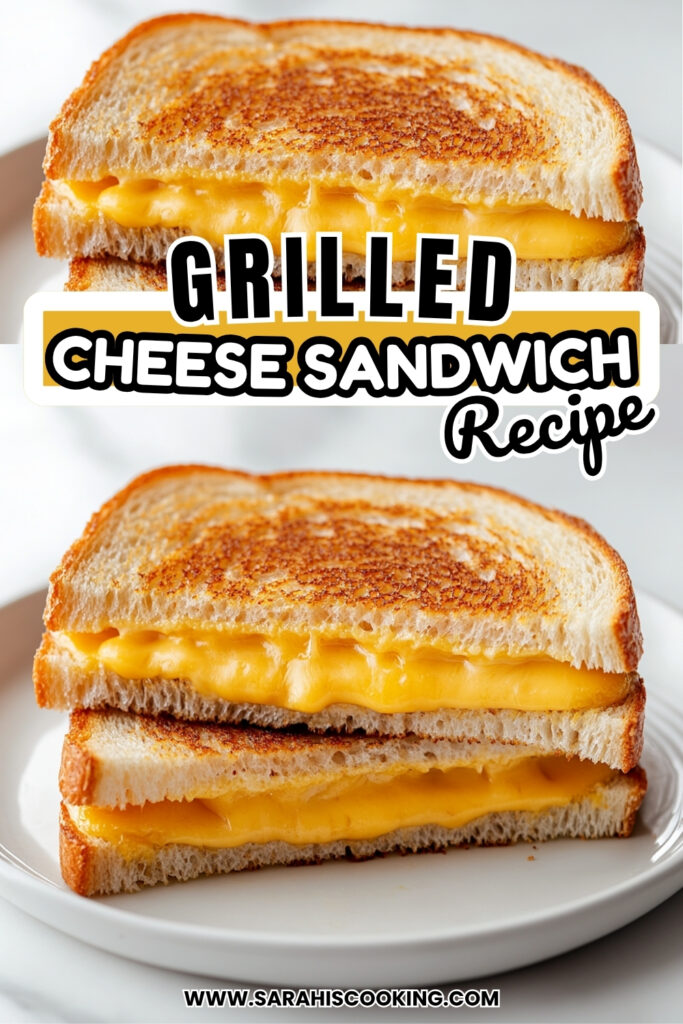
Golden, crisp bread with a rich, buttery finish and a perfectly melted center. This grilled cheese sandwich balances texture and flavor with a method you can trust every time.
A truly great grilled cheese sandwich is defined by contrast. The outside should be deeply golden and crisp, while the inside stays soft with fully melted cheese that pulls gently when sliced.
I’ve tested this method to remove the guesswork. With a few deliberate choices and controlled heat, you get consistent results instead of hoping it turns out right.
This is not about reinventing the sandwich. It is about refining the small details that make the difference between decent and excellent.
Ingredients Needed for the Recipe
Good-quality bread - Provides structure and holds the cheese without collapsing or developing holes that cause leakage during cooking.
Softened butter or mayonnaise - Creates an even fat layer on the exterior, ensuring consistent browning and a crisp, golden crust.
Cheddar cheese - Delivers sharp flavor and reliable melt, forming the base of the sandwich’s creamy interior.
Shredded Gruyère cheese - Adds a smooth, nutty richness and improves meltability by filling gaps between slices of cheddar.
How to make Grilled Cheese Sandwich?
Step 1 - Prepare the Bread
Spread a thin, even layer of butter or mayonnaise on one side of each slice. Make sure the coating reaches the edges to prevent dry spots during cooking.
Keep the layer thin. Too much fat can cause uneven browning and a greasy surface instead of a crisp finish.
Step 2 - Preheat the Pan
Place a nonstick or cast iron skillet over medium heat and allow it to fully warm. The pan should feel evenly heated but not smoking.
Starting with a properly heated surface ensures immediate contact, which helps build a consistent crust from the first moment.
Step 3 - Assemble in the Pan
Place one slice of bread in the pan with the coated side facing down. Layer the cheddar evenly, then distribute the shredded Gruyère on top.
Add the second slice of bread with the coated side facing up. Press lightly to settle the layers without compressing the bread too much.
Step 4 - Cook the First Side
Cook for 3 to 4 minutes until the bottom is golden brown. Apply gentle pressure with a spatula to improve contact with the pan.
Watch the edges closely. You should see slight browning before flipping, not dark spots or burning.
Step 5 - Flip and Finish Cooking
Flip carefully and cook the second side for another 3 to 4 minutes. Adjust heat if needed so the bread browns at the same pace the cheese melts.
If the exterior is browning too quickly, reduce the heat slightly. The goal is full melt inside before the crust becomes too dark.
Step 6 - Rest Before Cutting
Transfer the sandwich to a cutting board and let it rest for one minute. This allows the cheese to set slightly and prevents immediate spill-out.
Slice with a sharp knife and serve while warm for the best texture contrast.
Why This Recipe Works
The balance of two cheeses creates both flavor and structure. Cheddar provides sharpness, while Gruyère melts smoothly and fills gaps, preventing uneven pockets inside.
The controlled use of fat on the bread ensures even browning. A thin layer promotes crispness without saturating the surface, which keeps the texture clean rather than oily.
Cooking at moderate heat allows the interior and exterior to finish at the same time. This avoids the common issue of burnt bread with unmelted cheese.
How I Tested and Refined This Recipe
I started by testing different breads, including soft sandwich loaves and bakery-style options. Softer bread browned too quickly and lacked structure, while sturdier loaves held up better and produced cleaner slices.
Next, I compared butter and mayonnaise. Butter gave better flavor, but mayonnaise created more even browning. A thin layer of either works, but the key is consistency in application.
I also tested heat levels extensively. Higher heat browned the bread too fast, leaving the cheese partially melted. Lower heat improved melt but reduced crispness. Medium heat proved to be the most reliable balance.
Finally, I adjusted the cheese ratio. Using only sliced cheese left small gaps, while adding shredded cheese improved melt coverage and texture. The final version reflects that combination for consistent results.
Common Mistakes and How to Avoid Them
Using bread with large holes - Causes cheese to leak and burn in the pan, leading to uneven texture.
Applying too much butter or mayonnaise - Results in a greasy crust instead of a crisp, structured exterior.
Cooking over high heat - Browns the bread too quickly before the cheese has time to melt properly.
Skipping the preheat step - Leads to uneven browning and poor crust development.
Overloading with cheese - Prevents even melting and can cause the sandwich to separate while flipping.
Cutting immediately after cooking - Allows the cheese to spill out instead of holding a soft, cohesive center.
Make-Ahead, Storage, and Freezing Guidance
This sandwich is best eaten immediately after cooking. The texture relies on the contrast between crisp bread and melted cheese, which fades over time.
If needed, you can store a cooked sandwich in the refrigerator for up to one day. The bread will soften slightly, and the cheese will firm up as it cools.
To reheat, use a skillet over low heat rather than a microwave. This helps restore some crispness while gently remelting the interior.
Freezing is not recommended. The bread structure changes significantly, and reheating does not fully recover the original texture.
Tips
Use evenly sized bread slices to ensure uniform cooking and alignment.
Shred part of the cheese for better melt coverage.
Press gently while cooking, but do not flatten the sandwich.
Adjust heat as needed instead of rushing the process.
Toast the inside lightly for extra texture if desired.
Slice diagonally for better presentation and easier handling.
Elevate your comfort food game with this perfectly crafted grilled cheese sandwich. Featuring a golden, buttery crust and a luxuriously melty cheese center, this recipe uses simple techniques and quality ingredients to create the ultimate cheesy experience. Whether you're cooking for one or feeding a crowd, this foolproof method delivers restaurant-quality results every time.
Ingredients
2slices good quality bread (tight-crumbed Italian or whole grain, ½-inch thick)
1-2tablespoons softened butter or mayonnaise (high-quality like Hellmann's or Duke's)
2slices medium or sharp cheddar cheese (about 2 oz / 56g)
1oz shredded Gruyère cheese (about ½ cup / 28g)
Instructions
1
Prep the Bread – Using a butter knife, spread a thin, even layer of softened butter or mayonnaise on one side of each bread slice, covering all the way to the edges for maximum crispiness.
2
Assemble in Skillet – Preheat a nonstick or cast iron skillet over medium heat. Place one slice of bread buttered-side down in the pan. Layer the cheddar slices evenly, then sprinkle the shredded Gruyère on top. Cap with the second bread slice, buttered-side up.
3
Cook to Golden Perfection – Cook for 3-4 minutes until the bottom is deeply golden and crisp. Gently press with a spatula for even browning. Carefully flip and cook the other side 3-4 minutes more until golden and cheese is fully melted. Reduce heat if browning too quickly.
4
Rest & Serve – Transfer to a cutting board and let rest 1 minute to allow cheese to set slightly. Slice in half diagonally and serve immediately while warm and gloriously melty. Pairs beautifully with tomato soup or a crisp green salad.
Nutrition Facts
Servings 1
Serving Size 1 sandwich
Amount Per Serving
Calories450kcal
% Daily Value *
Total Fat28g44%
Saturated Fat16g80%
Trans Fat0.5g
Cholesterol75mg25%
Sodium850mg36%
Potassium200mg6%
Total Carbohydrate32g11%
Dietary Fiber2g8%
Sugars3g
Protein18g36%
Vitamin A 600 IU
Calcium 450 mg
Iron 2 mg
Vitamin D 10 IU
Vitamin E 1 IU
Vitamin K 3 mcg
Thiamin 0.2 mg
Riboflavin 0.4 mg
Niacin 3 mg
Vitamin B6 0.1 mg
Folate 80 mcg
Vitamin B12 0.8 mcg
Biotin 4 mcg
Pantothenic Acid 0.5 mg
Phosphorus 300 mg
Iodine 25 mcg
Magnesium 30 mg
Zinc 2 mg
Selenium 20 mcg
Copper 0.1 mg
Manganese 0.3 mg
Chromium 2 mcg
Molybdenum 15 mcg
Chloride 600 mg
* Percent Daily Values are based on a 2,000 calorie diet. Your daily value may be higher or lower depending on your calorie needs.
Note
Butter vs. Mayo: Mayo spreads easily from the fridge and has a higher smoke point for even browning. Butter delivers rich, classic flavor. For best results, try a blend of both! Pro Tip: For extra crunch, lightly toast the inside faces of the bread in the pan before assembling. This creates a delightful textural contrast inside and out.
Pin this recipe to share with your friends and followers.
Sarah
Food and Lifestyle Blogger
Hi, I’m Sarah, a home cook and baker who believes that good food doesn’t need to be complicated to be meaningful. This blog is where I share approachable, dependable recipes made with care — the kind of dishes you can come back to again and again.