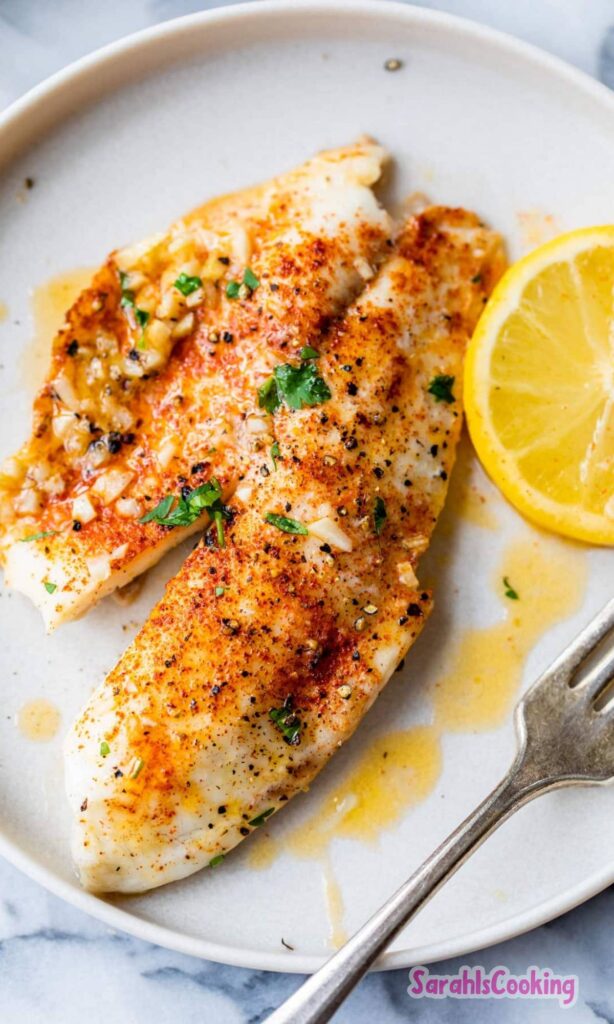
This section introduces Baked Tilapia Recipe as a dependable, weeknight-friendly main dish built on simplicity, speed, and repeatable results. It establishes trust by emphasizing minimal ingredients, fast cook time, and a clean flavor profile that fits real-life cooking.
The goal here is to frame the recipe as a reliable method rather than a one-time idea, reinforcing confidence that readers can execute it successfully even on busy evenings.
Include personal experience about how often this recipe is used in everyday cooking, highlight the value of short cook times, and reassure readers that mild fish like tilapia is approachable even for those new to seafood.
Who This Recipe Is For
This section defines the recipe’s accessibility for beginner cooks, busy families, and anyone looking for a light but satisfying protein that doesn’t require advanced technique or specialty ingredients.
It clarifies that the method prioritizes ease and predictability, making it ideal for weeknight meals, meal prep, or a quick reset after heavier dishes.
Emphasize reader success by noting the forgiving nature of the seasoning and bake time, and include guidance on pairing with simple sides like Cucumber Salad Recipe to round out the meal without adding complexity.
Why Baked Tilapia Recipe Works
This section explains the culinary logic behind high-heat baking, which allows the fish to cook quickly while maintaining moisture and preventing toughness. The balance of lemon pepper seasoning and light oil coating supports both flavor distribution and proper surface roasting.
It highlights how a short ingredient list prevents overpowering the fish’s natural texture, letting the mild flavor act as a flexible base for different meals.
Reinforce testing insights about oven temperature consistency, explain why over-seasoning can mask the fish’s qualities, and reduce risk by noting visual doneness cues instead of relying solely on time.
Ingredient Insights and Function
This section breaks down each ingredient’s role, showing how tilapia provides a lean, flaky structure while lemon pepper seasoning delivers salt, citrus brightness, and mild heat in a single step.
It explains how olive oil or nonstick spray prevents sticking and promotes even seasoning adhesion, while optional lemon slices add gentle moisture and aromatic lift during baking.
Call out experiential knowledge about keeping ingredients minimal for better control, emphasize how this helps readers understand the cooking behavior of fish, and reduce risk by discouraging unnecessary additions early on.
Step-by-Step Success Guidance for Baked Tilapia Recipe
Preparation Phase
This subsection outlines the importance of preheating the oven fully and arranging fillets in a single layer to ensure even heat exposure and consistent texture.
Include practical reminders about drying fillets for better roasting, explain pan preparation choices, and note how small setup steps prevent sticking or steaming.
Execution Phase
This subsection focuses on the short baking window, explaining how high heat cooks the fish quickly while preserving tenderness. Timing and spacing matter more than complicated technique.
Highlight observational cues such as color change and flaking texture, reinforcing that visual confirmation leads to better outcomes than guesswork.
Suggest serving alongside complementary dishes like Italian Pasta Salad when a heartier plate is desired, showing how the fish integrates into varied meal styles.
Finishing and Doneness Cues
This subsection teaches readers to recognize doneness through opacity, flaking, and internal temperature rather than extended cooking, which can dry the fish.
Explain the importance of a short rest after baking to allow juices to settle, and include reassurance that this small pause improves final texture.
How I Tested and Refined Baked Tilapia Recipe
This section describes testing variables such as bake time, oven temperature, and seasoning quantity to arrive at a method that delivers consistent results without requiring adjustments.
It also addresses what did not work, such as overcrowding the pan or extending cook time, and explains how those factors affected moisture and texture.
Weave in personal repetition as proof of reliability, and reference pairing flexibility, including fresh finishes like Easy Homemade Chimichurri Sauce Recipe when a brighter flavor variation is desired.
Common Mistakes When Making Baked Tilapia Recipe
This section anticipates reader missteps such as overcooking, skipping the preheated oven, or adding too many toppings that interfere with the fish’s natural structure.
It explains why these issues occur and how small corrections—like monitoring flake texture or keeping seasoning simple—lead to better consistency.
Focus on risk reduction by clarifying that tilapia cooks faster than expected, and include confidence-building reminders that simplicity is intentional, not a shortcut.
Make-Ahead, Storage, and Freezing Guidance
This section outlines how to refrigerate leftovers properly, maintain moisture during reheating, and repurpose flaked fish for easy next-day meals without compromising texture.
It sets realistic expectations for shelf life and explains why gentle reheating preserves the fish better than high heat.
Include practical reuse ideas such as adding leftovers to grain-based dishes like Quinoa Salad, reinforcing the recipe’s versatility while minimizing food waste.