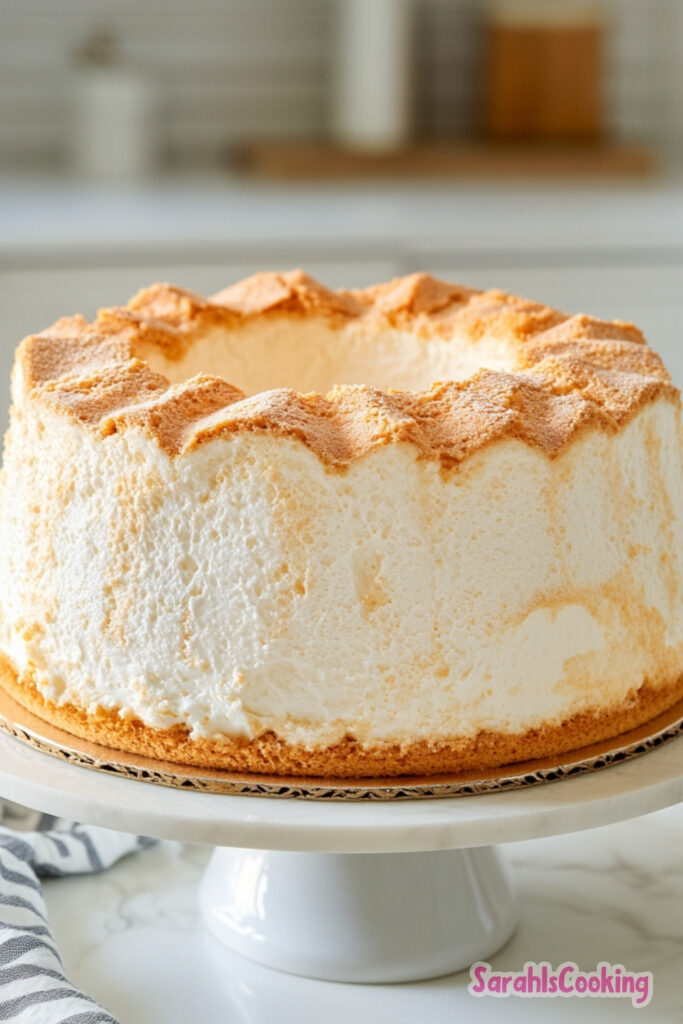
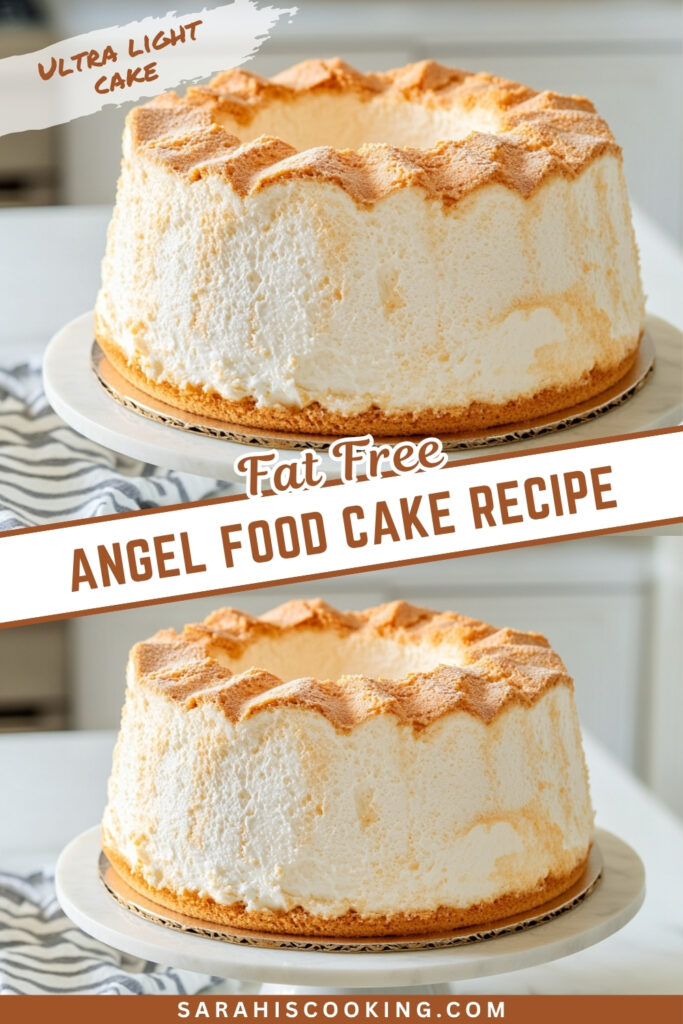
Light, fluffy Angel Food Cake with perfect sweetness and structure. A reliable, tested method for a soft crumb and delicate golden crust every time.
Angel food cake is often misunderstood as complicated, yet when the structure is respected, it becomes one of the most dependable cakes a baker can make. This version produces a tall, cloud-like crumb with a lightly crisp exterior that holds its shape beautifully when sliced.
I approach this recipe with the same mindset I use when testing formulas. Small adjustments in ratios and technique make a measurable difference in texture, rise, and stability. The result is a cake that feels delicate but performs reliably.
This cake is naturally fat-free and relies entirely on the strength of egg whites and carefully incorporated dry ingredients. When executed correctly, the interior is soft and springy with just enough sweetness to pair well with fruit or cream.
The goal here is consistency. Once you understand why each step matters, the process becomes straightforward and repeatable.
Who This Recipe Is For
This recipe is ideal for home bakers who want a dependable method rather than guesswork. It suits those who appreciate clarity and prefer understanding how structure affects outcome.
Beginner bakers can follow this method confidently, while experienced bakers will appreciate the precision behind the ratios and mixing technique. Anyone who enjoys light desserts will find this cake satisfying without feeling heavy.
If you want a cake that looks elegant yet uses basic pantry ingredients, this is an excellent option. It is especially appealing for warm-weather baking when rich desserts feel overwhelming.
Why This Recipe Works
Angel food cake depends entirely on egg white foam for structure. The balance between sugar and flour stabilizes the foam while still allowing expansion during baking. Too much flour creates density, while too little weakens the crumb.
Sifting the dry ingredients repeatedly ensures the flour disperses evenly and prevents clumping. Gentle folding preserves air pockets created during whipping, allowing the cake to rise without collapsing.
The absence of fat keeps the crumb exceptionally light. Unlike butter-based cakes, the texture comes from protein structure rather than emulsified fat. This creates a unique elasticity that feels almost sponge-like when pressed.
Baking in an ungreased tube pan allows the batter to cling to the sides as it rises. This support helps the cake reach full height and prevents shrinkage during cooling.
Ingredients Needed for the Recipe
Egg whites - Provide the primary structure through protein networks that trap air when whipped.
Cream of tartar - Stabilizes the egg white foam and prevents collapse during mixing and baking.
Salt - Balances sweetness and strengthens the protein structure slightly.
Cake flour - Low protein flour ensures a soft crumb without toughness.
Sugar - Sweetens while reinforcing the foam structure by slowing protein tightening.
Almond extract - Adds a subtle aromatic depth that complements the delicate crumb.
Optional vanilla extract - Softens the almond flavor and adds warmth.
Ingredient Insights and Function
Egg whites must be free from yolk contamination. Even a small amount of fat interferes with foam formation, preventing proper volume. Using fresh eggs improves stability because the proteins are intact and responsive.
Cream of tartar increases acidity, which helps proteins unfold evenly during whipping. Without it, the foam forms inconsistently and may collapse before baking completes.
Cake flour contains less gluten-forming protein than all-purpose flour. Substituting all-purpose flour produces a slightly denser texture and increases the risk of chewiness.
Granulated sugar should be sifted with the flour to ensure even distribution. Large sugar granules can weigh down the foam if added improperly.
Almond extract provides the classic flavor profile associated with traditional angel food cake. Using only vanilla produces a milder taste but still maintains balance.
Salt is minimal but important. Removing it entirely results in a flat sweetness that lacks depth.
How to make Angel Food Cake - Dash of Sanity?
Step 1 - Prepare Egg Whites
Separate eggs while they are cold because the yolks remain firm and less likely to break. Allow the whites to reach room temperature before whipping to maximize volume.
Place whites in a clean mixing bowl with no grease residue. Even trace fat prevents proper foam formation.
Step 2 - Whip to Stiff Peaks
Using a hand or stand mixer, beat egg whites until soft peaks form, then continue until stiff peaks develop. The foam should hold shape but still appear glossy.
Avoid whipping until dry or clumpy. Overwhipped whites lose elasticity and become difficult to fold.
Step 3 - Add Stabilizers and Flavor
Add cream of tartar, salt, and almond extract once peaks begin forming. Incorporating these early allows even distribution without deflating the foam.
Mix briefly until fully combined. Overmixing at this stage can tighten the protein network excessively.
Step 4 - Sift Dry Ingredients
Sift cake flour and sugar together five to six times. This step creates an ultra-light mixture that folds smoothly into the foam.
Repeated sifting prevents dense pockets of flour and ensures uniform sweetness throughout the cake.
Step 5 - Fold Carefully
Gradually fold the dry mixture into the whipped egg whites using a wide spatula. Use slow, sweeping motions from the bottom of the bowl upward.
Stop folding once no visible streaks remain. Overworking the batter compresses air pockets needed for lift.
Step 6 - Transfer to Tube Pan
Pour batter into an ungreased 10-inch tube pan. Smooth the surface lightly but avoid tapping the pan aggressively.
The batter must cling to the sides as it rises, which creates the signature tall shape.
Step 7 - Bake at Controlled Temperature
Place the filled pan in a cold oven and set temperature to 325°F. Gradual heating allows steady expansion and prevents sudden collapse.
Bake for approximately one hour until the surface turns golden and springs back when touched.
Step 8 - Invert and Cool
Invert the pan immediately after removing from the oven. Cooling upside down prevents gravity from compressing the delicate crumb.
Allow the cake to cool completely before loosening edges with a knife. Removing it too early may cause tearing.
How I Tested and Refined This Recipe
Early versions of this cake varied significantly in height. I tested different ratios of sugar to flour and observed how structural strength changed during cooling.
Reducing sugar slightly created a drier crumb, while increasing flour produced noticeable heaviness. The final balance keeps the interior soft without sacrificing stability.
I experimented with mixing speed and timing. Rapid whipping created large bubbles that collapsed during baking, while slower whipping produced a finer crumb.
Cooling orientation also affected texture. Cakes cooled upright shrank noticeably, while inverted cooling preserved height and prevented compression.
Repeated testing confirmed that multiple siftings improved consistency. Skipping this step resulted in uneven pockets throughout the cake.
Common Mistakes and How to Avoid Them
Using a greased pan prevents batter from climbing the sides and reduces height.
Allowing egg yolk into whites interferes with foam stability.
Overwhipping egg whites creates dry foam that cannot expand properly.
Undersifting dry ingredients leads to dense sections in the crumb.
Mixing aggressively deflates air pockets needed for lift.
Removing cake before fully cooled can cause collapse.
Baking at higher temperature creates rapid expansion followed by shrinkage.
Using all-purpose flour produces a heavier texture.
Make-Ahead, Storage, and Freezing Guidance
This cake maintains best texture when stored at room temperature in an airtight container for up to two days. The crumb remains soft and slightly springy.
Refrigeration extends shelf life to four days but may slightly firm the texture. Allow slices to return to room temperature before serving.
For freezing, wrap slices tightly in plastic wrap followed by foil. Freeze for up to two months without significant texture loss.
Thaw at room temperature without microwaving. Gentle thawing preserves the delicate crumb structure.
Tips
Use a metal bowl for whipping egg whites for best volume.
Room temperature whites whip faster than cold whites.
Use a serrated knife for clean slicing without compression.
Serve with fresh berries to balance sweetness.
A small amount of lemon zest adds brightness.
Measure flour carefully to avoid density changes.
Do not rush cooling time.
Fold slowly and deliberately.
Use a removable-bottom tube pan for easier release.
Angel Food Cake is a classic, airy dessert made with egg whites and no fat. This homemade version is light, fluffy, and perfectly sweet. Serve with fresh fruit or whipped cream for a summer favorite.
Pin this recipe to share with your friends and followers.
Sarah
Food and Lifestyle Blogger
Hi, I’m Sarah, a home cook and baker who believes that good food doesn’t need to be complicated to be meaningful. This blog is where I share approachable, dependable recipes made with care — the kind of dishes you can come back to again and again.