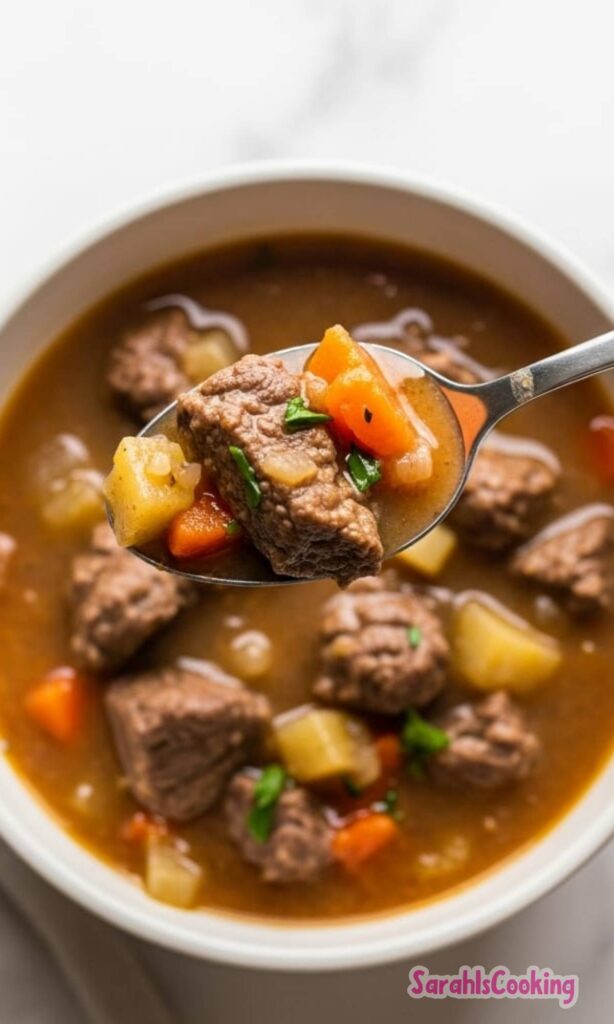
There’s something so comforting about a warm bowl of beef stew, especially on a quiet evening at home. For a long time, I thought I had to give that up to eat low-carb, but it turns out, that just isn’t true.
This keto beef stew is every bit as rich and satisfying as the classic version. It’s all about choosing the right ingredients and giving them a little time to become something truly special together.
Ingredients Needed for the Recipe
1 ¼ pounds beef chuck roast, cubed: This cut becomes incredibly tender and flavorful when slow-cooked, forming the hearty base of our stew.
2 tablespoons olive oil, avocado oil, or bacon grease: Used for browning the meat and mushrooms, creating a deep, savory foundation.
8 ounces whole mushrooms, quartered: They add a wonderful, earthy flavor and a meaty texture that complements the beef perfectly.
2 tablespoons tomato paste: This little bit adds a touch of acidity and richness, helping to lift the browned bits from the pot.
5 cups beef broth: This creates the flavorful liquid our stew simmers in, turning into a beautiful, rich broth.
1 large bay leaf and ½ teaspoon dried thyme: These classic herbs provide that underlying, aromatic warmth we all love in a stew.
6 ounces celery root, peeled and cubed: A fantastic low-carb stand-in for potatoes, offering a mild, celery-like flavor and a lovely texture.
4 ounces pearl onions or one small regular onion: They add a subtle sweetness and depth without overloading on carbs.
2-3 ribs celery, sliced: For a nice crunch and that classic stew flavor.
3 ounces carrot, roll-cut or sliced: A small amount gives the stew a beautiful pop of color and a hint of sweetness.
2 cloves garlic, sliced: For a gentle, aromatic kick that infuses the entire dish.
Salt and pepper to taste: Essential for bringing all the flavors together at the very end.
Why Your Choice of Beef Matters So Much
I used to buy those pre-cut packages of stew meat from the store, thinking it was a great timesaver. I often found myself wondering why the beef sometimes stayed a bit tough, even after a long simmer.
The secret, I discovered, is to buy a whole chuck roast and cube it yourself. This specific cut is marbled with fat and connective tissue, which slowly melts during cooking.
That process is what gives you those fall-apart tender, incredibly flavorful bites of beef. It’s a simple switch that makes all the difference in the world, turning a good stew into an amazing one.
How to Make Amazing Keto Beef Stew?
Step 1 – Preparing Your Ingredients
Start by taking your chuck roast out of the refrigerator and let it sit on the counter for about 30 minutes. Searing cold meat can shock it and make it tough.
While you wait, wash and chop all your vegetables. I like to quarter the mushrooms, peel and cube the celery root, and get the celery and carrots ready. Go ahead and slice your garlic, too.
Step 2 – Searing the Mushrooms
Place your Dutch oven or a heavy-bottomed pot over medium heat. Add one tablespoon of your oil, and once it's hot, add the quartered mushrooms.
Let them cook without moving for a good two minutes to get a nice sear. Give them a stir and cook for another two minutes, then remove them and set them aside with your other vegetables.
Step 3 – Browning the Beef
Now, pat your beef cubes dry and toss them with a teaspoon of oil. This helps them brown beautifully. Working in batches, add the beef to the hot pot, making sure not to crowd the pan.
Let each piece get a good, dark sear on all sides. This browning is where a ton of the stew's deep flavor comes from, so don't rush this step.
Step 4 – Building the Stew Base
Once all the beef is browned and back in the pot, stir in the tomato paste, bay leaf, and dried thyme. Let it cook for just about a minute until it becomes fragrant.
Then, slowly pour in one cup of the beef broth, using a wooden spoon to scrape all those delicious browned bits from the bottom of the pot.
Step 5 – The First Simmer
Pour in the remaining four cups of beef broth and bring the stew up to a gentle simmer. Once it's bubbling lightly, cover the pot with a lid and reduce the heat to low.
Let it simmer gently like this for about an hour and a half. This long, slow cooking is what makes the beef incredibly tender.
Step 6 – Adding the Vegetables
After 90 minutes, check the beef by piercing a piece with a fork. It should meet with very little resistance. Now, stir in all of your reserved vegetables, including the mushrooms.
Bring the stew back up to a simmer, then leave the lid off. Let it cook for another 40 to 60 minutes, or until the vegetables are tender but still hold their shape.
Step 7 – Final Seasoning and Serving
Once the vegetables are cooked to your liking, turn off the heat. Now is the time to taste your stew and season it with salt and pepper.
Be generous, as it will make all the flavors pop. Remove the bay leaf before ladling the stew into bowls and serving it warm.
Choosing the Best Low-Carb Vegetables
When you're making a keto stew, the vegetables are key. You want options that provide great texture and flavor without the high starch content of potatoes and parsnips.
Celery root is my absolute favorite substitute for potatoes. It has a mild, pleasant flavor and holds its shape wonderfully, giving you that classic stew feel.
Mushrooms and green beans are also fantastic additions. For a little color, I use one small carrot, cut using a "roll-cut" technique for pretty, irregular pieces.
The trick is to add all these vegetables in the last hour of cooking. This way, they become perfectly tender without turning to mush, which keeps the stew feeling fresh and balanced.
Tips
For the most tender meat, always let your cubed beef chuck come to room temperature for about 30 minutes before you start browning it.
Don’t skip browning the mushrooms first. It concentrates their flavor and keeps them from becoming slimy later in the cooking process.
If you want a slightly thicker broth, you can mash a few of the cooked celery root pieces against the side of the pot and stir them back in.
Feel free to play with other low-carb vegetables. Diced turnips or radishes are also excellent choices and behave very much like potatoes in a stew.
This stew tastes even better the next day, making it a perfect make-ahead meal for busy weeks.
Simple Ways to Change the Flavor
This stew is wonderfully versatile. If you feel like mixing things up, there are a few easy ways to give it a different character without much extra work.
You could stir in a teaspoon of balsamic vinegar at the very end for a touch of brightness and acidity. A splash of red wine, added with the broth, will add a lovely depth and richness.
For an herby twist, a pinch of dried marjoram or oregano can be lovely. Sometimes, I even add a very small strip of orange peel during the last simmer for a subtle, fragrant note.
It’s your stew, so don’t be afraid to make it your own. These little changes can keep this comforting dish feeling new and exciting every time you make it.
A rich-tasting keto beef stew featuring meltingly tender beef chuck and perfectly cooked low-carb vegetables. You'll never believe this comforting bowl is keto-friendly—intensely savory, deeply satisfying, and only 6g net carbs per serving.
6ounces celery root, peeled and cubed into ¾ inch pieces (or sub turnips or radishes)
4ounces pearl onions, trimmed and peeled (or ½ regular onion, large dice)
2–3ribs celery, sliced
3ounces carrot, roll-cut (optional for color; adds minimal carbs)
2cloves garlic, sliced
2tablespoons tomato paste
2tablespoons olive oil, avocado oil, or bacon grease (divided)
5cups beef broth (preferably bone broth)
1large bay leaf
½teaspoon dried thyme
salt and pepper (to taste)
Instructions
1
PrepRemove the chuck roast from the refrigerator 30 minutes before cooking to bring to room temperature. Trim excess fat and cut into 1-inch cubes. Mix 2 teaspoons of oil into the beef. Quarter the mushrooms. Wash, peel, and chop all vegetables (celery root, onions, celery, carrot, garlic) and set aside in a bowl.
2
Sauté MushroomsHeat a Dutch oven or heavy-bottomed pot over medium heat. Add ½ tablespoon oil and swirl to coat. Add mushrooms and cook undisturbed for 2 minutes, then stir and cook 2 more minutes until browned. Remove and add to the vegetable bowl.
3
Brown BeefBrown the beef in batches (do not crowd the pan), adding more oil as needed. Once all beef is browned, return it to the pot. Stir in tomato paste, bay leaf, and thyme. Cook for 30–60 seconds until fragrant.
4
Simmer MeatSlowly pour in 1 cup of beef broth while scraping up browned bits (fond) from the bottom. Add remaining broth to just cover the meat. Bring to a gentle simmer, cover, and cook on low heat for 1 hour 30 minutes, or until beef is fork-tender.
5
Add VegetablesOnce beef is tender, add all prepared vegetables. Increase heat to bring back to a simmer, then reduce heat and simmer uncovered for 40–60 minutes, or until vegetables are tender but not mushy.
6
Season & ServeRemove bay leaf. Season with salt and pepper to taste. Serve hot in bowls—approximately 1¾ cups per serving.
Nutrition Facts
Servings 6
Serving Size 1 ¾ cups
Amount Per Serving
Calories420kcal
% Daily Value *
Total Fat27g42%
Saturated Fat9g45%
Cholesterol85mg29%
Sodium890mg38%
Potassium1100mg32%
Total Carbohydrate10g4%
Dietary Fiber4g16%
Sugars3g
Protein35g70%
Calcium 6 mg
Iron 25 mg
* Percent Daily Values are based on a 2,000 calorie diet. Your daily value may be higher or lower depending on your calorie needs.
Note
Vegetable Timing Tip: Add low-carb vegetables in the last 40–60 minutes to keep them tender-crisp and visually appealing.
Make Ahead: This stew tastes even better the next day! Store in the fridge for up to 4 days or freeze for up to 3 months.
Wine Option: Deglaze with ½ cup dry red wine instead of broth for deeper flavor (adds ~1g net carb per serving).
No Carrot? Omit the carrot to reduce carbs to ~5g net per serving.
Pin this recipe to share with your friends and followers.
Sarah
Food and Lifestyle Blogger
Hi, I’m Sarah, a home cook and baker who believes that good food doesn’t need to be complicated to be meaningful. This blog is where I share approachable, dependable recipes made with care — the kind of dishes you can come back to again and again.