
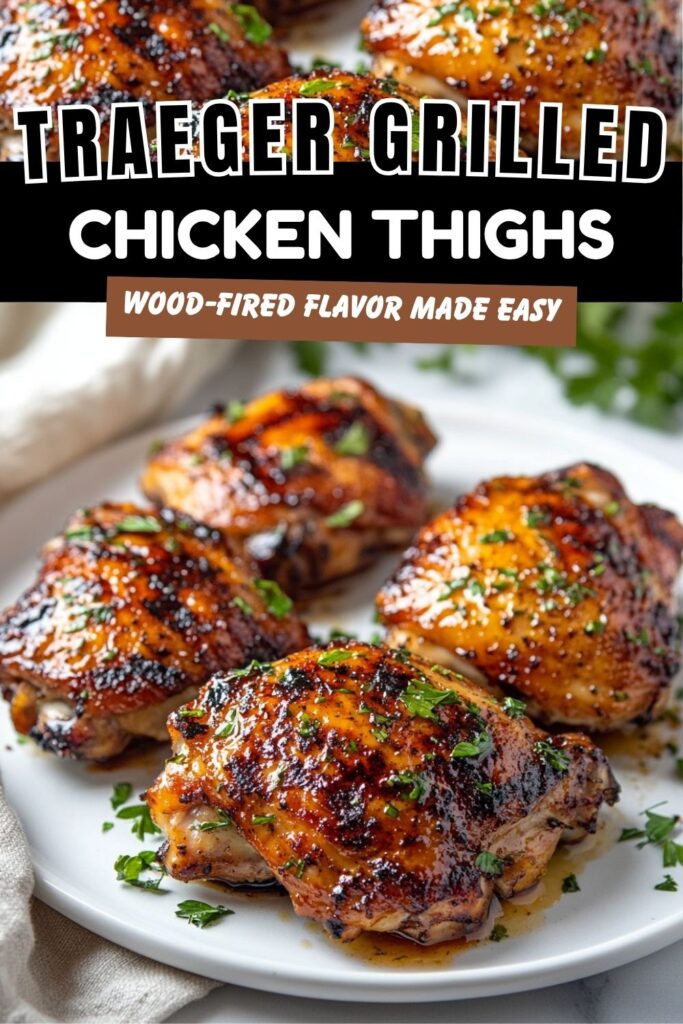
Traeger grilled chicken thighs made easy – crispy skin, juicy meat, and perfect wood-fired flavor with a simple marinade and reliable timing.
This recipe is built for consistency. Bone-in, skin-on chicken thighs are forgiving, but getting crisp skin and juicy meat at the same time still requires control.
I rely on a simple marinade, high heat, and a specific grilling order to deliver repeatable results. When done right, the skin crisps deeply while the interior stays tender and well-seasoned.
Using a wood pellet grill gives you steady temperature and light smoke without guesswork. The method here works just as well on any pellet grill, not just one brand.
Ingredients Needed for the Recipe
- Bone-in, skin-on chicken thighs – the bone protects moisture during cooking, while the skin renders fat and creates a crisp exterior.
- Olive oil – acts as the fat base for the marinade, helping distribute seasoning evenly and aiding browning on the grill.
- Lemon juice – provides acidity to tenderize the meat and balance the richness of the skin and fat.
- Dijon mustard – adds slight tang and helps emulsify the marinade so it coats the chicken more effectively.
- Sea salt – essential for drawing out moisture early, then reabsorbing it to enhance flavor throughout the meat.
- Black pepper – contributes mild heat and depth without overpowering the smoke flavor.
- Dried thyme – adds an earthy, herbaceous note that holds up well under high heat grilling.
- Paprika – supports color development and brings a subtle smoky sweetness, especially if using smoked paprika.
How to make Traeger Grilled Chicken Thighs?
Step 1 – Prepare the Chicken
Place the chicken thighs in a large zip-top bag or a covered bowl. Keep the pieces in a single layer if possible so the marinade distributes evenly.
If the skin feels wet, lightly pat it dry before adding anything. This helps the marinade adhere instead of sliding off.
Step 2 – Build the Marinade
Whisk together olive oil, lemon juice, Dijon mustard, salt, pepper, thyme, and paprika until fully combined. The mixture should look slightly thickened and cohesive.
This balance of fat and acid is important. If it separates too much, keep whisking until it emulsifies again.
Step 3 – Marinate the Chicken
Pour the marinade over the chicken, ensuring every piece is coated. Seal and refrigerate for at least 1 hour, up to 4 hours for deeper flavor.
Turn the bag once or twice during marinating. This prevents uneven seasoning and keeps the skin exposed to the marinade.
Step 4 – Bring to Room Temperature
Remove the chicken from the fridge about 20 minutes before grilling. This small step promotes even cooking from edge to bone.
Cold chicken placed directly on a hot grill often cooks unevenly, leading to dry edges and undercooked centers.
Step 5 – Preheat the Grill
Set your wood pellet grill to 450F. Allow it to fully preheat so the grates are hot and ready to sear.
This temperature is key. Too low and the skin softens instead of crisping, too high and the exterior burns before the inside cooks through.
Step 6 – Start Skin Side Down
Remove the chicken from the marinade and place it directly on the grill, skin side down. Do not wipe off the marinade.
Let it cook undisturbed for about 20 minutes. You are looking for rendered fat, deep golden color, and slight charring at the edges.
Step 7 – Flip and Finish Cooking
Flip the thighs and continue cooking for about 10 minutes. Use a thermometer to check doneness at the thickest part near the bone.
Once the internal temperature reaches 165F, remove the chicken immediately. Waiting longer risks drying out the meat.
Step 8 – Rest Before Serving
Allow the chicken to rest for about 10 minutes before serving. This lets the juices redistribute throughout the meat.
If you cut into it too soon, the juices will run out, leaving the texture drier than it should be.
Why This Recipe Works
The structure of this recipe is built around fat rendering and moisture retention. Chicken thighs naturally contain more fat than breasts, which allows them to stay juicy under higher heat.
Starting skin side down gives that fat time to render slowly. As it melts, it bastes the meat and creates a crisp, flavorful surface.
The marinade is intentionally simple. Oil carries flavor, acid tenderizes, and mustard binds everything together without overpowering the natural taste of the chicken.
Cooking at 450F strikes the balance between searing and roasting. It is hot enough to crisp the skin but controlled enough to cook the meat through without burning.
How I Tested and Refined This Recipe
I tested this recipe across multiple grill temperatures, starting as low as 375F and going as high as 500F. Lower temperatures produced soft skin, while higher ones burned the exterior too quickly.
I also experimented with boneless thighs. While faster, they lacked the same depth of flavor and were easier to overcook.
The marinade went through several versions. Early tests used too much acid, which broke down the texture of the meat over time.
Reducing the lemon juice and adding Dijon created a more balanced coating that clings better and enhances browning.
I adjusted the cooking order as well. Starting skin side up led to pale, rubbery skin, even at high heat.
Once I reversed the order and extended the first side cook time, the texture improved immediately. That became the foundation of the final method.
Common Mistakes and How to Avoid Them
- Skipping the marinade time – results in flat flavor and uneven seasoning throughout the meat.
- Placing chicken on a cold grill – prevents proper searing and leads to sticking and tearing skin.
- Cooking skin side up first – traps moisture under the skin and stops it from crisping properly.
- Using low heat – causes the fat to render too slowly, leaving the skin soft and chewy.
- Overcooking past 165F – dries out the meat, especially near the edges.
- Not resting the chicken – causes juices to escape, reducing overall moisture and flavor.
- Crowding the grill – limits airflow and leads to steaming instead of grilling.
Make-Ahead, Storage, and Freezing Guidance
You can marinate the chicken up to 4 hours ahead of time. Beyond that, the acid begins to affect the texture negatively.
Cooked chicken thighs can be stored in an airtight container in the refrigerator for up to 3 days. The skin will soften slightly over time.
For freezing, let the chicken cool completely before sealing tightly. It will keep well for up to 2 months, though the skin texture will not fully recover.
Reheat in an oven at 375F until warmed through. This helps restore some crispness compared to microwaving.
Tips
- Use a thermometer every time for accuracy instead of guessing doneness.
- Let excess marinade drip off slightly to prevent flare-ups.
- Keep the grill lid closed as much as possible to maintain steady heat.
- Choose thighs of similar size so they cook evenly.
- Clean and oil the grates before cooking to reduce sticking.
- Allow space between pieces for proper airflow and browning.
- Rest the chicken on a wire rack instead of a plate to keep the skin from steaming.

Traeger Grilled Chicken Thighs Recipe
Description
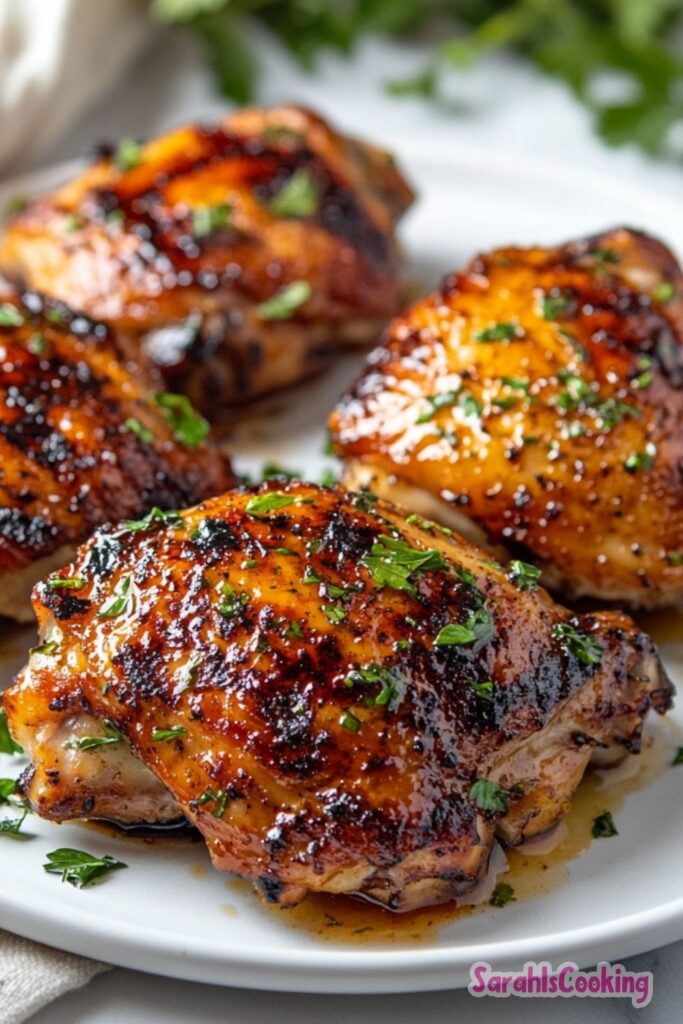
Discover the ultimate way to cook bone-in, skin-on chicken thighs on your Traeger or any wood pellet grill. This recipe delivers incredibly juicy meat with perfectly crispy, smoky skin in under an hour. A simple lemon-herb marinade enhances the natural flavor of the chicken, making it a family favorite for quick weeknight dinners or weekend gatherings. Whether you are new to pellet grilling or a seasoned pro, these thighs are foolproof and delicious.
Ingredients
The Marinade
The Chicken
Instructions
Prepare the Marinade
In a small bowl or jar, whisk together the olive oil, lemon juice, Dijon mustard, sea salt, dried thyme, paprika, and black pepper until well emulsified.Marinate the Chicken
Place the chicken thighs in a large zip-top bag or a shallow dish with a lid. Pour the marinade over the chicken, ensuring each piece is coated. Seal or cover and refrigerate for at least 1 hour, or up to 4 hours for deeper flavor.Preheat the Grill
About 20 minutes before you plan to cook, remove the chicken from the refrigerator to let it come to room temperature. Preheat your Traeger or wood pellet grill to 450°F (232°C).Grill Skin-Side Down
Remove chicken from the marinade (do not rinse or wipe off). Place the thighs skin-side down directly on the grill grates. Close the lid and grill for approximately 20 minutes. This renders the fat and crisps the skin.Flip and Finish Cooking
Flip the chicken thighs over. Continue grilling for another 10-15 minutes, or until the internal temperature reaches 165°F (74°C) at the thickest part of the thigh, near the bone.Rest and Serve
Remove the chicken from the grill and let it rest on a plate or cutting board for 10 minutes. This allows the juices to redistribute, ensuring moist meat. Serve warm.
Nutrition Facts
Servings 5
Serving Size 1 thigh
- Amount Per Serving
- Calories 324kcal
- % Daily Value *
- Total Fat 21g33%
- Saturated Fat 6g30%
- Cholesterol 112mg38%
- Sodium 958mg40%
- Potassium 380mg11%
- Protein 30g60%
* Percent Daily Values are based on a 2,000 calorie diet. Your daily value may be higher or lower depending on your calorie needs.
Note
For best results, use a digital meat thermometer to ensure accuracy. Do not overcrowd the grill; leave space between thighs for proper air circulation. Leftovers can be stored in an airtight container in the refrigerator for up to 3 days.