
This Easter Poke Cake is designed to deliver consistent results with minimal guesswork. It combines a soft, pastel-swirled cake with a creamy pudding layer that soaks into every bite, creating a dessert that stays moist and balanced.
I approach recipes like this with a testing mindset. The goal is not just visual appeal, but structure that holds up after chilling, slicing, and serving. Every step here supports that outcome.
It may look intricate at first glance, but the method is straightforward. Once you understand the sequence, it becomes one of the most reliable desserts you can make for a holiday table.
Who This Recipe Is For
This recipe is for home bakers who want a festive dessert without complicated techniques. If you’re comfortable using a mixing bowl and oven, you can make this successfully.
It also works well for anyone hosting gatherings. The make-ahead nature removes last-minute pressure, which matters when you’re managing multiple dishes.
If you like recipes that are flexible but still structured, this one fits well. You can customize colors and toppings while still relying on a stable base.
Why This Recipe Works
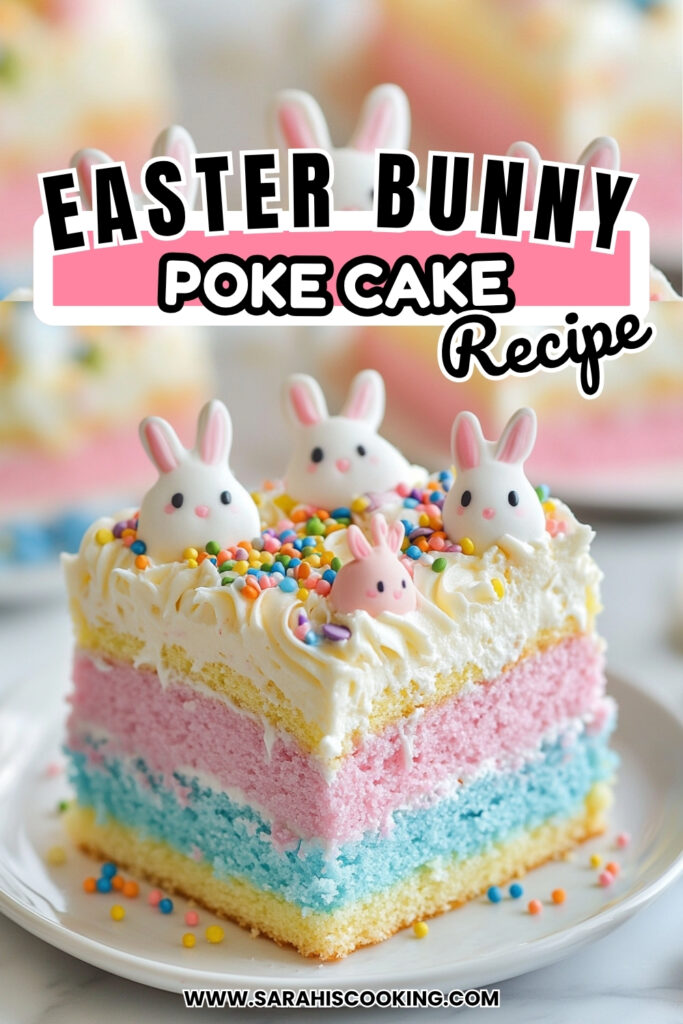
The structure of this cake relies on a balance between a light crumb and added moisture from the pudding layer. Using egg whites keeps the cake pale and fluffy, which allows the pastel colors to stay clean and defined.
The addition of Greek yogurt and whole milk creates a batter that is rich but not heavy. This combination ensures the cake can absorb the pudding without collapsing or becoming soggy.
Poking holes at the right depth allows the pudding to settle evenly throughout the cake. This step is essential because it distributes moisture instead of leaving it only on the surface.
The whipped cream topping is lightly sweetened and stable enough to hold its shape after chilling. It balances the sweetness of the pudding and keeps the final dessert from feeling overly dense.
Ingredients Needed for the Recipe
- White cake mix – provides a consistent base structure and allows the pastel colors to remain bright and clear.
- Egg whites – add lightness and structure without introducing yellow tones that would dull the colors.
- Vegetable oil – ensures moisture and tenderness, preventing a dry crumb after refrigeration.
- Greek yogurt – contributes density and softness, helping the cake hold its shape when soaked.
- Whole milk – balances the batter consistency and adds richness without thinning it too much.
- Gel food coloring – delivers concentrated color without adding excess liquid that could affect texture.
- Instant vanilla pudding mix – forms the filling that seeps into the cake, adding flavor and moisture.
- Whole milk for pudding – activates the pudding mix and creates a smooth, pourable consistency.
- Heavy cream – forms the base of the whipped topping, adding richness and structure.
- Granulated sugar – lightly sweetens the whipped cream while helping it stabilize.
- Shredded coconut – adds texture and visual contrast on top of the cake.
- Easter sprinkles or candy – provide decoration and a festive finish without affecting structure.
Ingredient Insights and Function
Using a white cake mix is intentional. It creates a neutral base that highlights the pastel colors. A yellow or butter cake mix will still work, but the final look will be less vibrant.
Egg whites are not just for color. They also produce a lighter crumb compared to whole eggs. If you use whole eggs, expect a slightly denser cake with a warmer tone.
Greek yogurt adds stability to the batter. Sour cream can be used as a substitute, but it will slightly increase richness and may make the crumb softer.
Gel food coloring is important for control. Liquid coloring can thin the batter, which may cause uneven baking or muddy swirls if overmixed.
For the pudding layer, instant mix is necessary. Cook-and-serve pudding will not set quickly enough and will not penetrate the cake in the same way.
If you swap whipped cream for a tub topping, the cake will hold longer in the fridge. However, fresh whipped cream provides better flavor and a lighter finish.
How to make Easter Bunny Poke Cake?
Step 1 – Prepare the Batter
Preheat the oven to 350°F and grease a 9×13-inch baking dish. In a large bowl, mix the cake mix, egg whites, oil, Greek yogurt, and milk until smooth, about 2 minutes.
The batter should be thick but pourable. If it feels overly stiff, check your measurements before adjusting. Over-thinning will affect the final structure.
Step 2 – Color the Batter
Divide the batter evenly into three bowls. Add a small amount of gel food coloring to each and mix gently until the colors are uniform.
Start with minimal coloring and build gradually. Overmixing at this stage can incorporate too much air or weaken the batter consistency.
Step 3 – Create the Marbled Effect
Drop spoonfuls of each colored batter into the prepared dish, alternating colors. Use a butter knife to lightly swirl the batter.
Keep the swirling minimal. Too much movement will blend the colors instead of creating distinct patterns.
Step 4 – Bake the Cake
Bake for 23 to 28 minutes until the edges are lightly golden and a toothpick inserted in the center comes out with a few moist crumbs.
Allow the cake to cool completely before moving to the next step. A warm cake will not hold the pudding properly.
Step 5 – Poke the Cake
Use the handle of a wooden spoon to poke holes across the surface, about two-thirds deep. Gently wiggle the spoon to widen the holes slightly.
Spacing matters here. Even distribution ensures the pudding reaches all parts of the cake.
Step 6 – Add the Pudding Layer
Whisk the pudding mix with milk for about 2 minutes until smooth. Immediately pour it over the cake and spread evenly.
Work quickly before the pudding thickens. Press gently with a spatula to guide it into the holes.
Step 7 – Chill and Set
Refrigerate the cake for at least 60 to 90 minutes. This allows the pudding to set and the flavors to develop.
Do not rush this step. The structure depends on proper chilling before adding the topping.
Step 8 – Prepare the Whipped Cream
Beat heavy cream and sugar until stiff peaks form. The cream should hold its shape without collapsing.
Overbeating will cause graininess, so stop once firm peaks are achieved.
Step 9 – Finish and Decorate
Spread the whipped cream evenly over the chilled cake. Sprinkle with shredded coconut and Easter candies.
Chill for at least 2 more hours before slicing. This final rest improves texture and makes clean cuts easier.
How I Tested and Refined This Recipe
I tested several versions of this cake to find the right balance between moisture and structure. Early attempts used whole eggs, which made the crumb heavier and dulled the pastel colors.
I also experimented with different dairy ratios. Removing the yogurt made the cake too soft after adding pudding, while too much yogurt created a dense texture.
The depth of the holes was another adjustment point. Shallow holes left dry pockets, while overly deep ones caused uneven soaking. Two-thirds depth gave the best distribution.
I tested both homemade whipped cream and stabilized alternatives. Fresh whipped cream had the best flavor, but stabilized versions held better for longer storage. Both are valid depending on timing.
Even the swirl technique required refinement. Over-swirling consistently produced muddy colors, so I settled on minimal movement for a cleaner look.
Common Mistakes and How to Avoid Them
- Overmixing the batter – leads to a dense cake instead of a light crumb.
- Using liquid food coloring – can thin the batter and dull the colors.
- Not cooling the cake fully – causes the pudding to separate instead of soaking properly.
- Poking holes too shallow – results in uneven moisture distribution.
- Waiting too long to pour pudding – makes it too thick to absorb into the cake.
- Overwhipping the cream – creates a grainy texture instead of smooth peaks.
- Skipping chill time – leads to a loose structure and messy slices.
Make-Ahead, Storage, and Freezing Guidance
This cake holds well in the refrigerator for up to 3 days when covered tightly. The texture actually improves after the first day as the pudding fully settles.
If making more than 12 hours ahead, consider using stabilized whipped cream or a prepared topping. Fresh whipped cream may soften over extended storage.
Freezing is not ideal once assembled. The pudding and whipped cream can separate upon thawing, affecting both texture and appearance.
If needed, you can freeze the baked cake layer alone. Thaw completely before adding the pudding and toppings for best results.
Tips
- Use a light hand when swirling to keep colors distinct.
- Chill your mixing bowl before whipping cream for better volume.
- Space holes evenly to ensure consistent soaking.
- Slice with a clean, sharp knife for neat layers.
- Add toppings just before serving for the freshest look.
- Use whole milk for richer pudding texture.
- Let the cake rest overnight for the best flavor development.
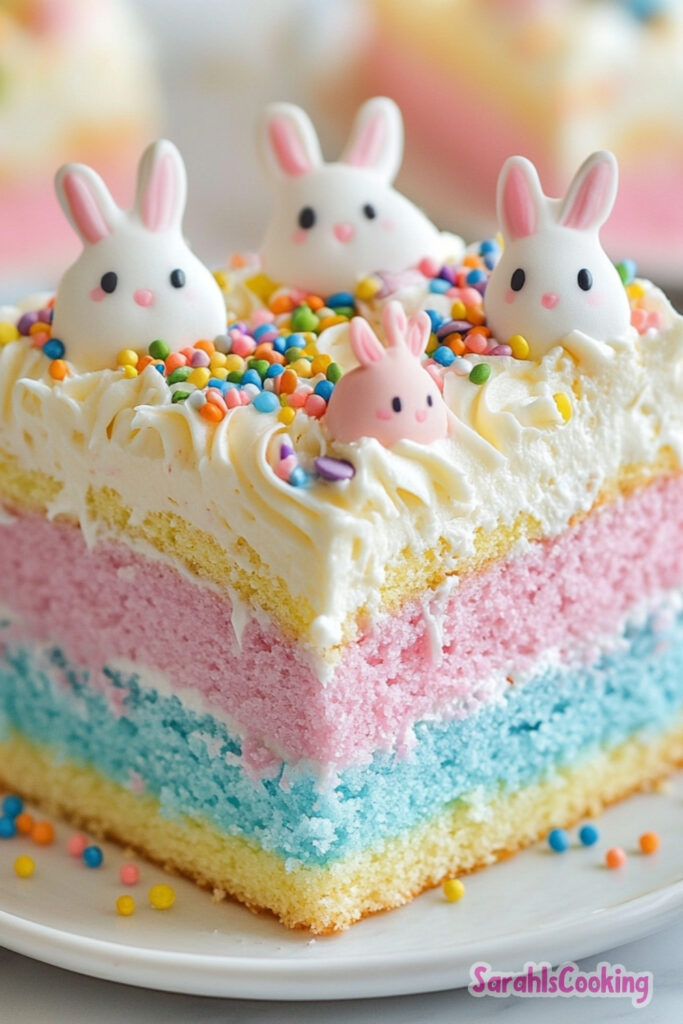

Easter Bunny Poke Cake Recipe
Description
This Easter Poke Cake is a fun and festive dessert that's way easier to make than it looks! A pastel-colored, marbled cake soaks up creamy vanilla pudding, then gets topped with fluffy whipped cream, coconut, and candy eggs. Perfect for spring gatherings, this cake offers a bright, fresh flavor profile with customizable colors and toppings. It's cost-effective, made with simple ingredients, and tastes even better when made ahead!
ingredients
Cake
Pudding Layer
Whipped Cream Layer & Toppings
Instructions
For the Cake
Preheat and Prep
Preheat oven to 350°F (175°C). Grease a 9×13-inch glass baking dish and set aside.Mix Batter
In a large bowl, beat the white cake mix, egg whites, vegetable oil, Greek yogurt, and 3/4 cup whole milk until smooth (about 2 minutes).Do not follow box instructions; use these specific ingredients for a fluffier texture.Color Batter
Divide batter evenly into three bowls. Add a drop or two of pink, yellow, and blue gel food coloring to each bowl respectively and mix. Adjust drops for desired pastel intensity.Gel coloring is preferred over liquid for vibrant colors without thinning the batter.Create Marble Effect
Drop spoonfuls of colored batter into the prepared dish, alternating colors randomly. Lightly swirl with a butter knife just once or twice to create a marbled effect. Do not overmix.Overmixing will muddy the colors.Bake
Bake for 23-28 minutes, until a toothpick inserted in the center comes out clean or with a few moist crumbs. Allow the cake to cool completely in the pan.Poke Holes
Once cooled, use the handle of a wooden spoon to poke holes across the entire surface of the cake, about 2/3 of the way down. Gently wiggle the spoon to widen holes slightly.Ensure holes are large enough for the pudding to seep in.
For the Pudding Layer
Prepare Pudding
In a large bowl, whisk the instant vanilla pudding mix and 2 3/4 cups cold whole milk for 2 minutes until thickened.Soak Cake
Immediately pour the pudding mixture over the cooled cake. Spread evenly with a rubber spatula, gently pushing the pudding into the holes.Chill
Cover and refrigerate for 60-90 minutes to allow the pudding to set and soak into the cake.
For the Whipped Cream Layer
Make Whipped Cream
In a large bowl, beat the heavy cream and granulated sugar with an electric mixer on medium-high speed until stiff peaks form (about 2 minutes).Ensure cream is very cold for best results.Top Cake
Spread the whipped cream evenly over the chilled pudding layer.Decorate
Sprinkle generously with sweetened shredded coconut, Easter sprinkles, and/or candy eggs.Final Chill
Cover and refrigerate for at least 2 hours before slicing and serving to ensure clean cuts.Best served cold.
Nutrition Facts
Servings 12
Serving Size 1 slice
- Amount Per Serving
- Calories 485kcal
- % Daily Value *
- Total Fat 27gg42%
- Saturated Fat 12gg60%
- Trans Fat 0gg
- Cholesterol 65mgmg22%
- Sodium 380mgmg16%
- Potassium 180mgmg6%
- Total Carbohydrate 56gg19%
- Dietary Fiber 1gg4%
- Sugars 38gg
- Protein 5gg10%
- Calcium 10% mg
- Iron 4% mg
* Percent Daily Values are based on a 2,000 calorie diet. Your daily value may be higher or lower depending on your calorie needs.
Note
- Make-Ahead Tip: This cake is perfect for making the day before. If making more than 12 hours in advance, consider using stabilized whipped cream or a tub of whipped topping (like Cool Whip) to keep the topping fluffy.
- Color Tip: Gel food coloring is highly concentrated. Start with one drop and add more if needed to achieve vibrant pastels without altering the batter consistency.
- Variation: Swap the vanilla pudding for white chocolate or lemon pudding to complement the citrus notes if desired.
- Storage: Keep leftovers stored in an airtight container or tightly wrapped in plastic wrap in the fridge for up to 3 days.