
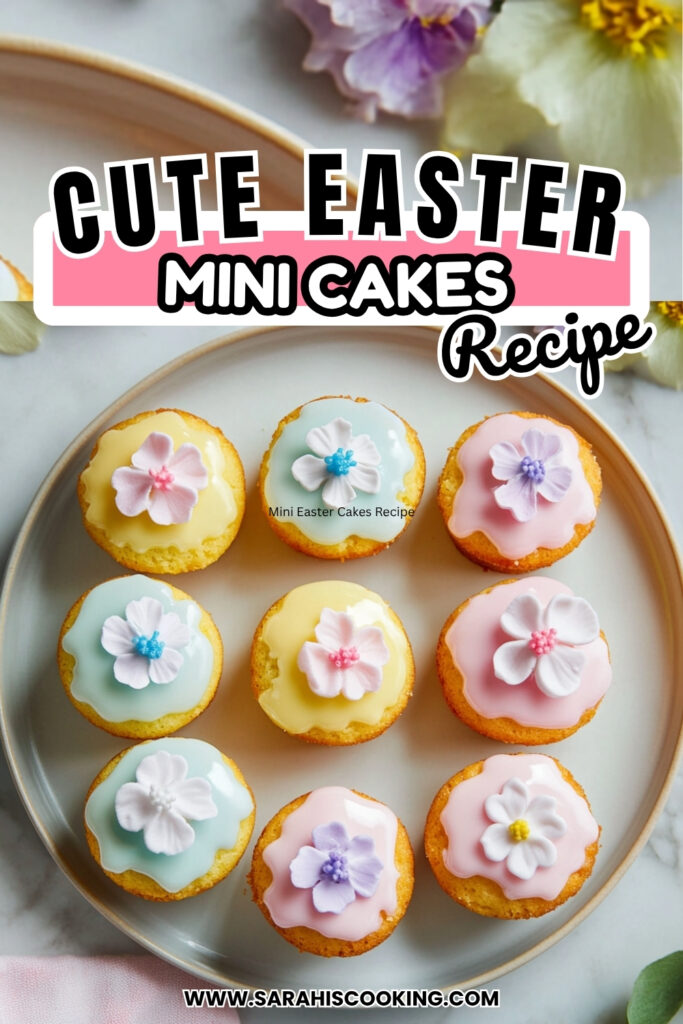
These mini Easter cakes are designed to deliver consistent, reliable results in a short amount of time. The texture is soft, lightly springy, and balanced with a bright lemon finish that keeps the sweetness in check.
I have tested this recipe with a focus on structure and repeatability. It is built on a classic sponge method, adjusted slightly to ensure even baking in smaller portions without drying out.
The decorating element keeps things flexible. You can keep it simple or let it be a creative project, especially if you are baking with kids or preparing for a festive table.
Who This Recipe Is For
This recipe is ideal for home bakers who want dependable results without complicated techniques. If you are comfortable with basic mixing and oven use, you will have no trouble here.
It is especially well suited for families or anyone baking with children. The method is straightforward, and the decorating stage allows for creativity without affecting the structure of the cake.
If you prefer recipes that are efficient, adaptable, and easy to scale, this one fits neatly into that category.
Why This Recipe Works
The base follows a classic equal-weight sponge ratio of butter, sugar, and flour, supported by eggs for structure. This balance ensures the cakes rise evenly while staying tender.
Lemon zest and juice are used not just for flavor but to cut through sweetness and enhance perceived freshness. The acidity also subtly tightens the crumb, giving a cleaner bite.
Milk is added to loosen the batter slightly, which is important for small cakes. It allows the mixture to spread evenly in the cases and bake without forming dense centers.
The icing is intentionally simple. A lemon-based glaze sets lightly on top, adding sweetness without overwhelming the sponge or making it heavy.
Ingredients Needed for the Recipe
- Butter – Provides richness and moisture while contributing to the soft crumb structure when creamed properly.
- Caster sugar – Fine texture helps incorporate air during creaming, which supports rise and lightness.
- Eggs – Act as the main structural binder, adding stability and helping the cakes hold their shape after baking.
- Self-raising flour – Contains leavening agents that ensure an even rise without needing additional baking powder.
- Lemon zest – Adds concentrated citrus oils that enhance flavor without affecting moisture balance.
- Lemon juice – Brings acidity that brightens the taste and slightly firms the crumb.
- Milk – Adjusts batter consistency, ensuring a smooth texture and even baking in smaller portions.
- Icing sugar – Forms the base of the glaze, dissolving easily for a smooth finish.
- Food coloring – Used purely for visual appeal and customization during decoration.
- Icing flowers and colored sugar – Add texture and visual contrast without impacting the cake structure.
Ingredient Insights and Function
Butter must be softened but not melted. If it is too warm, it will not trap air properly during creaming, which leads to flatter cakes. Cold butter, on the other hand, will not incorporate evenly.
Caster sugar is preferred over granulated sugar because it dissolves faster. If you substitute granulated sugar, expect a slightly coarser crumb and less aeration during mixing.
Eggs should be at room temperature. Cold eggs can cause the batter to split during mixing, which affects final texture and consistency.
Self-raising flour simplifies the process, but if using plain flour, you must add a measured amount of baking powder. Incorrect ratios here can lead to either dense or overly airy cakes.
Lemon is a defining element. Bottled juice can work in a pinch, but it lacks the brightness of fresh zest and juice combined. Removing zest reduces overall flavor depth.
Milk is adjustable within a small range. Too little results in a stiff batter, while too much can weaken structure and cause sinking in the center.
For icing, icing sugar must be sifted. Lumps will not dissolve fully and will create an uneven glaze. Substituting with granulated sugar is not recommended here.
How to make Mini Easter Cakes?
Step 1 – Prepare the Oven and Pan
Preheat the oven to 180°C or 160°C for fan ovens. This ensures consistent heat from the start, which is critical for small cakes.
Line a 12-hole patty tin with paper or foil cases. Proper lining prevents sticking and supports even baking around the edges.
Step 2 – Cream Butter and Sugar
In a large bowl, beat the softened butter and caster sugar together until pale and fluffy. This step introduces air, which directly affects the rise.
The mixture should look lighter in color and slightly increased in volume. If it remains dense, continue mixing for another minute.
Step 3 – Incorporate the Eggs
Add the beaten eggs gradually, mixing well after each addition. This prevents the batter from splitting and maintains a smooth consistency.
If the mixture begins to look curdled, add a small spoonful of flour to bring it back together.
Step 4 – Fold in Dry Ingredients and Flavor
Gently fold in the self-raising flour, lemon zest, and milk. Use a light hand to avoid knocking out the air created during creaming.
The final batter should be soft and slightly dropping in consistency, not stiff or overly runny.
Step 5 – Portion the Batter
Divide the mixture evenly between the cake cases. Filling each about two-thirds full allows room for proper rise without overflow.
Uneven portions will bake at different rates, so take a moment to level them if needed.
Step 6 – Bake the Cakes
Bake for 20 to 25 minutes until the tops are pale golden. The centers should spring back when lightly pressed.
A toothpick inserted into the center should come out clean or with a few dry crumbs, not wet batter.
Step 7 – Cool Completely
Transfer the cakes to a wire rack and allow them to cool fully. Decorating warm cakes will cause the icing to melt and run off.
This cooling stage also allows the crumb to set properly, improving texture.
Step 8 – Prepare and Apply Icing
Mix icing sugar with lemon juice until smooth and pourable. Adjust thickness by adding small amounts of liquid as needed.
Divide into bowls and add food coloring. Spoon the icing over each cake and decorate immediately before it sets.
How I Tested and Refined This Recipe
I started with a standard sponge ratio and tested different liquid levels to see how the batter behaved in smaller cake cases. The original version was slightly dense in the center.
Increasing the milk by a small amount improved the texture without weakening the structure. It allowed the cakes to bake more evenly and reduced the risk of sinking.
I also tested baking temperatures. A slightly lower fan temperature produced more consistent tops without over-browning the edges.
The icing went through a few adjustments as well. Too much liquid caused it to run off completely, while too little made it difficult to spread. The final ratio gives a controlled, slightly set finish.
Each change was made with repeatability in mind. The final method works reliably across different ovens and standard home baking conditions.
Common Mistakes and How to Avoid Them
- Overmixing the batter – Leads to dense, tough cakes. Fold gently once flour is added.
- Using cold butter or eggs – Prevents proper mixing and can cause uneven texture.
- Overfilling the cases – Causes overflow and uneven baking.
- Opening the oven too early – Can cause the cakes to collapse in the center.
- Incorrect oven temperature – Too high leads to dry edges, too low results in undercooked centers.
- Skipping the cooling step – Icing will melt and slide off warm cakes.
- Adding too much lemon juice to icing – Creates a thin glaze that will not set properly.
Make-Ahead, Storage, and Freezing Guidance
These cakes can be made a day ahead and stored in an airtight container at room temperature. The texture remains soft, and the flavor develops slightly overnight.
If storing longer, refrigeration is possible but may firm up the crumb. Allow the cakes to return to room temperature before serving for best texture.
For freezing, store the un-iced cakes in a sealed container for up to one month. Thaw at room temperature and decorate fresh for best results.
If reheating is needed, a few seconds in a microwave can soften the crumb, but avoid overheating as it can dry out the cake quickly.
Tips
- Use a cookie scoop for evenly portioned batter.
- Zest the lemon before juicing to make the process easier.
- Test one cake early if unsure about oven timing.
- Rotate the tray halfway through baking if your oven has hot spots.
- Keep icing slightly thick for better control during decorating.
- Decorate immediately after icing to ensure toppings stick well.
- Let kids decorate freely but guide icing consistency for best results.
Mini Easter Cakes Recipe
Description
These delightful Mini Easter Cakes are a bright, fresh treat perfect for spring celebrations and family gatherings. Featuring a zesty lemon sponge topped with colorful icing and festive decorations, they are an excellent recipe to make with kids. Ready in just over 30 minutes, these tiny cakes bring a cheerful citrus flavor to your Easter table.
ingredients
For the Cakes
For the Icing & Decoration
Instructions
Preheat and Prepare
Preheat the oven to 180°C (Fan 160°C / 350°F / Gas Mark 4). Line a 12-hole patty tin with foil or paper cake cases.Ensuring the cases are secure helps the cakes keep their shape.Cream Butter and Sugar
In a large bowl, cream the softened butter and caster sugar together until light and fluffy. Use an electric whisk if available for best results.This step incorporates air for a lighter sponge.Add Eggs and Dry Ingredients
Beat in the British Lion eggs a little at a time to prevent curdling. Gently fold in the self-raising flour, lemon zest, and milk until you have a soft, smooth mixture.Do not overmix once the flour is added to keep the cakes tender.Bake
Divide the sponge mixture evenly between the cake cases. Bake for 20–25 minutes until pale golden and the centers bounce back when lightly touched.Rotate the tray halfway through for even baking.Cool
Remove from the oven and leave the cakes in the tin for 2 minutes, then transfer to a wire rack to cool completely before icing.Icing warm cakes will cause the glaze to melt and run off.Make the Icing
Stir 2 tablespoons of lemon juice into the sifted icing sugar and mix until smooth. Divide the icing into small bowls and add a few drops of food coloring to create two or three pastel shades.Adjust consistency with more juice or sugar as needed.Decorate
Spoon the colored icing over the cooled cakes. Immediately decorate with edible icing flowers and colored crystal sugar before the icing sets.Get creative with patterns or let kids design their own!
Nutrition Facts
Servings 12
Serving Size 1 cake
- Amount Per Serving
- Calories 165kcal
- % Daily Value *
- Total Fat 8gg13%
- Saturated Fat 4.8gg24%
- Trans Fat 0gg
- Cholesterol 45mgmg15%
- Sodium 95mgmg4%
- Potassium 45mgmg2%
- Total Carbohydrate 22gg8%
- Dietary Fiber 0.3gg2%
- Sugars 16gg
- Protein 2.5gg5%
- Calcium 25 mg
- Iron 0.6 mg
* Percent Daily Values are based on a 2,000 calorie diet. Your daily value may be higher or lower depending on your calorie needs.
Note
- Make Ahead: These cakes can be baked a day in advance; store in an airtight container and ice on the day of serving.
- Kids Activity: Set up a decorating station with different colored icings and toppings for a fun party activity.
- Dietary Variation: For a gluten-free option, substitute the self-raising flour with a gluten-free self-raising blend.
- Flavor Twist: Add a teaspoon of lavender extract to the batter for a floral note that pairs beautifully with the lemon.