
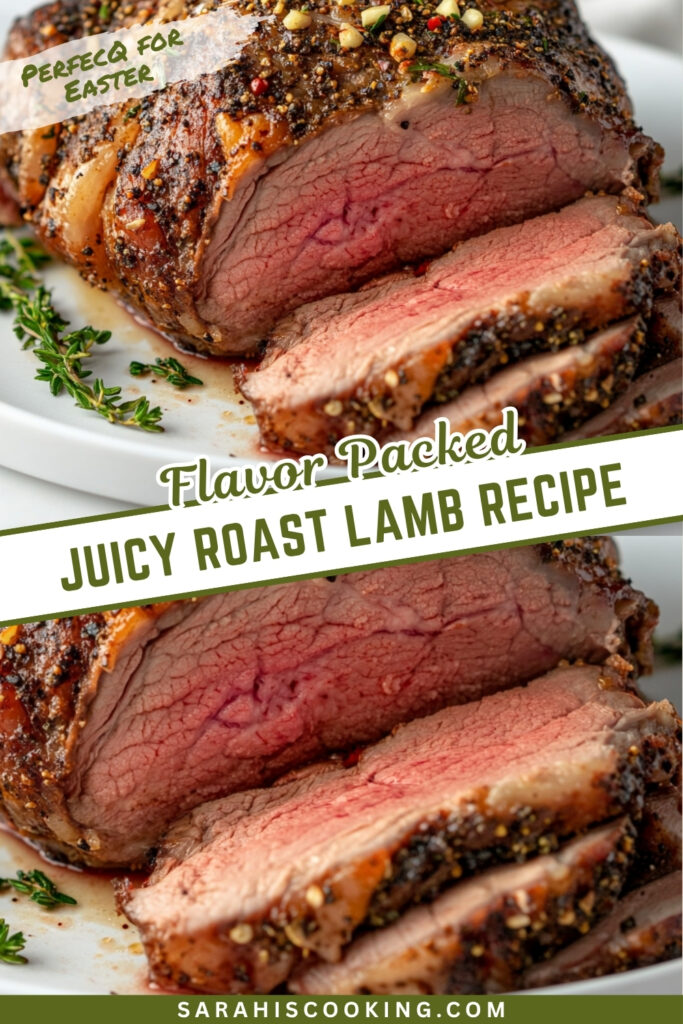
I rely on this roasted leg of lamb when I want something dependable, not just impressive. It’s a straightforward method that delivers consistent results with very little guesswork.
The goal here is simple: a tender, juicy roast with a well-seasoned crust and a clean, balanced flavor. No complicated marinades or fussy techniques, just solid execution.
I’ve made this enough times to trust it. Once you understand the timing and temperature cues, it becomes one of those recipes you can return to without second-guessing.
Ingredients Needed for the Recipe
- Olive oil – Acts as the base for the seasoning and helps conduct heat evenly, which supports proper browning and prevents the surface from drying out.
- Kosher salt – Essential for drawing out moisture early, then redistributing it back into the meat during cooking for better internal seasoning.
- Black pepper – Adds mild heat and depth, balancing the richness of the lamb without overpowering it.
- Garlic powder – Provides consistent garlic flavor that adheres evenly to the surface, avoiding burning that can happen with fresh garlic.
- Dried rosemary – Brings structure to the flavor profile with its woody, aromatic notes that pair naturally with lamb.
- Ground cumin – Adds warmth and a subtle earthiness that rounds out the seasoning blend.
- Leg of lamb (semi-boneless, about 4 pounds) – The main structure of the dish, with enough fat to stay moist while roasting and enough density to hold its shape when sliced.
How to make Roasted Leg of Lamb?
Step 1 – Build the seasoning mixture
Combine olive oil, salt, pepper, garlic powder, rosemary, and cumin in a small bowl. The mixture should look cohesive and slightly thick, not watery.
This consistency matters because it needs to cling to the meat. If it slides off, the seasoning won’t distribute evenly during roasting.
Step 2 – Coat the lamb thoroughly
Rub the mixture all over the lamb, making sure every surface is covered. Pay attention to creases and thicker areas where seasoning can be missed.
The coating should feel even and lightly slick, not dripping. This ensures the outer layer develops flavor without becoming greasy.
Step 3 – Rest at room temperature
Place the lamb on a rack inside a roasting pan, fat side up, and let it sit at room temperature for one hour. This step stabilizes internal temperature.
Skipping this can lead to uneven cooking, where the outside overcooks before the center reaches the target doneness.
Step 4 – Start with high heat
Preheat the oven to 425°F. Insert a meat thermometer into the thickest part, avoiding contact with bone.
Roast for 15 minutes at this temperature to develop a browned crust. This initial blast of heat sets the exterior texture.
Step 5 – Lower heat and cook through
Reduce the oven temperature to 375°F and continue roasting. Expect roughly 20 minutes per pound, but rely on temperature, not time alone.
For medium-rare, aim for 135°F internally. The meat should feel firm but still slightly springy when pressed.
Step 6 – Rest before slicing
Remove the lamb from the oven and loosely cover it with foil. Let it rest for 20 minutes before cutting.
This allows juices to redistribute. If you cut too early, you’ll lose moisture and end up with dry slices.
Why This Recipe Works
This method uses a two-stage roasting process, which is key for both texture and flavor. High heat at the start creates a crust, while the lower temperature gently cooks the interior.
The seasoning ratio is intentional. Salt leads, supported by aromatics that enhance rather than compete with the natural flavor of the lamb.
Using oil as a binder ensures even heat transfer across the surface. Combined with the fat cap, it creates a self-basting effect during roasting.
How I Tested and Refined This Recipe
I tested several variations of this recipe, starting with different temperature approaches. A single low-temperature roast produced uneven browning and lacked depth on the outside.
I also tried skipping the resting period before cooking. That resulted in a gradient of doneness, with overcooked edges and an undercooked center.
Fresh garlic was another variable. While flavorful, it tended to burn during the high-heat phase, which is why I settled on garlic powder for consistency.
The final version balances simplicity and control. Every step has a purpose, and removing any one of them noticeably affects the result.
Common Mistakes and How to Avoid Them
- Skipping the room temperature rest – leads to uneven cooking and a raw center.
- Not using a thermometer – guessing doneness often results in overcooked meat.
- Overcooking past medium – causes the lamb to become dry and lose its natural flavor.
- Under-seasoning – results in bland slices, especially in thicker sections.
- Letting the top over-brown – cover loosely with foil if roasting a larger piece for extended time.
- Slicing immediately after roasting – releases juices and dries out the meat.
Make-Ahead, Storage, and Freezing Guidance
Cooked lamb keeps well in the refrigerator for up to 4 days when stored in an airtight container. The texture stays tender if it’s not overheated.
For reheating, use low power in the microwave or warm it gently in the oven, covered. High heat will quickly dry it out.
This roast also freezes well. Slice it before freezing for easier portions, and wrap tightly to prevent freezer burn.
When thawed, the texture remains good, though slightly firmer. It’s best used in sandwiches or reheated dishes rather than served as a centerpiece again.
Tips
- Place the lamb fat side up so it naturally bastes itself while roasting.
- Adjust seasoning amounts if using a larger cut to maintain flavor balance.
- Use a rack to allow air circulation and prevent the bottom from steaming.
- Check temperature early to avoid overshooting your target doneness.
- Let the knife do the work when slicing – don’t press down, which squeezes out juices.
- Serve leftovers cold for a different but equally enjoyable texture.
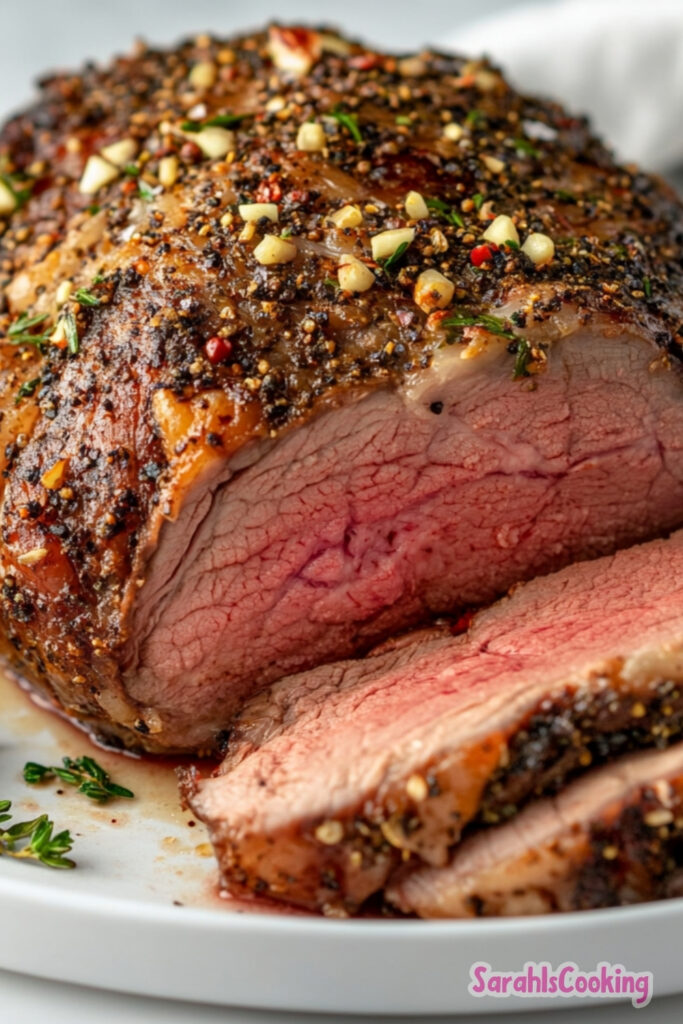

Roasted Leg of Lamb Recipe
Description
This roasted leg of lamb recipe delivers tender, juicy, and incredibly flavorful meat with a simple spice rub of olive oil, garlic, rosemary, and cumin. Perfect for holiday gatherings, Sunday dinners, or any special occasion. The two-stage roasting method ensures a beautifully browned exterior while keeping the inside perfectly medium-rare. Minimal prep, maximum wow factor.
ingredients
Instructions
- In a small bowl, mix together the olive oil, kosher salt, black pepper, garlic powder, dried rosemary, and ground cumin until well combined.
- Pat the leg of lamb dry with paper towels. Rub the olive oil spice mixture all over the lamb, covering evenly on all sides.
- Place the lamb, flat side down and fat cap up, on a greased rack set inside a rimmed roasting pan. Let rest at room temperature for 1 hour to promote even cooking.
- Preheat oven to 425°F (220°C). Insert an oven-safe meat thermometer into the thickest part of the lamb, avoiding the bone. Set thermometer to alert at 135°F (57°C) for medium-rare.
- Roast the lamb at 425°F (220°C) for 15 minutes to develop a golden crust.
- Reduce oven temperature to 375°F (190°C). Continue roasting until the internal temperature reaches 135°F (57°C) for medium-rare, approximately 1 hour 20 minutes (about 20 minutes per pound).For larger roasts, loosely tent with foil after 90 minutes to prevent over-browning.
- Remove lamb from oven, loosely cover with aluminum foil, and let rest for 20 minutes before slicing. This allows juices to redistribute for maximum tenderness.
- Slice against the grain and serve warm. Enjoy with your favorite sides!
Nutrition Facts
Servings 8
Serving Size 3 oz (85g) cooked
- Amount Per Serving
- Calories 219kcal
- % Daily Value *
- Total Fat 14g22%
- Saturated Fat 5.9g30%
- Cholesterol 79mg27%
- Sodium 56mg3%
- Potassium 266mg8%
- Protein 21.7g44%
- Calcium 9.4 mg
- Iron 1.7 mg
* Percent Daily Values are based on a 2,000 calorie diet. Your daily value may be higher or lower depending on your calorie needs.
Note
- Temperature is key: Use an oven-safe meat thermometer for perfect doneness. 135°F = medium-rare, 145°F = medium (USDA recommendation).
- Resting matters: Always let the roast rest 20 minutes before slicing to lock in juices and ensure tender slices.
- Scaling up: For roasts larger than 4 lbs, increase oil and spices proportionally (e.g., +50% for a 6 lb roast) and tent with foil after 90 minutes to prevent over-browning.
- Leftovers: Store in an airtight container up to 4 days. Reheat gently at 50% microwave power or enjoy cold with quick pickles, Dijon mustard, or sriracha mayo.