
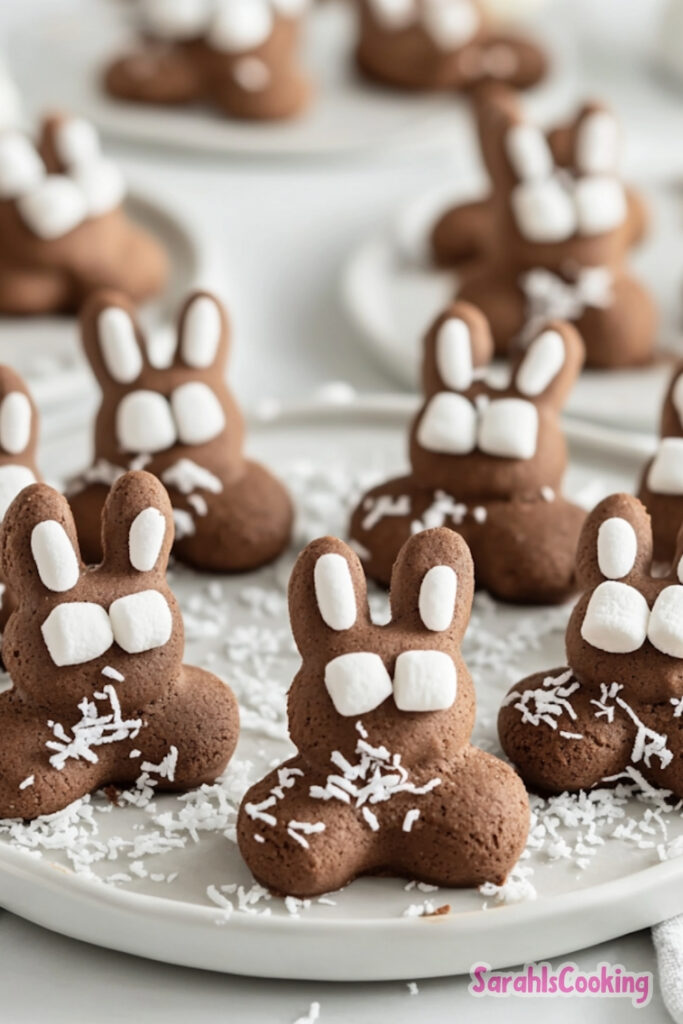
These Easter bunny biscuits are designed to be both charming and dependable. The chocolate biscuit base bakes firm with a gentle snap, while the white chocolate coating and coconut marshmallow tail add contrast in texture and sweetness. The result feels festive without sacrificing structure.
I have always believed that decorative baked goods should still function as good recipes. These biscuits hold their shape during baking, decorate cleanly, and stay crisp for days without becoming dry. That reliability matters just as much as the final appearance.
The dough is straightforward and forgiving, but the ratios are intentional. A balance of butter, cocoa, and flour produces a dough that rolls easily, cuts sharply, and bakes evenly. Once decorated, the biscuits look playful yet polished enough for gifting.
If you enjoy baking treats that are both visually fun and technically sound, these bunny biscuits deliver exactly that.
Who This Recipe Is For
This recipe is ideal for home bakers who enjoy seasonal treats but still want reliable results. If you like cookie dough that rolls smoothly and cutters that produce clean shapes, this method will feel comfortable and predictable.
It also works well for intermediate bakers who appreciate understanding why a recipe behaves the way it does. The dough is simple, but small choices such as chilling time and thickness make a noticeable difference.
If you bake with children or prepare edible gifts during the spring holidays, these biscuits are especially useful. The decorating process is simple enough to share, yet the finished cookies still look carefully crafted.
Why This Recipe Works

The biscuit dough uses a classic butter-sugar creaming method. This step creates a slightly aerated base that prevents the cookies from baking dense while still maintaining enough structure to hold sharp bunny shapes.
The flour-to-cocoa ratio is particularly important. Too much cocoa weakens structure and makes the dough fragile, while too little dulls the chocolate flavor. This balance gives the biscuits their deep color without sacrificing strength.
Chilling the dough is another structural decision. Resting the dough allows the butter to firm up and the flour to hydrate fully. That rest prevents spreading in the oven and keeps the bunny outlines crisp.
The white chocolate coating adds sweetness and contrast, but it also serves as an edible adhesive. It secures the marshmallow tail while creating a clean decorative finish that sets firmly once cooled.
Ingredients Needed for the Recipe
- Unsalted butter – Provides richness and creates the tender crumb of the biscuit while allowing controlled salt levels.
- Caster sugar – Fine sugar that creams smoothly with butter, helping produce a light texture and subtle crispness.
- Vanilla extract – Softens the bitterness of cocoa and rounds out the overall flavor profile.
- Egg – Adds structure and binds the dough so it rolls without cracking.
- Plain flour – The structural backbone of the biscuit, giving strength and stability during baking.
- Cocoa powder – Provides deep chocolate flavor and dark color while slightly drying the dough for clean cuts.
- White chocolate – Used for dipping and decorating, creating sweetness and helping the marshmallow tails adhere.
- Desiccated coconut – Adds texture and creates the fluffy appearance of the bunny tail.
- Mini marshmallows – Form the base of the bunny tails and add a soft chew that contrasts the crisp biscuit.
Ingredient Insights and Function
Butter must be softened but not melted. When properly softened, it creams easily with sugar and creates the correct structure. Melted butter will make the dough greasy and difficult to roll.
Caster sugar works best because its small crystals dissolve quickly during creaming. Granulated sugar can be used if necessary, but the dough may feel slightly grainier and require a little more mixing.
Natural cocoa powder gives the most balanced flavor here. Dutch processed cocoa can be used, but it tends to create a smoother and slightly milder chocolate profile.
If you need to substitute the egg, a flax egg may bind the dough, but the texture will be more delicate. The biscuits may also spread slightly more during baking.
White chocolate should be chopped into small pieces before melting. This allows it to melt evenly and prevents scorching, which can happen quickly with microwave heating.
Desiccated coconut creates the fluffy tail texture. Larger coconut flakes do not adhere as well to the marshmallow and may fall off during storage.
How to make Easter Bunny Biscuits
Step 1 – Cream the Butter and Sugar
Place the softened butter and caster sugar in a mixing bowl. Beat with a wooden spoon or electric mixer for several minutes until the mixture looks slightly paler and smoother.
This step should create a creamy texture without becoming overly fluffy. Proper creaming helps the biscuits bake evenly and prevents them from feeling heavy.
Step 2 – Add the Egg and Vanilla
Mix in the vanilla extract and egg, beating until fully incorporated. The mixture may look slightly loose at first but should quickly come together into a smooth batter.
Scrape down the sides of the bowl to ensure everything mixes evenly. Uneven mixing at this stage can create streaks in the dough later.
Step 3 – Incorporate the Dry Ingredients
Add the flour and cocoa powder gradually while mixing. Continue beating until the mixture begins to clump and form a soft dough.
Once the dough starts pulling together, finish bringing it together with your hands. Overmixing at this stage can make the biscuits tough.
Step 4 – Chill the Dough
Shape the dough into a flat disc, wrap it well, and place it in the refrigerator for about 45 minutes. This chilling step is essential for controlling spread during baking.
The dough should feel firm but still pliable when ready. If it becomes too hard, allow it to sit at room temperature for a few minutes before rolling.
Step 5 – Roll and Cut the Biscuits
Roll the chilled dough between two sheets of baking parchment until it reaches about 5 mm thickness. Rolling between parchment prevents sticking and keeps the dough smooth.
Use a bunny-shaped cutter to stamp out the biscuits. Re-roll scraps gently to avoid warming the dough too much.
Step 6 – Bake the Biscuits
Arrange the cut biscuits on lined baking sheets, leaving a little space between each one. Bake in a preheated oven at 200°C for 10 to 12 minutes.
The biscuits should feel set around the edges while remaining slightly soft in the center. They will firm up as they cool.
Step 7 – Cool Completely
Allow the biscuits to rest on the tray for a few minutes before transferring them to a wire rack. Moving them too early can cause breakage.
Cooling completely is important before decorating. Warm biscuits will melt the chocolate coating and create uneven finishes.
Step 8 – Prepare the Bunny Tails
Melt the white chocolate in short microwave bursts, stirring every 10 seconds until smooth. Alternatively, melt it gently over a bowl of barely simmering water.
Dip a mini marshmallow into the melted chocolate, coating the base and sides. Roll it in desiccated coconut until fully covered, then set aside to firm up.
Step 9 – Decorate the Biscuits
Dip half of each cooled biscuit into the melted white chocolate. Allow excess chocolate to drip off so the coating stays thin and even.
Press a coconut marshmallow onto the dipped side to form the bunny tail. Let the biscuits sit undisturbed until the chocolate fully sets.
How I Tested and Refined This Recipe
When developing this recipe, I tested several cocoa levels to find the right balance between flavor and structure. Early batches contained more cocoa but produced fragile biscuits that cracked during cutting.
I also experimented with skipping the chilling step. Those versions spread noticeably in the oven and lost the clean bunny shape, which confirmed that resting the dough was necessary.
The marshmallow tail decoration took a few attempts as well. At first I tried attaching plain marshmallows directly, but they slipped off once the chocolate hardened.
Coating the marshmallows in chocolate before rolling them in coconut solved that problem. The chocolate acts like glue, helping the coconut stick while also anchoring the tail securely to the biscuit.
Common Mistakes and How to Avoid Them
- Skipping the dough chilling step, which causes biscuits to spread and lose their shape.
- Rolling the dough too thin, leading to overly crisp or fragile biscuits.
- Overmixing the dough after adding flour, which can make the cookies tough.
- Baking too long, which dries out the biscuits and dulls the chocolate flavor.
- Decorating while the biscuits are still warm, causing the white chocolate to slide off.
- Melting white chocolate too quickly, which can cause it to seize or burn.
Make-Ahead, Storage, and Freezing Guidance
These biscuits store well once completely cooled and decorated. Keep them in an airtight container at room temperature for up to one week.
The texture remains crisp for several days, though the marshmallow tails soften slightly over time. This change does not affect flavor but is worth noting if gifting.
Unbaked dough freezes well for up to two months. Wrap it tightly and thaw in the refrigerator before rolling and cutting.
Baked biscuits can also be frozen before decorating. Thaw at room temperature and add the chocolate coating and marshmallow tails afterward for the best presentation.
Tips
- Roll the dough between parchment sheets to avoid adding excess flour.
- If the dough warms during cutting, return it to the refrigerator for 10 minutes.
- Use a skewer or cocktail stick when dipping marshmallows into chocolate for cleaner handling.
- Tap dipped biscuits lightly to remove excess chocolate before setting them down.
- Allow decorations to set fully before stacking or packaging the biscuits.

Easter Bunny Biscuits Recipe
Description
These adorable Easter bunny biscuits feature rich double chocolate cookies topped with fluffy marshmallow tails dipped in white chocolate and coconut. Perfect for Easter celebrations, party favors, or a fun baking activity with kids. Delicious, cute, and sure to hop right into everyone's hearts!
ingredients
For the Chocolate Biscuits
For the Bunny Tails & Decoration
Instructions
Make the Biscuit Dough
- Heat the oven to 200°C (gas mark 6) and line 2 baking sheets with baking parchment.
- Put the softened butter and caster sugar in a mixing bowl. Beat with a wooden spoon or electric mixer for a few minutes until slightly paler and fluffy.
- Mix in the vanilla extract and egg until well combined.
- Gradually add the plain flour and cocoa powder, beating as you go, until the mixture starts to clump together.
- Bring the dough together with your hands, wrap in cling film, and chill in the fridge for 45 minutes.
Shape & Bake
- Remove the biscuit dough from the fridge and roll it out between 2 pieces of baking parchment to 5mm thick.
- Use a bunny-shaped cutter (or print/draw a template) to cut out shapes. Re-roll scraps as needed.
- Arrange the biscuits on the prepared baking sheets, leaving a little space between each.
- Bake for 10-12 minutes until firm to the touch. Leave on the tray for a few minutes before transferring to a wire rack to cool completely.
Decorate the Bunny Tails
- Melt the white chocolate in short bursts in the microwave, stirring every 10 seconds, or in a bowl over a pan of barely simmering water until smooth. Place the desiccated coconut into a small bowl.
- To make bunny tails: dip a mini marshmallow into the melted white chocolate (use a cocktail stick to help) and coat the base and sides. Roll the marshmallow in coconut, then set aside on parchment. Repeat for all marshmallows.
- Dip each cooled biscuit into the white chocolate so they are half-coated. Stick a coconut-covered marshmallow on as a tail while the chocolate is still wet.
- Leave to cool completely and allow the chocolate to set before packaging as gifts or serving. Store in an airtight container for up to 1 week.
Nutrition Facts
Servings 25
Serving Size 1 biscuit
- Amount Per Serving
- Calories 140kcal
- % Daily Value *
- Total Fat 7.2gg12%
- Saturated Fat 4.5gg23%
- Total Carbohydrate 16gg6%
- Dietary Fiber 0.7gg3%
- Sugars 10gg
- Protein 2.1gg5%
* Percent Daily Values are based on a 2,000 calorie diet. Your daily value may be higher or lower depending on your calorie needs.
Note
- No bunny cutter? Print a simple bunny silhouette, cut it out, and use as a template to trace around with a knife.
- Make it dairy-free: Use plant-based butter and dairy-free white chocolate alternatives.
- Prevent spreading: Ensure dough is well-chilled before rolling and cutting for crisp edges.
- Gift idea: Package in cellophane bags with ribbon for adorable Easter favors or treats.