
This outline establishes a clear, technique-driven approach to preparing filet mignon using a stovetop-to-oven method designed to create a deep crust and tender interior. The focus is on controlled heat, simple seasoning, and repeatable results.
The goal is to position this recipe as an achievable, confidence-building meal that delivers steakhouse-quality outcomes without unnecessary complexity or specialty equipment.
Who This Recipe Is For
This recipe is designed for home cooks who want a dependable way to cook filet mignon without prior steak-cooking experience. It supports both special-occasion meals and elevated weeknight dinners.
The structure appeals to readers who value precision, minimal ingredients, and clear visual cues over complicated marinades or restaurant-style techniques.
- Reference the author’s methodical approach influenced by a science-based mindset.
- Highlight accessibility for beginners while still satisfying experienced cooks.
- Address fear of overcooking lean cuts by emphasizing thermometer use.
Why Filet Mignon Recipe Works
The method relies on a two-stage cooking process: a high-heat sear to develop flavor followed by gentle oven finishing to evenly cook the interior. This balances crust formation with controlled doneness.
Using butter, garlic, rosemary, and thyme enhances the meat’s natural flavor without masking its tenderness, allowing the quality of the cut to remain central.
Ingredient Insights and Function
Each ingredient serves a focused role: filet mignon provides tenderness, butter supports browning and richness, and herbs add aromatic structure without overpowering the beef.
Salt and pepper act as foundational seasoning, helping form the crust while enhancing the steak’s natural flavor profile rather than introducing competing elements.
Step-by-Step Success Guidance for Filet Mignon Recipe
Preparation Phase
Bringing steaks to room temperature promotes even cooking, while drying the surface ensures effective searing. Preheating the oven before cooking maintains workflow momentum.
Preparing the garlic herb butter in advance allows flavors to meld and prevents distraction during active cooking.
Execution Phase
A hot cast iron skillet creates the Maillard reaction necessary for a golden crust. Minimal movement during searing allows proper caramelization to develop.
The oven finish gently raises the internal temperature, ensuring the steak cooks evenly from edge to center without drying out.
- Highlight timing observations gathered through repeated testing.
- Encourage thermometer use as the primary doneness indicator.
- Prevent common mistakes like flipping too frequently.
Finishing and Doneness Cues
Resting the steak allows juices to redistribute while the compound butter melts, creating a balanced finish. Carryover cooking completes the temperature rise naturally.
Visual and tactile cues—firmness, aroma, and sliced texture—confirm success without cutting prematurely.
How I Tested and Refined Filet Mignon Recipe
Testing focused on thickness variation, sear duration, and oven timing to identify the most forgiving combination for home kitchens. The finalized method prioritizes consistency over speed.
Eliminating marinades and simplifying seasoning proved essential to maintaining texture while ensuring reliable browning.
Common Mistakes When Making Filet Mignon Recipe
Errors typically stem from insufficient preheating, skipping the drying step, or relying on time instead of temperature. These lead to uneven cooking or lack of crust.
Another frequent issue is choosing steaks that are too thin, which reduces control and increases the chance of overcooking.
Make-Ahead, Storage, and Freezing Guidance
While filet mignon is best enjoyed immediately, leftovers can be stored for several days and reheated gently to preserve tenderness. Low heat and added moisture prevent drying.
Raw steaks freeze well for long-term storage, making this a practical recipe to keep on hand for planned meals.
Serving Strategy and Meal Pairing
Because filet mignon is rich and tender, it benefits from sides that add contrast in texture or brightness. Simple vegetable or starch pairings allow the steak to remain the centerpiece.
Balanced menus help turn this into a complete meal without adding complexity to the cooking process.

Filet Mignon Recipe
Description
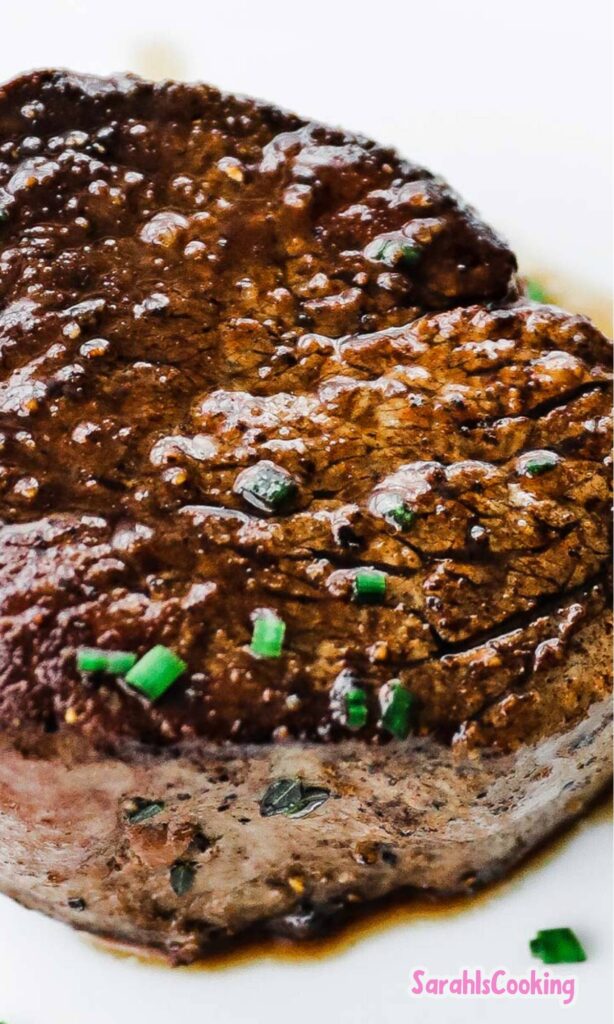
Learn how to cook filet mignon perfectly like a steakhouse! This easy filet mignon recipe is melt-in-your-mouth tender, juicy, and flavorful with a perfect browned crust. Just season, sear, and finish in the oven for restaurant-quality results at home in under 15 minutes.
ingredients
Instructions
- If possible, remove your steaks from the fridge about 30 minutes before cooking to bring them to room temperature.
- In a small bowl, mash together half of the butter (1 tablespoon), rosemary, thyme, and garlic. Form into a log, wrap in plastic, and refrigerate until serving.
- Preheat the oven to 400°F (204°C).
- Trim any connective tissue around the edges of the steaks. Pat them dry with paper towels.
- Season the filet mignon liberally with sea salt and black pepper on all sides.
- Heat a large cast iron skillet over medium-high heat for 2–3 minutes, until very hot. Add the remaining butter (1 tablespoon) and let it melt.
- Add the steaks to the pan in a single layer. Sear for 2 minutes on each side, without moving them around.
- Transfer the skillet to the preheated oven. Cook to desired doneness: approx. 5 min for rare, 6 min for medium rare, 7 min for medium, or 8 min for medium well (for 2-inch thick steaks). Use a meat thermometer for best results: 120°F (rare), 130°F (medium rare), 140°F (medium), 155°F (medium well).
- Transfer the steaks to a plate. Top each with 1/2 tablespoon of the garlic herb butter. Let rest for 5 minutes before serving and slicing.
Nutrition Facts
Servings 4
Serving Size 4 oz (½ of an 8-oz steak with compound butter)
- Amount Per Serving
- Calories 445kcal
- % Daily Value *
- Total Fat 19g30%
- Saturated Fat 8g40%
- Cholesterol 165mg56%
- Sodium 1180mg50%
- Potassium 730mg21%
- Protein 69g138%
- Calcium 20 mg
- Iron 3 mg
* Percent Daily Values are based on a 2,000 calorie diet. Your daily value may be higher or lower depending on your calorie needs.
Note
- Serving size: 4 oz, or 1/2 of an 8-oz filet mignon with compound butter
- Storage: Keep leftovers in the refrigerator for up to 3–4 days. Reheat gently in the oven with broth to retain moisture.
- Freeze: Raw filet mignon can be frozen for up to 6–12 months; cooked for up to 3 months.
- Tip: Always use a meat thermometer—target internal temp before resting: 120°F (rare), 130°F (medium rare), 140°F (medium), 155°F (medium well).