
Seven layer dip has lasted because it solves a real hosting problem. It feeds a group, requires no cooking, and holds attention on a snack table longer than most party foods. When executed with balance and intent, it becomes a reliable centerpiece rather than a throwback dish people scoop once and ignore.
After years of serving this dip at family gatherings and casual parties, one thing is consistent. When the layers are built with structure in mind, the dish stays neat, scoopable, and appealing well into the event. When the order or texture is off, it collapses into a loose mixture that chips cannot support. This guide focuses on the execution details that separate those two outcomes.
Who This Seven Layer Dip Recipe Is For
This recipe is for hosts who want a dependable, crowd-pleasing dish that relies on assembly rather than active cooking. It is designed for readers who value classic party food done correctly, without shortcuts that compromise texture or presentation.
It is not intended for novelty spins or themed variations. The goal here is repeatable success and a dip that performs well over time on a serving table.
Why This Seven Layer Dip Works (Food Logic, Not Nostalgia)
The success of seven layer dip depends on alternating dense and soft components in a specific order. A firm base supports the weight above it, while softer layers add richness without causing slippage. When dense layers are stacked together or soft layers are layered without structure, the dip loses integrity under the pressure of repeated scooping.
Temperature and fat balance also play a critical role. Cold dairy layers provide stability and mute sharp flavors, while room-temperature components release aroma and taste more pronounced. When everything is assembled without considering temperature, flavors flatten and texture suffers. A properly built dip tastes balanced from the first scoop to the last, even after sitting out for a reasonable period.
Through repeated testing, certain failures show up quickly. Thin bases slide, wet toppings weep, and improperly mixed seasoning creates uneven bites. Understanding why the layers work together prevents those problems before they happen.
Understanding the Role of Each Layer
The Base Layer: Structural Support
Refried beans form the foundation because they are dense, cohesive, and capable of holding weight. A properly prepared base should spread smoothly without flowing back into itself. If the beans are too loose, the entire dip shifts when scooped, pulling upper layers out of place.
Spreading technique matters as much as ingredient choice. A thin, uneven layer leaves weak spots that collapse under pressure. A thicker, evenly distributed base creates a stable platform that supports every layer above it. After testing multiple thicknesses, a consistent, level base proved far more important than the exact seasoning of the beans themselves.
The Seasoned Cream Layer
Seasoning the dairy separately ensures even flavor distribution across the dip. Mixing taco seasoning directly into sour cream allows the spices to hydrate fully, preventing pockets of blandness or overly salty bites.
Texture is the key cue here. Properly mixed sour cream should look uniform and slightly loosened, without streaks or clumps. When this step is rushed, the dip tastes inconsistent, especially once chilled. This layer also acts as a buffer between the beans and higher-moisture toppings, helping maintain clean separation.
For readers who prefer precise seasoning control, using a homemade taco seasoning recipe allows adjustments to salt and spice without affecting texture.
Cheese and Guacamole Layers
Shredded cheese serves more than a flavor role. It creates a barrier between the seasoned cream and the guacamole, limiting moisture transfer. Without this barrier, the guacamole can slide and discolor more quickly.
Guacamole placement matters. Spread directly on top of the cheese, it adheres better and is less exposed to air. When guacamole is placed too high or spread unevenly, it browns faster and shifts during serving. Using a balanced, well-emulsified guacamole, such as this best guacamole recipe, improves both stability and flavor.
Fresh Toppings
Tomatoes, onions, and olives add acidity, crunch, and visual contrast. They also introduce moisture, which must be managed carefully. Smaller, evenly chopped pieces distribute weight and reduce liquid release over time.
If these toppings are added too early or cut too large, they shed liquid that pools on the surface. This not only affects appearance but also softens chips. Testing showed that well-drained, finely chopped toppings maintain texture far longer during service.
Prep Choices That Keep the Dip Clean and Scoopable
Preparation decisions have a direct impact on final texture. Tomatoes should be seeded and drained thoroughly. Onions should be chopped small enough to integrate without overwhelming individual bites. Olives should be patted dry to prevent surface moisture.
Timing also matters. Ingredients with high water content should be prepped close to assembly, while stable components like beans and seasoned cream can be prepared ahead. In multiple test runs, dips assembled with wet ingredients too early developed watery layers after refrigeration, even when properly covered.
Precision here prevents soggy chips and messy serving. Each prep step supports the structure built during assembly.
Step-by-Step Assembly Guidance (Beyond the Recipe Card)
Choosing the Right Dish
A wide, shallow dish improves both structure and presentation. It allows layers to spread evenly and reduces vertical pressure. Clear glass dishes also provide visual cues that help with even layering and portioning.
Deep bowls compress layers and hide visual separation. Through testing, shallow dishes consistently produced cleaner scoops and better guest engagement.
Layering Strategy That Holds
Each layer should be spread gently, using minimal pressure. Visual cues help confirm success. A stable layer looks smooth, level, and clearly defined. If layers begin to mix, it is a sign that the base is too loose or spreading pressure is too aggressive.
Taking time during this step preserves separation and prevents collapse later.
Timing Before Serving
Allowing the dip to rest briefly after assembly improves flavor integration. However, extended resting with fresh toppings can harm texture. The balance lies in assembling stable layers ahead and adding moisture-heavy toppings closer to serving time.
Common Seven Layer Dip Mistakes (And How to Avoid Them)
One common mistake is using overly thin layers. Thin layers lack structural strength and collapse quickly. Another is adding wet toppings too early, which leads to surface pooling and soggy chips.
Overloading the dip with extra variations is another frequent issue. While tempting, additional layers often disrupt balance and reduce scoopability. Sticking to a tested framework produces better results than constant modification.
Smart Variations That Preserve Structure
Flavor swaps should maintain density and balance. Pickled red onions can replace olives or green onions, adding acidity without excess moisture. Controlled heat additions, such as finely minced jalapeños, should be used sparingly.
When adjusting guacamole flavor or texture, using a structured base recipe prevents separation and browning. Variations should enhance the dip without altering its foundational stability.
Make-Ahead, Storage, and Food Safety Guidance
Certain components can be prepared up to 24 hours ahead. Beans and seasoned cream store well when tightly covered and refrigerated. Cheese can be shredded in advance and kept sealed.
Guacamole and fresh toppings should be added closer to serving. Fully assembled dips can be refrigerated for several hours, but surface moisture increases over time. Proper covering reduces air exposure and slows browning.
Freezing is not recommended. Dairy layers separate upon thawing, and fresh vegetables lose texture. This dip performs best when prepared fresh or within a short refrigeration window.
Serving Ideas That Turn the Dip Into a Spread Anchor
Seven layer dip works best as a central element on a snack table. Pairing it with crisp vegetables from a veggie tray recipe adds freshness without competition. For heartier gatherings, serving alongside chicken wings provides balance without overlapping flavors.
Position the dip where traffic flows easily, allowing guests to return without congestion. Its role is to anchor the spread, not compete with every dish on the table.
FAQ: Seven Layer Dip Questions Readers Actually Ask
Can I make seven layer dip the night before?
Yes, with limits. Assemble stable layers ahead and add fresh toppings closer to serving.
How do I keep the guacamole from browning?
Limit air exposure and place it beneath cheese or toppings where possible.
What size dish works best for a crowd?
A wide, shallow dish allows even layering and easier scooping.
How much dip do I need per person?
Plan for generous portions. This dip often attracts repeat servings.
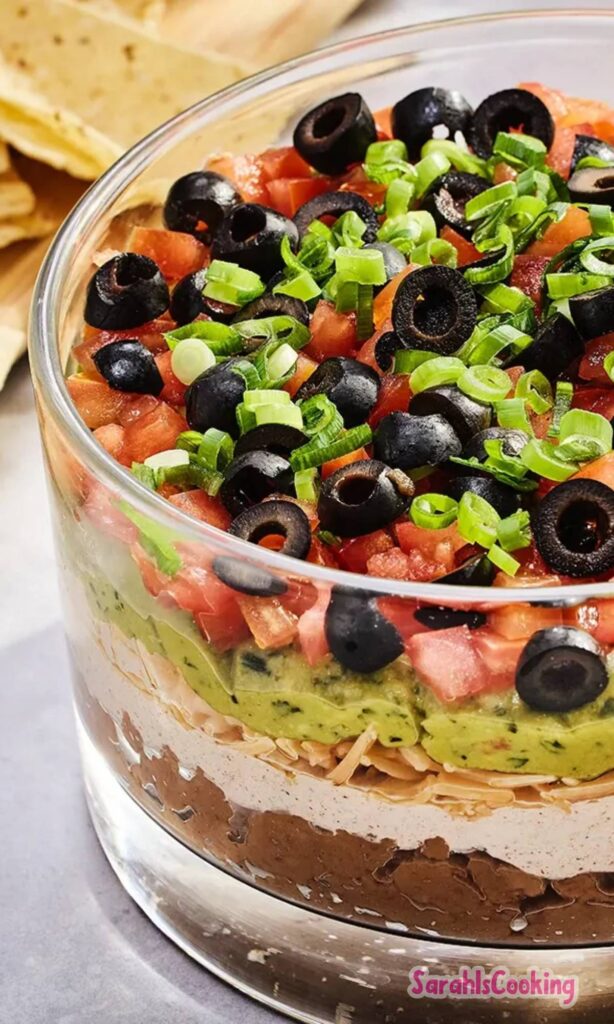

7 Layer Dip Recipe
Description
Wondering how to make the classic Seven Layer Dip for your next fiesta? Make sure your kitchen is stocked with chips, because everyone will want to dig into this easy 7 layer taco dip, loaded with beans, guacamole, sour cream, cheese, and more! Perfect for parties, game day, or casual snacking - this vibrant, flavorful dip is always a crowd-pleaser.
Ingredients
Instructions
- Spread refried beans evenly in the bottom of a shallow serving dish (such as a 9x13-inch dish).
- In a small bowl, mix sour cream and McCormick® Original Taco Seasoning Mix until well blended. Spread this mixture evenly over the refried beans.
- Layer shredded Cheddar cheese on top of the seasoned sour cream.
- Carefully spread guacamole over the cheese layer.
- Top with chopped tomatoes, followed by sliced green onions and black olives.
- Serve immediately with tortilla chips.
Nutrition Facts
Servings 64
Serving Size 2 tablespoons
- Amount Per Serving
- Calories 45kcal
- % Daily Value *
- Total Fat 3g5%
- Saturated Fat 1.5g8%
- Cholesterol 10mg4%
- Sodium 180mg8%
- Potassium 60mg2%
- Total Carbohydrate 3g1%
- Dietary Fiber 1g4%
- Sugars 1g
- Protein 2g4%
- Calcium 6 mg
- Iron 2 mg
* Percent Daily Values are based on a 2,000 calorie diet. Your daily value may be higher or lower depending on your calorie needs.
Note
- Make ahead tip: Assemble all layers except tomatoes, guacamole, and green onions up to 1 day in advance. Add fresh toppings just before serving to prevent browning and sogginess.
- Customize it: Add cooked ground beef, jalapeños, corn, or cilantro for extra flavor and texture.
- Serving suggestion: Use sturdy restaurant-style tortilla chips to support generous scoops!