
A well-made sugar cookie should do two things at once. It should hold a sharp edge when cut into shapes, and it should remain tender enough to enjoy without icing. That balance does not happen by accident. It comes from precise ratios, controlled mixing, and deliberate chilling.
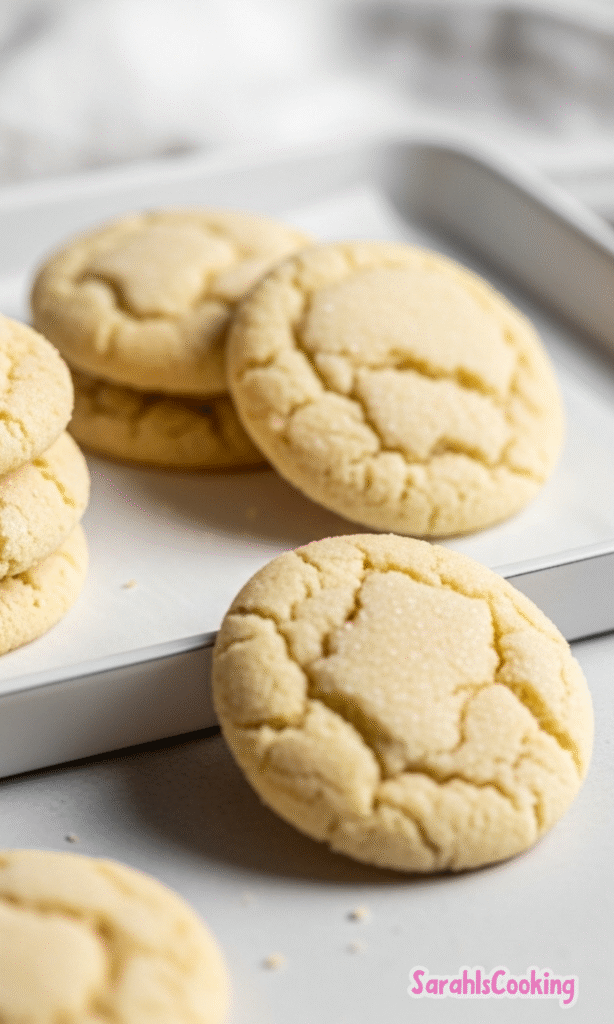
This sugar cookies recipe is built for reliability. The dough rolls smoothly, cuts cleanly, and bakes into cookies that stay flat without spreading into soft-edged circles. The texture is light but structured. The flavor is clean and buttery, with enough salt to keep the sweetness balanced.
If you have ever pulled misshapen or dry sugar cookies from the oven, this version addresses those exact failure points.
Who This Recipe Is For
This recipe is for home bakers who want repeatable results. It is especially suited for:
- Bakers making cut-out cookies for holidays or events
- Anyone decorating with glaze or royal icing
- Those who need dough that can be prepared ahead of time
- Beginners who want detailed guidance instead of guesswork
You do not need advanced equipment. A hand mixer works well. What you do need is attention to temperature and timing. The instructions explain what to look for at each stage so you are not relying on instinct alone.
If you are specifically baking for shaped occasions, such as Valentine’s Day, this dough performs beautifully for detailed designs like those in my Heart Shaped Sugar Cookies Recipe.
Why This Recipe Works
Sugar cookies fail when structure and tenderness are not balanced. Too much fat and they spread. Too much flour and they become dry. Too much leavening and they puff and lose their defined edges.
This formula uses a moderate butter-to-flour ratio that supports clean shapes. The dough contains enough butter to create tenderness, but not so much that it melts aggressively in the oven. The flour level is calibrated to stabilize the dough during baking without creating a dense crumb.
Granulated sugar plays a dual role. It sweetens, but more importantly, it creates air pockets during creaming. Proper creaming incorporates fine air bubbles into the butter. Those air pockets expand slightly in the oven, producing a light texture without relying heavily on chemical leaveners.
Only a small amount of baking powder is used. That choice is intentional. Too much lift distorts edges. A restrained amount gives just enough internal softness to prevent a hard, biscuit-like texture.
Chilling is not optional here. When the dough rests in the refrigerator, three important things happen:
- The butter solidifies, slowing spread.
- The flour hydrates fully, improving structure.
- The dough becomes easier to roll cleanly.
Skipping or shortening this step almost always results in soft edges.
Thickness also matters. A quarter-inch thickness is the structural sweet spot. Thinner cookies brown too quickly and lose moisture. Thicker cookies remain pale but can feel underbaked in the center. Through testing, this measurement proved most consistent across ovens.
For comparison, sugar functions differently in drop-style cookies like my Chocolate Chip Cookies Recipe, where spread and caramelization are desirable. In cut-out cookies, sugar must support structure instead of driving expansion.
Ingredient Insights and Function
Structural Ingredients
All-purpose flour provides the framework. Its moderate protein level gives strength without chewiness. Measuring accurately is critical. Spoon and level your flour rather than scooping directly from the bag. Excess flour is the most common cause of dry sugar cookies.
Eggs bind the dough and add controlled moisture. They also contribute slight lift. Use large eggs at room temperature. Cold eggs can cause the butter mixture to seize slightly, affecting texture.
Baking powder is included sparingly. Its purpose is softness, not rise. Increasing it even slightly produces puffed surfaces and rounded edges.
Tenderness and Flavor Builders
Unsalted butter gives richness and allows full control over salt levels. It should be softened but not glossy or melting. Properly softened butter yields to pressure but still holds shape. If it is too warm, the dough will feel greasy and spread more quickly in the oven.
Granulated sugar supports aeration during creaming. It also contributes to a subtle crisp edge once baked. Powdered sugar is not a direct substitute here. It contains cornstarch and produces a different texture.
Vanilla extract enhances warmth without dominating. Use pure extract for a cleaner flavor. Salt may seem minor, but it sharpens sweetness and deepens butter flavor. Do not omit it.
Substitution Boundaries
Salted butter can be used if necessary, but reduce added salt slightly. Flavor consistency may vary between brands.
Reducing sugar changes more than sweetness. It alters structure because less aeration occurs during creaming. The cookies may bake up denser.
Replacing butter with margarine significantly affects spread and flavor. Butter’s water and fat balance is part of the structural design. Margarine often contains more water, which encourages spreading.
If you enjoy working with shaped cookies for different holidays, the same structural principles apply to spiced cut-outs like my Gingerbread Cookies Recipe, though the fat and sugar balance differs to accommodate molasses.
Step-by-Step Success Guidance
Proper Creaming
Beat softened butter and sugar together until the mixture lightens in color and becomes visibly fluffy. This usually takes about two minutes with a hand mixer on medium speed. Under-creamed butter looks dense and slightly grainy. Properly creamed butter appears smoother and slightly aerated.
Do not rush this step. Insufficient creaming leads to heavy cookies.
Adding Eggs
Add eggs one at a time, mixing fully after each addition. If the mixture looks slightly curdled at first, continue mixing. It should smooth out within seconds. Scrape the bowl thoroughly. Uneven mixing creates streaks of butter that bake unevenly.
Incorporating Dry Ingredients
Mix the dry ingredients separately before adding them. This ensures even distribution of leavening and salt.
Add the flour mixture gradually. Mix only until no visible flour remains. Overmixing activates gluten and toughens the dough. The dough should look cohesive and soft but not sticky.
Chilling With Purpose
Divide the dough into two flat disks before chilling. Flat disks cool more evenly than large balls. Wrap tightly to prevent drying.
Refrigerate for at least two hours. If the dough becomes very firm after extended chilling, let it sit at room temperature for five to ten minutes before rolling.
Rolling and Cutting
Lightly flour your surface and rolling pin. Roll to a consistent quarter-inch thickness. Inconsistent thickness causes uneven baking.
If the dough softens while you are working, return it to the refrigerator briefly. Warm dough sticks and loses definition.
Dip cookie cutters lightly in flour for cleaner releases. Transfer shapes carefully with a thin spatula.
Baking Indicators
Preheat your oven fully before baking. An underheated oven causes spreading before structure sets.
Bake until the edges are just beginning to turn pale golden. The centers should remain light. Sugar cookies should not brown deeply. Browning signals moisture loss.
Allow the cookies to cool on the baking sheet for five minutes before transferring. They finish setting during this time.
How I Tested and Refined This Recipe
The earliest version of this recipe used more butter. The flavor was excellent, but the cookies spread noticeably, even after chilling. Increasing flour corrected spread but created a drier crumb.
Reducing butter slightly while maintaining sugar preserved tenderness without sacrificing edge clarity. That adjustment was the turning point.
I also tested varying chill times. One hour produced acceptable results, but edges softened during baking. Two hours consistently held sharper detail. Overnight chilling did not negatively affect texture, provided the dough rested briefly before rolling.
Baking powder required careful adjustment. At one point, increasing it by just a quarter teaspoon created visibly puffed centers. That small change reinforced how sensitive cut-out cookies are to leavening.
Thickness trials revealed that thinner cookies browned too quickly and tasted drier within a day. The quarter-inch thickness maintained softness for several days at room temperature.
After multiple batches baked in different ovens, this ratio proved most reliable across temperature variations.
Common Mistakes and How to Avoid Them
Cookies spread too much
Butter was too warm or dough was under-chilled. Ensure butter is soft but cool to the touch. Chill fully before baking.
Edges look rounded instead of sharp
Oven may not have been fully preheated. The structure must set quickly. Use an oven thermometer if necessary.
Cookies are dry or crumbly
Too much flour was added. Measure carefully. Overbaking also dries sugar cookies quickly. Remove them when edges are just turning golden.
Cookies are puffy
Too much baking powder or overmixing after flour addition can cause excess rise.
Dough sticks during rolling
Surface or dough may be too warm. Light flouring and brief refrigeration solve this.
Every one of these issues has appeared in testing. Each has a direct correction.
Make-Ahead, Storage, and Freezing Guidance
Baked cookies store well at room temperature in an airtight container for up to one week. Keep them in a single layer if decorated with icing that has not fully hardened.
Undecorated cookies can be layered with parchment between them. Texture remains soft for several days. After about four days, edges become slightly firmer but still pleasant.
The dough freezes well. Wrap disks tightly and freeze for up to two months. Thaw overnight in the refrigerator. Let the dough rest briefly at room temperature before rolling.
You can also freeze baked, undecorated cookies. Cool completely before freezing. Store in airtight containers. Thaw at room temperature while still covered to prevent condensation from settling on the surface.
If freezing decorated cookies, ensure icing has hardened fully before storing. Moisture during thawing can cause colors to bleed.
Food safety is straightforward here. These cookies are low moisture and stable at room temperature when stored properly. Avoid humid storage conditions.
Final Thoughts
A dependable sugar cookie recipe should remove uncertainty. When ratios are deliberate and technique is clear, the dough behaves predictably. That consistency allows you to focus on shaping and decorating instead of correcting problems.
This version was refined to hold its form, bake evenly, and stay tender for days. Follow the temperature cues and structural checkpoints, and the results will match the intention.

Sugar Cookies Recipe
Description
My easy sugar cookie recipe is a must-try! The dough is made with just 7 simple ingredients and holds its shape beautifully when cut and baked—perfect for holidays, parties, or any occasion. These cookies are soft, tender, and lightly sweet, with crisp edges when baked just right. Whether you’re shaping hearts, stars, Christmas trees, or bunnies, these cut-out sugar cookies will look exactly how you imagined them. A reader, Mary, says: “I made these cookies for Christmas and they were wonderful! They kept their shapes perfectly and tasted great! I’ve never had success with cut-out sugar cookies before. Thank you.” ★★★★★
Ingredients
Instructions
- In a medium bowl, sift together the flour, salt, and baking powder. Set aside.
- In a large mixing bowl or the bowl of a stand mixer fitted with the paddle attachment, beat the butter and sugar together on medium speed until light and fluffy (about 2 minutes).
- Add the eggs one at a time, mixing well after each addition. Scrape down the sides of the bowl, then beat in the vanilla extract.
- With the mixer running on low, gradually add the dry ingredients until the dough comes together. Do not overmix.
- Divide the dough in half, shape each half into a disk, and wrap tightly in plastic wrap. Refrigerate for at least 2 hours (or up to 2 days).
- Preheat your oven to 190°C (375°F). Line baking sheets with parchment paper or silicone mats.
- On a lightly floured surface, roll one disk of dough to ¼-inch thickness. Cut out shapes with cookie cutters, re-rolling scraps as needed.
- Place cookies 1 inch apart on prepared baking sheets. Bake one sheet at a time for 10–12 minutes, or until the bottom edges are lightly golden.
- Let cookies cool on the baking sheet for 5 minutes before transferring to a wire rack to cool completely. Decorate once fully cooled.
Nutrition Facts
Servings 36
Serving Size 1 cookie
- Amount Per Serving
- Calories 140kcal
- % Daily Value *
- Total Fat 7g11%
- Saturated Fat 4.5g23%
- Cholesterol 35mg12%
- Sodium 75mg4%
- Potassium 45mg2%
- Total Carbohydrate 19g7%
- Dietary Fiber 0.5g2%
- Sugars 10g
- Protein 2g4%
- Calcium 30 mg
- Iron 1 mg
* Percent Daily Values are based on a 2,000 calorie diet. Your daily value may be higher or lower depending on your calorie needs.
Note
- Cool cookies before decorating. Whether you’re using royal icing, buttercream, sprinkles, or melted chocolate, always let cookies cool completely to prevent icing from melting.
- Freezing tip: Freeze dough disks for up to 1 month. Thaw in the fridge before rolling and cutting.
- Flour tip: For best results, weigh your flour (480g). If using cups, fluff and spoon the flour—don’t scoop directly from the bag.
- Butter temperature: It should be soft but still cool—finger should leave an indentation without sinking completely.